



Beta-glucan is a polysaccharide made of glucose units in cereals, yeasts and mushrooms. From oats and barley it contributes to normal cholesterol levels at 3 g a day, while from yeast and mushrooms its branched structure is the focus of immune research. The source therefore always decides.
Beta-glucan is not the same as beta-glucan, which is why its effect depends on the source. Beta-glucan from oats and barley contributes to the maintenance of normal blood cholesterol levels under an EU-wide authorised claim, as soon as you take in 3 g of it a day. Beta-glucan from yeast and mushrooms is a different molecule with a branched structure and is therefore at the centre of immune research. The real question is never "does beta-glucan work?", but "which one?".
Anyone who buys a product without knowing the source buys a label, not an active principle.
Beta-glucan: what is it, exactly?
Beta-glucans are long-chain polysaccharides made of glucose units and sit in the cell walls of cereals, yeasts and mushrooms. The units are joined by beta bonds, and this type of bond determines how the molecule behaves. Oats and barley link their glucose at positions 1,3 and 1,4; the chain stays relatively straight, dissolves in water into a thick mass and thickens your porridge. You can see that in the pot. Yeasts link at positions 1,3 and 1,6, which creates side branches.
Besides oats, barley and baker's yeast, the literature names the medicinal mushrooms reishi, shiitake, maitake and chaga as suppliers. Because linkage and branching determine the properties, research treats cereal and mushroom beta-glucans as separate topics, which should not be thrown into one pot if you want to know what a particular supplement can do.
What is beta-glucan good for? The tasks by source
Depending on its origin, beta-glucan takes on very different tasks:
- Oats and barley: soluble fibre with two EU claims, one on cholesterol levels and one on the blood sugar rise after a meal; the everyday classic in porridge, muesli and bran.
- Baker's yeast: 1,3/1,6-linked and branched, the classic source of beta-glucan in capsules and powders.
- Medicinal mushrooms such as reishi, shiitake, maitake and chaga: beta-glucan as a component of the cell wall, shown in extracts as part of the polysaccharides.
Two worlds, two questions: with oats it is about a fibre with a recognised contribution, with yeast and mushrooms about a structural molecule that research links to the immune system.
Which foods contain beta-glucan?
Oats are the everyday source. They contain around 4.5 g of beta-glucan per 100 g, and barley as well as the brans of oats and barley belong to the sources the authorised EU claims refer to. Bread cereals deliver little by comparison: according to Wikipedia, wheat contains 0.8 % beta-glucan and rye 2.3 %. That is hardly worth mentioning. Anyone who wants to cover 3 g a day from food therefore ends up with oats, not bread. Yeast and mushrooms also supply beta-glucan; a declared extract makes the amount plannable.
Beta-glucan effects in oats: cholesterol and blood sugar
The EU regulation words the first claim like this: beta-glucans contribute to the maintenance of normal blood cholesterol levels. It may be used for foods containing at least 1 g of beta-glucans from oats, oat bran, barley or barley bran per quantified portion, and the beneficial effect is obtained with a daily intake of 3 g. A second claim is authorised alongside it: beta-glucans from oats or barley, as part of a meal, contribute to a smaller rise in blood glucose after that meal, at no less than 4 g of beta-glucans per 30 g of available carbohydrates.
You can reckon with around 4.5 g of beta-glucan per 100 g of oats. For the 3 g a day you therefore need about 67 g of rolled oats, a hearty portion of porridge in the morning. That is doable. The values differ with variety and processing, so the nutrition table of your product is more precise than any rule of thumb.
Beta-glucan in the gut: what the fibre does there
As a soluble fibre, beta-glucan travels undigested into the large intestine, and there your gut flora takes over. It ferments it into short-chain fatty acids, and butyrate counts as the main energy source of the colon cells, while beta-glucans also promote the growth of beneficial gut bacteria such as lactobacilli and therefore count as prebiotics. A bowl of porridge in the morning feeds your bacteria at the same time.
Beta-glucan and the immune system: what research examines in yeast and mushrooms
Immune cells carry receptors that recognise beta-glucans, and the best-studied one is the receptor Dectin-1. It recognises chains with a 1,3 backbone and 1,6 side branches, as found in mushrooms and yeasts, but not the cereal glucans from oats, barley and wheat with their 1,3/1,4 linkage, and that is exactly why the immune link belongs to mushroom and yeast glucans and not to oats. The difference lies in the shape.
The specialist literature adds a warning: results for one glucan cannot simply be transferred to all, because molecular size, branching and solubility change what a supplement does. What the recognition by receptors means in a person's daily life is the subject of ongoing studies. You support your immune system in everyday life with nutrients for which authorised claims exist: vitamin D and vitamin B6 each contribute to the normal function of the immune system.
Beta-glucan from mushrooms: what to look for in a supplement
Mushroom beta-glucans come as powder or capsules, and four criteria separate a good product from an arbitrary one:
- Declared source: mushroom, yeast or cereal must appear on the label, otherwise you do not know what you are buying.
- Standardised content: a share of polysaccharides or beta-glucan stated in percent is the number one quality marker.
- Fruiting body instead of mycelium: extract from the real fruiting body counts for more than mycelium grown on grain.
- Laboratory tested: traceable purity and transparent origin.
Our reishi extract meets all four: a 20:1 extract from the fruiting body of Japanese reishi, extracted twice with water and alcohol and standardised to 40 % polysaccharides. The alcohol evaporates completely after extraction, and no chemical solvents are used. Three capsules contain 1,950 mg of extract and therefore 780 mg of polysaccharides, with two capsules it is 520 mg. The lion's mane extract (30:1, also from the fruiting body) shows 585 mg of polysaccharides and 98 mg of beta-glucan in three capsules, which is 5 % of the extract.
Oats or mushrooms: which source suits you?
If you are looking for a soluble fibre for your daily routine and the recognised cholesterol contribution, the cereal form from oats or barley is the right choice; porridge delivers it anyway. If medicinal mushrooms and immune research interest you, look at mushroom extracts. Both work. Both ways go together: you take the reishi extract in the morning after your first meal, that is, straight after the porridge, and the lion's mane extract after a meal of your choice.
If you have a pre-existing condition, take medication or are pregnant, discuss a concentrated supplement with your doctor beforehand. That is quickly settled.
Matching Products from Scheunengut
For the mushroom side we offer the reishi extract (20:1, 1,950 mg in three capsules, 40 % polysaccharides) and the lion's mane extract (30:1, 1,950 mg in three capsules, of which 98 mg beta-glucan), both from the fruiting body and free of additives, colourings and fillers. In traditional Chinese medicine, reishi has been valued for thousands of years for inner calm and balance. We make both extracts in Germany and Europe (incl. Switzerland, Austria); every batch goes to an independent laboratory to be tested for purity and active-ingredient content.
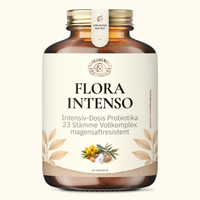
If you also have the gut in mind, add Flora Intenso, a complex of 23 bacterial strains with 100 bn CFU/g in gastro-resistant capsules, plus 320 mg of acacia fibre as dietary fibre and vitamin B6, which contributes to the normal function of the immune system. For the nutrient building block, our Vitamin D3 Depot + K2Pure® with 5,000 IU per tablet is a fit, just one every 5th day, 180 tablets last 900 days; vitamin D contributes to the normal function of the immune system. Not for pregnant or breastfeeding women, children and adolescents. Scheunengut has existed since 2012, without investors and with a focus on pure raw-material quality.
Frequently Asked Questions (FAQ)
Is oat beta-glucan the same as yeast or mushroom beta-glucan?
No, structurally they are two different molecules. Oats and barley link their glucose units 1,3/1,4 and form soluble, thick chains, while yeast and mushrooms link 1,3/1,6 and form branched structures. Research treats them separately. When buying, the declared source counts.
How much beta-glucan is in rolled oats?
Around 4.5 g per 100 g of oats; the values differ with variety and processing. For the 3 g a day to which the EU claim on cholesterol levels refers, you therefore need about 67 g of rolled oats.
Can I simply get beta-glucan through my diet?
For the cereal form, yes, easily through oats, barley and their bran. You take in yeast and mushroom beta-glucan through mushrooms as food or specifically through a declared extract. What suits you depends on which of the two worlds interests you.
Does beta-glucan strengthen the immune system?
The branched structure of yeast and mushroom beta-glucan is recognised by receptors on immune cells, and that is exactly what research is studying. What follows from this for a supplement in everyday life has not yet been clarified. Authorised nutrients such as vitamin D and vitamin B6 contribute to the normal function of the immune system.
What should I look for in a beta-glucan supplement?
Four things: a clearly declared source (oats or barley, yeast or mushroom), a content stated in percent, for mushrooms extract from the fruiting body instead of mycelium, and laboratory testing with transparent origin.
Is oat beta-glucan or mushroom beta-glucan the better choice?
There is no general "better", only a "for what". For the recognised cholesterol contribution and everyday use, the cereal form from oats or barley is the right choice. If you are interested in medicinal mushrooms and immune research, look at mushroom extracts. The two do not compete, they answer different questions.
What is beta-glucan good for and what is it exactly?
Beta-glucans are polysaccharides made of glucose units in the cell walls of cereals, yeasts and mushrooms. From oats and barley they serve as a soluble fibre with authorised EU claims on cholesterol levels and blood sugar rise, from yeast and mushrooms they are the focus of immune research.
Health notice: This guide is for general information purposes only and does not replace individual medical or pharmaceutical advice. Food supplements are not a substitute for a balanced, varied diet and a healthy lifestyle. If you have health concerns, are pregnant or breastfeeding, or are taking medication, please consult a doctor or pharmacist. How our guides are created →
Sources
- Dietary supplements – yes or no — Verbraucherzentrale (German Consumer Advice Centre)
- Health assessment of food supplements — German Federal Institute for Risk Assessment (BfR)
- Colorful pills for a clear conscience – what do dietary supplements actually do? — German Nutrition Society (DGE)
- Food supplements — European Food Safety Authority (EFSA)
- Regulation (EU) No 432/2012: list of permitted health claims — European Commission (EUR-Lex), 2012
- Oat days have a positive effect on cholesterol, blood sugar and weight — aponet.de (Avoxa), 2025
- Structure-Functional Activity Relationship of β-Glucans From the Perspective of Immunomodulation: A Mini-Review — Han et al., Frontiers in Immunology, 2020
- Beta-glucans — Wikipedia, 2026