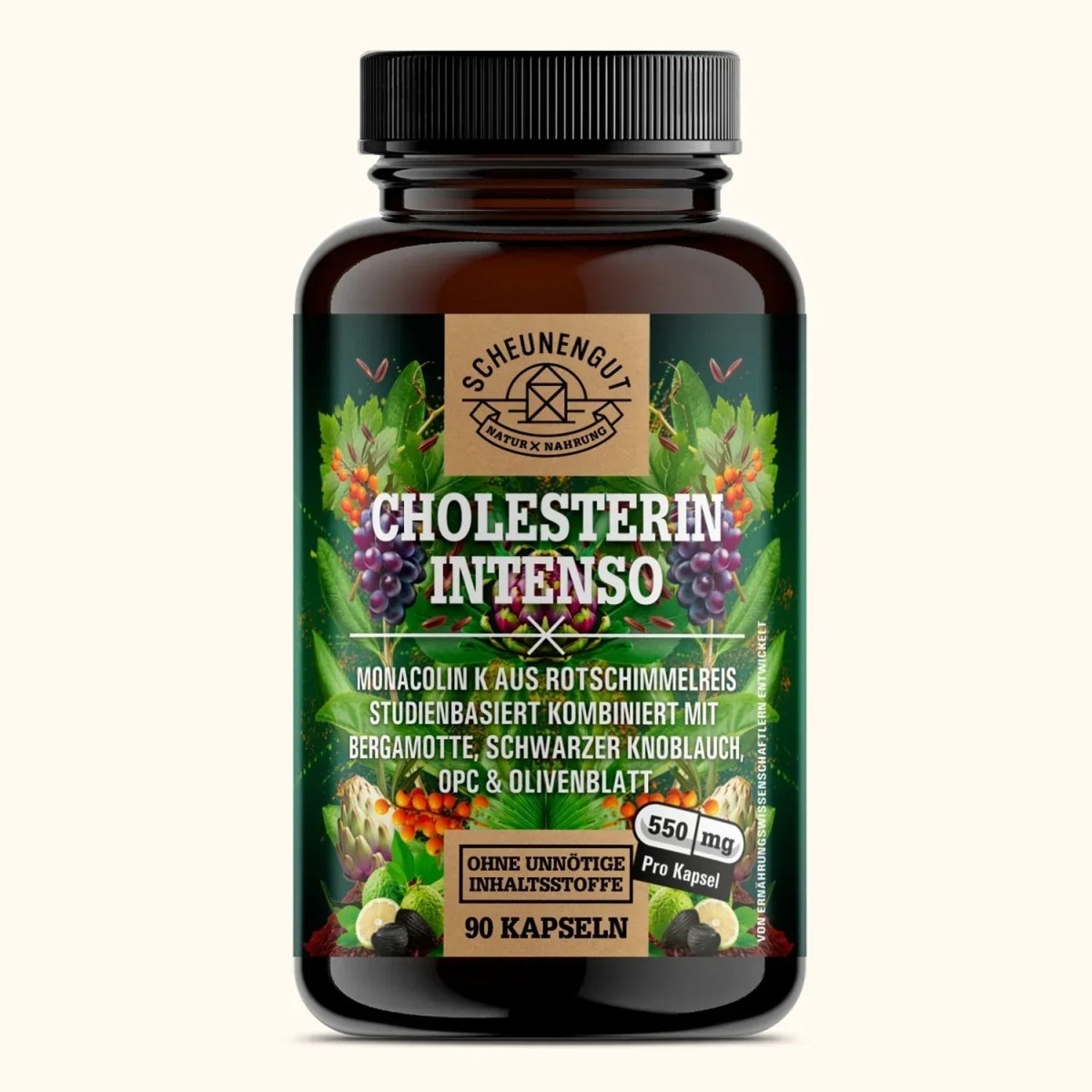
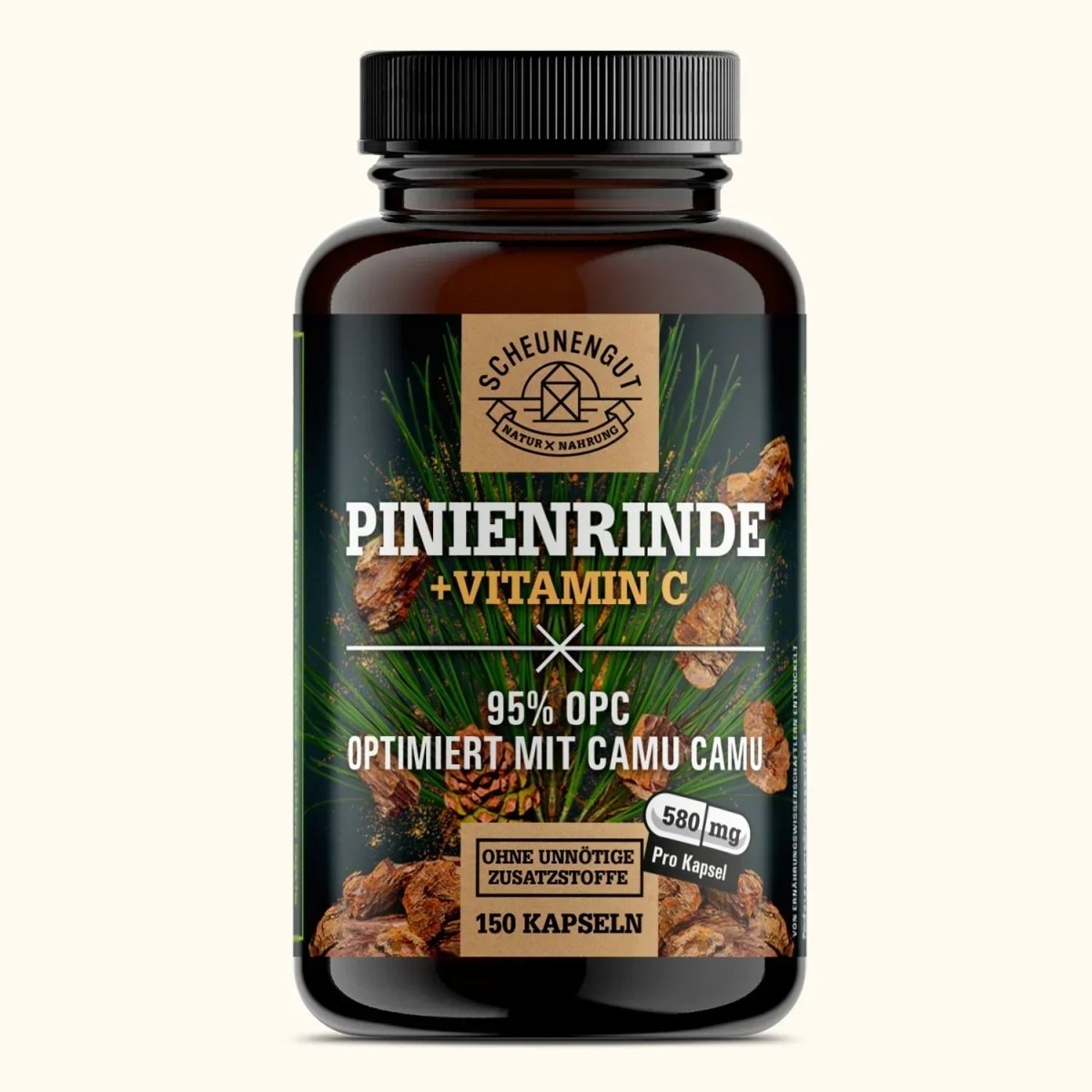
Buy OPC – High-Dose Extracts from Grape Seed & Pine Bark
OPC (oligomeric proanthocyanidins) belong to the polyphenol group and are therefore classed as plant compounds. They are obtained mainly from the seeds of red grapes and from the bark of the French maritime pine, better known as pine bark. In this category, you'll find high-dose OPC products from Scheunengut – standardised to a defined OPC content, vegan and lab-tested.
Origin & Production
There are essentially two sources: grape seed OPC is extracted from grape seeds and is the classic, well-researched raw material. OPC from pine bark (French maritime pine, often standardised as an extract) is considered a particularly pure source. Both variants are gently extracted and then adjusted to their content of oligomeric proanthocyanidins.
Standardisation & Format
What matters most when buying OPC is the standardised OPC content – high-quality extracts often show a content of around 95%. OPC is usually offered as capsules or powder and is often combined with natural Vitamin C. Look for a clear statement of the milligrams of OPC per daily serving, so you can compare products properly.
What to Look for When Buying
- Standardised, transparently declared OPC content
- Origin of the raw material: grape seed or pine bark
- Purity: vegan, without unnecessary additives or fillers
- Independently lab-tested quality and traceable batches
OPC at Scheunengut
We rely on high-dose, standardised raw materials and an honest, no-frills formula. Alongside OPC, it's worth taking a look at related plant compounds such as Resveratrol and Quercetin. All OPC products are bottled in Germany and lab-tested before sale.