



Fenugreek (Trigonella foenum-graecum) is an ancient legume whose seeds are used as a spice, tea, sprout and capsule. Mucilage, bitter compounds, plenty of protein and the typical maple-like scent set it apart. Traditionally it is used for appetite before meals and while breastfeeding.
Roast a few golden-yellow fenugreek seeds briefly in a dry pan, and suddenly your kitchen smells like a mix of warm nuts and maple syrup. This very scent made fenugreek (Trigonella foenum-graecum) one of the most widely used spices in the world over millennia, from Egyptian tombs through Indian curries to modern organic kitchens, and as an herb with tradition for appetite and breastfeeding it is still in demand.
Fenugreek Effects: What Is in the Seeds
Botanically, fenugreek belongs to the legumes and is related to lentils and peas. The small, angular, golden-brown seeds matter most in the kitchen and in herbal lore. Their profile of compounds explains why the plant has stayed with us for so long: mucilage (soluble fibre), which makes soaked seeds swell into a gel, bitter compounds, which give them their slightly sharp character, saponins at roughly 0.6 to 1.7 percent and a lot of protein for a spice plant.
On top come aroma compounds such as sotolon, which produce the maple scent. Legumes deliver fibre and protein anyway. With fenugreek both come in one spice that you spread in small amounts over the whole meal, so without having to think about it, it fits into every lentil dish and every loaf of bread.
The European Medicines Agency lists the seeds as a traditional herbal medicine for appetite before meals and, as a warm poultice, for the skin. Beyond that, fenugreek belongs to Ayurvedic cooking, where it has been part of spice blends and traditional preparations for centuries as “methi”, and to the oldest documented cultivated plants of all.
What Do People Take Fenugreek For? The Most Common Occasions
In daily life you meet fenugreek in three roles. First, as a kitchen spice in curries, bread and legume dishes. Second, as tea or powder before eating, the way tradition knows it for appetite. Third, as a capsule when you want a fixed daily amount without any taste, for example while breastfeeding, where fenugreek is one of the classic herbs. What it is good for in detail and what was measured for the mind, men and women is covered in the guide to its benefits. Here the subject is use.
Fenugreek in the Kitchen: Bringing Out the Aroma
Whole seeds only develop their warm, nutty aroma through brief, dry roasting over medium heat until they smell fragrant and turn a shade darker; after that they can be ground in a mortar or mill. The line between “perfectly roasted” and bitter is thin. Stay with it.
Ground, fenugreek is a core part of many curry blends and suits lentil and chickpea dishes, vegetable pans and hearty bread. The fresh leaves (methi) taste milder than the seeds and serve as a leafy green, and sprouts from the seeds are a crunchy, nutty topping for salads and bowls that you can even grow yourself with a little patience. If you want to avoid the taste, reach for the taste-neutral capsule.
Fenugreek Tea: Preparation and Effects
Tea is the classic preparation. You pour 250 ml of boiling water over 1 to 6 g of seeds and drink it before meals; that is how the EU monograph names it for traditional use with temporary loss of appetite. The tea tastes sharp and slightly nutty, and crushed seeds release more aroma than whole ones, which is why a quick press in the mortar before pouring pays off.
The tea is a traditional household remedy with long experience, and those who like it drink it as a fixed ritual before eating.
Fenugreek Capsules: Effects, Use and Dosage
Capsules give you a fixed daily amount. According to the EU monograph, traditionally used amounts are 380 to 1,100 mg of powder per single dose (three times a day) or 295 mg of dry extract (twice a day), each before meals and with plenty of liquid. Our nursing complex Mamasmilch delivers 900 mg of fenugreek extract in three capsules.
Otherwise, as with any herb: start slowly, drink a glass of water with it, and with a sensitive gut split the amount across two meals. That gives the stomach time to adjust, and you notice early whether the form suits you. If complaints last longer than two weeks, they belong with a doctor.
Neutralising the Fenugreek Smell: Why the Body Smells of Maple
The scent of fenugreek comes from the aroma compound sotolon, and it is strong enough to pass into sweat and body fluids after larger amounts. The result is a slightly sweet, maple-like body odour. Known and harmless.
You cannot neutralise it in the body, but you can steer it, because it depends on the amount. If you spread the spice over meals in kitchen amounts, you will hardly notice anything; if you take a high dose, you are more likely to smell of it. With capsules, simply lower the amount and split it across two meals.
Fenugreek Effects in Women: Menopause and Breastfeeding
Tradition knows fenugreek around the female cycle and above all as an herb of nursing mothers. In a review of small studies with breastfeeding women, the amount of milk produced was higher under fenugreek than in the comparison groups. For this phase we developed Mamasmilch, with fenugreek extract, fennel, omega-3 with DHA and folic acid.
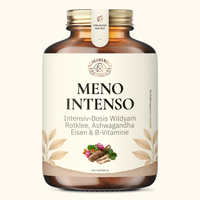
For menopause, fenugreek is an herb of experience. If you want a complex of your own there, you will find it in Meno Intenso: wild yam supplies the plant-based diosgenin, Siberian rhubarb brings phytoestrogens, ashwagandha traditionally stands for balance, and folic acid contributes to normal psychological function and to the reduction of tiredness and fatigue.
Fenugreek Effects on the Liver and Digestion
For digestion the mucilage plays the main part: as soluble fibre it swells in water and makes fenugreek a spice that accompanies a meal in a filling way. For the liver, the composition of a complex is worth a look: Mamasmilch contains 69.99 mg of choline in three capsules, and choline contributes to the maintenance of normal liver function.
Who Fenugreek Suits Less
As a spice, fenugreek is uncomplicated for most people. You need a little more attention with an allergy to peanut, soy or other legumes, because botanically fenugreek is a legume. It is not recommended during pregnancy or for children and adolescents under 18, and with medication or diabetes treatment you take concentrated extracts only after talking to a doctor. While breastfeeding, discuss intake with your midwife.
Quality and Storage
You recognise good quality by clear origin, organic cultivation and laboratory testing, especially with powders and extracts. Whole seeds keep for a very long time when cool, dry and protected from light, ground ones lose their aroma faster, which is why grinding in small amounts pays off.
Matching Products from Scheunengut
For the breastfeeding period we have Mamasmilch, the nursing complex with fenugreek, fennel, omega-3, DHA and folic acid. Three capsules contain 900 mg of fenugreek extract, 150 mg of fennel powder, 300 mg of omega-3 (of which 30 mg DHA), 69.99 mg of choline, 19.8 mg of iron, 450 µg of folic acid and 5.4 µg of vitamin B12; that is high-dose and in one daily serving instead of five little bottles. Iron contributes to the normal formation of red blood cells and haemoglobin, folic acid and iron contribute to the reduction of tiredness and fatigue, vitamin B12 to the normal function of the nervous system, and DHA contributes to the maintenance of normal brain function.
For menopause there is Meno Intenso, the purely plant-based complex with wild yam, rhubarb, ashwagandha and folic acid. Both products are made in Germany and Europe (incl. Switzerland, Austria) and need no additives, colourings or fillers.
Scheunengut has existed since 2012, without investors, with a focus on pure raw-material quality: raw materials and finished products of every batch go to an independent laboratory, and you will find the current report on the product page.
Frequently Asked Questions (FAQ)
How do you roast fenugreek seeds correctly?
Roast briefly in a dry pan over medium heat until fragrant and a shade darker, then grind or crush them. If roasted too long, the seeds quickly turn bitter, so keep an eye on them while doing this.
What is fenugreek used for in the kitchen?
Fenugreek is a component of many curry blends and goes well with lentil and chickpea dishes, vegetable stir-fries and bread. The fresh leaves (methi) serve as a mild leafy green, while the sprouted seeds make a crunchy salad topping.
Is fenugreek suitable during pregnancy and breastfeeding?
As an ordinary kitchen spice, fenugreek is widely used. With concentrated extracts or larger amounts, talk to your doctor or midwife first during pregnancy and breastfeeding.
Why does eating a lot of fenugreek give off a maple scent?
Fenugreek contains the aroma compound sotolon, which is responsible for the maple-like scent. After larger amounts it can show up as a slightly sweet body odour; that is harmless and well known, and a smaller amount dampens it.
What effect does fenugreek have?
Traditionally the seeds are used for appetite before meals and externally for the skin; while breastfeeding, fenugreek is one of the classic herbs. As a spice it also supplies fibre and protein.
How do I prepare fenugreek tea?
Pour 250 ml of boiling water over 1 to 6 g of seeds and drink before meals. Crushed seeds release more aroma than whole ones.
How do you take fenugreek capsules?
With plenty of liquid and best before a meal, starting slowly and splitting the amount across two meals with a sensitive gut. With Mamasmilch it is 2 to 3 capsules daily; three capsules contain 900 mg of extract.
Health notice: This guide is for general information purposes only and does not replace individual medical or pharmaceutical advice. Food supplements are not a substitute for a balanced, varied diet and a healthy lifestyle. If you have health concerns, are pregnant or breastfeeding, or are taking medication, please consult a doctor or pharmacist. How our guides are created →
Sources
- Fenugreek seed extract for men's health? — Verbraucherzentrale (German Consumer Advice Centre)
- Fenugreek and wild yam during menopause — Verbraucherzentrale (German Consumer Advice Centre)
- Trigonellae foenugraeci semen – herbal medicinal product (HMPC monograph, Revision 1) — European Medicines Agency (EMA/HMPC), 2022
- Bioactive Potential and Health Benefits of Trigonella foenum-graecum L.: A Comprehensive Review — Food Science & Nutrition (PMC/NCBI, peer-reviewed), 2025