
Shilajit is popular among men because the natural resin has traditionally been associated with strength and vitality in Ayurveda — not because of a proven effect on testosterone. For testosterone, there is only one authorized nutrient claim: zinc contributes to normal testosterone levels.
Shilajit is especially in demand in the men's segment because this mineral-rich natural resin has been linked to strength, stamina, and vitality in Ayurveda for centuries. This traditional context is the real reason for its popularity — not a proven testosterone effect. Important and honest upfront: there is no approved EU health claim for Shilajit. If you specifically want to support a normal testosterone level, the only nutrient lever with solid backing is the trace element zinc — more on that below.
Why Shilajit Is So Popular in the Men's Segment
Shilajit — also known as Mumijo — has earned a firm place in the world of men's supplements in recent years. That's down less to aggressive marketing than to the long tradition behind it: in Ayurvedic teaching, the resin is regarded as one of the most valuable natural products of all and is classically associated with themes like energy, recovery, and endurance. It's exactly these images — strength from the rock, substance from the high mountains — that appeal to a male-leaning audience looking for a high-quality, natural building block for everyday life.
Then there's its origin: Shilajit comes from the high altitudes of major mountain ranges, where it forms over very long periods from organic and mineral material. This archaic, original origin story fits the self-image of many users who favour natural products over highly synthetic ones. We take a detailed look at what Shilajit actually contains and how it's traditionally classified in our guide Shilajit: What It's Good For.
Traditional Standing in Ayurveda
In the Ayurvedic tradition, Shilajit is counted among the so-called Rasayanas — a group of substances classically regarded as rejuvenating or strengthening. This classification is a traditional, cultural attribution from a centuries-old system of use, not a modern medical claim of effect. This distinction is exactly what matters if you want to treat the topic honestly: tradition describes how a substance was historically used and interpreted — it doesn't replace an approved health claim.
For men who look into this topic, this traditional context is still interesting, because it explains the popularity. Shilajit isn't some random product in the men's space — it carries a long history as a valued strengthening agent. That history deserves recognition — it just shouldn't be reinterpreted as a modern promise of effect.
What Can Be Said Factually About Shilajit
Let's stick to the facts that can actually be backed up. Shilajit is a mineral-rich natural resin with a characteristic composition: it's marked above all by fulvic acid and humic acid, along with a broad spectrum of trace elements. Fulvic acid in particular is regarded as Shilajit's characteristic marker molecule and is often used as a quality indicator — the higher and more clearly defined the content, the more likely it is to be a high-quality product. We explain exactly what fulvic acid is and what role it plays in the resin in detail under Shilajit, Mumijo & Fulvic Acid.
What we deliberately don't do: make blanket promises of effect. Claims along the lines of Shilajit boosting testosterone, potency, or muscle growth aren't backed by an approved claim — so we don't make them. If you want to put Shilajit into perspective, it's best viewed as what it factually is: a natural product steeped in tradition, rich in minerals, with a characteristic fulvic acid profile, that can be used in good quality as part of a conscious routine.
Testosterone: The Only Proven Nutrient Lever Is Zinc
Let's get to the point that actually brings many men to Shilajit in the first place: testosterone. Honesty is called for here. There's no approved EU claim for Shilajit that would allow a link to testosterone. In this entire subject area, there is exactly one nutrient for which such a link is officially and explicitly permitted — and that's the trace element zinc. The approved wording reads: "Zinc contributes to normal testosterone levels in the blood."
These two things need to be kept clearly separate: the zinc claim applies to zinc, not to Shilajit. Zinc isn't a component of Shilajit in an amount that would justify this claim. So if you're specifically looking for a nutrient that supports a normal testosterone level, look at your zinc intake — not at Shilajit. We've brought together which nutrients actually play a role in this area and what sensible baseline support looks like in our guide Nutrients for Testosterone Levels.
That doesn't mean Shilajit and the topic of zinc are mutually exclusive. Many men combine a conscious, well-supplied daily routine — including adequate zinc intake — with Shilajit as a natural product steeped in tradition. The crucial difference is honesty about the reasoning: the proven testosterone link comes from zinc, while the interest in Shilajit comes from its Ayurvedic tradition and its fulvic acid profile.
Quality & Use: What Men Should Look For
Precisely because Shilajit is a natural product from the high mountains, everything hinges on purity. Depending on origin and processing, natural resins can contain heavy metals — which is why independent lab testing isn't a nice-to-have, but a must. Look for suppliers who provide heavy-metal analyses and transparently state the fulvic acid content. These two points — lab-tested purity and a defined fulvic acid content — are the most important quality markers. We cover what else matters when buying in Buying Shilajit: What to Look For.
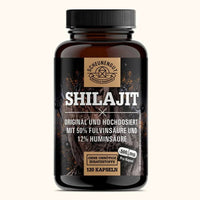
When it comes to actually taking it, many men rely on capsules, since they provide a consistent, defined amount and are uncomplicated in daily life — no weighing, no distinctive taste from the resin. You'll find guidance on sensible, moderate use in our guide Shilajit: Intake & Dosage. If you'd like to go straight for a properly tested product: with us, you can get our lab-tested Mumijo Shilajit (50% fulvic acid) in a convenient capsule form.
Frequently Asked Questions
Does Shilajit raise testosterone levels?
There's no approved EU claim for that, so we deliberately don't state it. The only nutrient with an official link to testosterone is zinc: "Zinc contributes to normal testosterone levels in the blood." This claim applies to zinc, not to Shilajit.
So why is Shilajit so popular among men?
Because the resin has traditionally been linked to strength and vitality in Ayurveda for centuries and is classified there as a Rasayana. This long tradition and its characteristic fulvic acid profile make Shilajit interesting in the men's segment — not a proven testosterone effect.
Does Shilajit contain zinc?
Shilajit brings a broad spectrum of trace elements, but not in an amount that would justify the approved zinc-testosterone claim. If you want to specifically take in zinc, treat that separately and focus on your zinc intake.
How can I recognise high-quality Shilajit?
By two things: independent lab testing for heavy metals and a transparently stated fulvic acid content. Fulvic acid is Shilajit's characteristic marker molecule and a good quality indicator. Without this evidence, you should be cautious with a natural resin.
What's the difference between Shilajit and Mumijo?
They're two names for the same mineral-rich natural resin from high-mountain regions. "Shilajit" comes from the Ayurvedic tradition, while "Mumijo" is the term more commonly used in Eastern Europe and Central Asia.
How do I take Shilajit?
Capsules are practical and popular because they provide a defined amount and avoid the resin's distinctive taste. Stick to moderate, sensible use — you'll find details in our guide to intake and dosage.
Health notice: This guide is for general information purposes only and does not replace individual medical or pharmaceutical advice. Food supplements are not a substitute for a balanced, varied diet and a healthy lifestyle. If you have health concerns, are pregnant or breastfeeding, or are taking medication, please consult a doctor or pharmacist. How our guides are created →