Buy Horse Chestnut – Standardised Extracts From Aesculus Hippocastanum
The horse chestnut (Aesculus hippocastanum) is a deciduous tree widespread across Europe. Its seeds are mainly used for extracts, containing the compound aescin, which belongs to the group of saponins – a mixture of various triterpene saponins. In this category you'll find horse chestnut supplements from Scheunengut, standardised to a defined aescin content, vegan and lab-tested.
Origin & Extraction
The ripe seeds of the horse chestnut serve as the raw material. They are dried and gently extracted to concentrate the plant compounds. Traditionally, the horse chestnut is cultivated and harvested as a plant across Europe.
Standardisation & Form
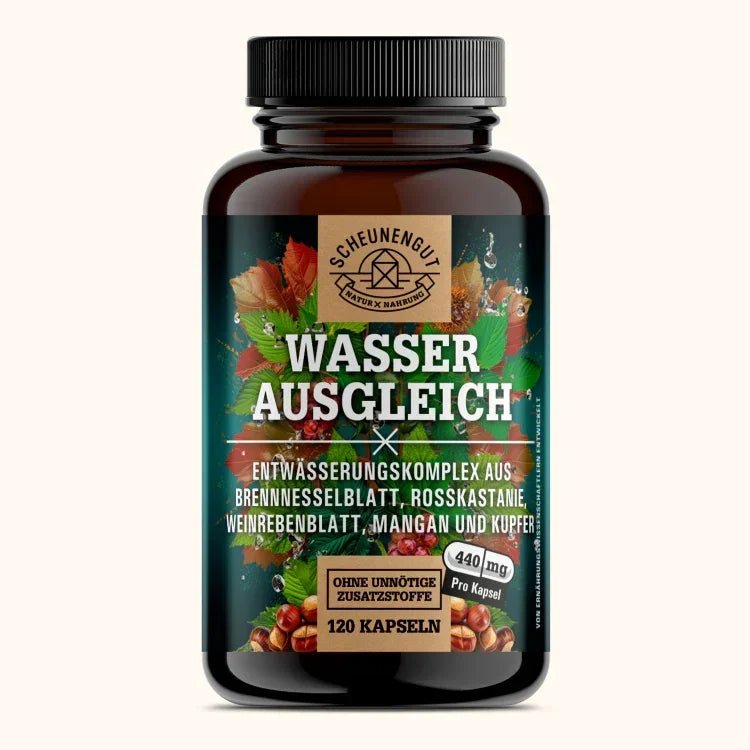
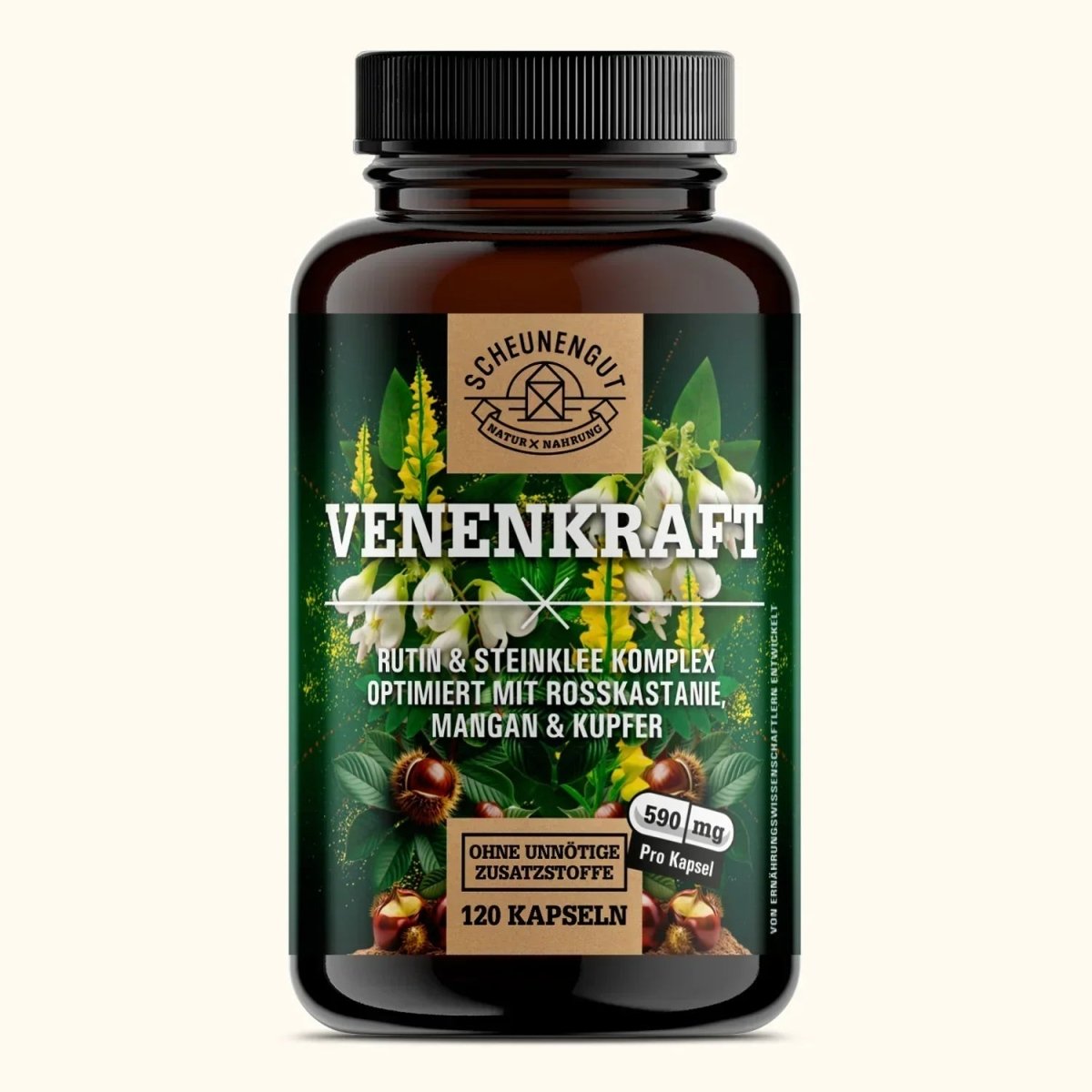
What matters is the standardised aescin content – high-quality extracts declare this transparently, often in the range of around 16 to 20%. Horse chestnut is available as capsules, powder or as part of complex formulas, for example combined with nettle or plant bioflavonoids such as rutin.
What to Look for When Buying
- Standardised, transparently declared aescin content
- Origin of the seeds and extraction method
- Vegan, free from unnecessary additives
- Independently lab-tested quality
Horse Chestnut at Scheunengut
We rely on standardised raw materials with clearly declared content. Related topics include plant polyphenols from grape seed as well as OPC. All products are bottled in Germany and lab-tested.