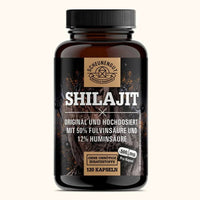
Our Andrographis extract is made from the Kalmegh herb and standardised to at least 10% andrographolides, its characteristic bitter compounds. 500 mg of extract per capsule, only two ingredients, every batch independently lab-tested. 153 customer reviews average 4.49 out of 5 stars.
Andrographis paniculata is known in its native regions as the “king of bitters” and ranks among the best-known herbs of Ayurveda and Traditional Chinese Medicine. Its characteristic compounds are the andrographolides – the namesake bitter compounds our extract is standardised to: guaranteed at least 10%, verified batch by batch in the lab. 153 customer reviews averaging 4.49 out of 5 stars speak for the quality. In this product spotlight, we show you what's behind our Kalmegh extract – from origin to production, right through to what actually matters when you buy it.
What Andrographis Paniculata Is
Andrographis paniculata is an annual, bushy-growing plant from the Acanthaceae family. It's native to the Indian subcontinent and large parts of South and Southeast Asia, from where it has spread to numerous tropical regions worldwide. In India and South Asia, the plant is known by the name Kalmegh.
Its nickname “king of bitters” is no exaggeration – it's a fairly accurate description. The leaves and herb of the plant rank among the bitterest used in herbal traditions anywhere. Typically, the whole above-ground herb is used. In Ayurveda and Traditional Chinese Medicine, Andrographis has long been one of the well-known herbs – we mention this here purely as cultural and historical context, not as a promise of effect for our product.
Botanically, Andrographis paniculata is an annual, heavily branched plant with four-angled, hairless stems that typically grows to around 50 centimetres tall. It favours seasonally dry, tropical habitats. The herb used for our extract comes from controlled cultivation.
Andrographolides: The Bitter Compounds Behind the Name
The characteristic constituents of Andrographis paniculata are the andrographolides – a group of diterpene lactones found mainly in the leaves and herb, responsible for the plant's intensely bitter taste. The andrographolide content is also the benchmark by which an extract's quality can be judged. Chemically, diterpene lactones belong to a larger group of plant bitter compounds also found in other herbs, though in Andrographis they occur in a composition typical of this particular plant.
That's exactly why reputable manufacturers standardise their extracts to a defined andrographolide content, rather than simply selling unstandardised plant powder with no percentage stated at all. This class of compounds has been studied for years in phytochemistry and pharmacology research – that research is ongoing, and its findings are not yet conclusively established. There is currently no authorised health claim in the EU for Andrographis as a botanical ingredient, which is why we deliberately keep our wording cautious here and make no promises of effect.
Our Extract: Production and Standardisation
Our extract is made from the whole herb of the plant. Extraction takes place in two stages: once with pure water for the water-soluble constituents, and once with food-grade alcohol for the fat-soluble ones. The alcohol fully evaporates afterwards. No chemical solvents are used, so the natural purity of the raw material is preserved. This two-stage method takes longer than a simple alcohol extraction, but it captures a fuller picture of the herb's constituents.
The dried extract is then filled into vegan capsule shells made from hydroxypropyl methylcellulose in Germany, under the corresponding requirements – standardised to a guaranteed content of at least 10% andrographolides. To back that up, we have both the raw material and the finished product of every single batch tested for purity and active-compound content in independent laboratories. The current lab report is on file, and we're happy to send a detailed analysis on request.
Composition: What's Inside Each Capsule
A daily dose of 2 capsules delivers 1000 mg of Kalmegh extract, standardised to 100 mg – that is, 10% – andrographolides. Per capsule, that's 500 mg of extract with 50 mg of andrographolides. The ingredient list is deliberately short: the Kalmegh extract itself, plus hydroxypropyl methylcellulose as a glazing agent – the plant-based, vegan capsule shell. The product contains no colourings, flow agents or fillers.
For nutrients with a defined EU reference intake, the nutrition table would show a percentage of the nutrient reference value (NRV). No such value exists for andrographolides, since they are not an essential nutrient but a plant bitter compound – so the table correctly shows a dash instead of a percentage.
Intake & Dosage
The recommended intake is 2 capsules daily, taken with sufficient liquid. The raw herb ranks among the bitterest plants used in herbal traditions anywhere – which is exactly why it comes in capsule form: you take the standardised extract without the full bitter taste in your mouth.
Do not exceed the stated daily amount. Store the capsules in a cool, dry place, protected from direct sunlight and heat, and out of reach of children. Food supplements do not replace a balanced and varied diet. If you are pregnant, breastfeeding, or taking medication on an ongoing basis, check with your doctor before use.
Who Our Kalmegh Extract Is For
This extract is for anyone who knows the bitter-compound tradition of Ayurveda and Traditional Chinese Medicine, or is curious about it, and wants a standardised, lab-tested extract rather than loose powder with no percentage stated. It's equally suited to anyone who values a short, transparent ingredient list: ours shows only the extract and the plant-based capsule shell.
It's also worth a look for anyone who already appreciates bitter compounds from the kitchen – think chicory, artichoke or wormwood – and wants to bring that same idea to a particularly bitter, standardised herb from Asian herbal tradition.
Honestly speaking: if you know the raw herb's pronounced bitterness and would rather avoid it, choosing the capsule over loose powder or tea is a deliberate choice. Our customer reviews confirm this – taste scores 3.92 out of 5, noticeably lower than tolerability (4.6) or quality (4.71). That's not a flaw in the capsule, it's simply an honest property of the raw material itself. This product is less suited to anyone looking for a flavour-neutral wellness ingredient with no bitterness at all. If you are pregnant, breastfeeding, or have a pre-existing condition or take medication regularly, check with your doctor first.
What to Look for When Buying Andrographis
The market for Andrographis products is confusing, because many packages reveal little about actual quality. Four points are worth a close look:
- Standardisation in percent: If a package just says “Andrographis powder” or “extract” with no percentage, you have no way of knowing how much of the namesake bitter compound is actually inside. Our extract is standardised to a guaranteed minimum of 10% andrographolides, and it's labelled accordingly.
- Short ingredient list: The fewer additives, the more transparent the product. Our capsules contain two ingredients – the extract and the plant-based capsule shell.
- Independent batch testing: Is testing done by spot check, or consistently, batch by batch? We have both the raw material and the finished product of every batch tested in independent laboratories for purity and active-compound content, and we make that report available.
- Capsule material: Vegan hydroxypropyl methylcellulose instead of gelatine – relevant for anyone eating plant-based, regardless of what's inside.
Origin is another useful clue: our production takes place in Germany under the corresponding requirements, from the dried herb right through to the filled capsule.
The Honest Assessment
There is currently no conclusively authorised health claim in the EU for Andrographis paniculata as a botanical ingredient – the regulatory assessment procedure for such botanical substances has been running for years and still isn't complete. Until it is, any statement about a specific effect in the body remains pure speculation, which is exactly why we don't make one here.
What we can back up instead: botanical origin, composition, the guaranteed andrographolide content, and independent batch testing. What many customers confirm in their reviews is, above all, quality (4.71 out of 5) and tolerability (4.6 out of 5) – the pronounced bitter taste (3.92 out of 5) is, to us, an honest part of that picture, not something to hide.
Frequently Asked Questions (FAQ)
What exactly is Andrographis paniculata (Kalmegh)?
Andrographis paniculata is an annual plant from the Acanthaceae family, native to the Indian subcontinent and large parts of South and Southeast Asia. In India it's known as Kalmegh, and its nickname “king of bitters” refers to the exceptionally bitter taste of its leaves and herb.
What are andrographolides?
Andrographolides are a group of diterpene lactones – the plant's characteristic bitter compounds and the benchmark reputable extracts are standardised to. Our extract guarantees at least 10% andrographolides, verified batch by batch in the lab.
What's in the extract, and what is it standardised to?
A daily dose of 2 capsules provides 1000 mg of Kalmegh extract, of which 100 mg (10%) are andrographolides. The ingredient list contains only the extract and the plant-based capsule shell made from hydroxypropyl methylcellulose – no additives, colourings or fillers. There's no EU nutrient reference value for andrographolides themselves, so the nutrition table correctly shows a dash.
How and how much of the extract should I take?
The recommended intake is 2 capsules daily with sufficient liquid. Don't exceed the stated daily amount, and store the capsules in a cool, dry place away from sunlight.
Does the extract taste bitter, even as a capsule?
The raw herb ranks among the bitterest plants used in herbal traditions anywhere – hence the nickname “king of bitters”. In our customer reviews, taste scores 3.92 out of 5, noticeably lower than tolerability or quality, but the capsule form makes taking it straightforward, without the full bitter taste in your mouth.
Who shouldn't take Andrographis?
If you are pregnant, breastfeeding, have a pre-existing condition, or take medication regularly, check with your doctor before use rather than relying on experience reports alone. Anyone looking for a flavour-neutral wellness ingredient with no bitterness at all is also better off elsewhere – this is a pure bitter-herb extract.
Health notice: This guide is for general information purposes only and does not replace individual medical or pharmaceutical advice. Food supplements are not a substitute for a balanced, varied diet and a healthy lifestyle. If you have health concerns, are pregnant or breastfeeding, or are taking medication, please consult a doctor or pharmacist. How our guides are created →
Sources
- Andrographis paniculata (Burm.f.) Wall. ex Nees — Royal Botanic Gardens, Kew – Plants of the World Online, 2026
- Andrographolide, diterpenoid constituent of Andrographis paniculata: Review on botany, phytochemistry, molecular docking analysis, and pharmacology — Annales Pharmaceutiques Françaises, 2024
- Health claims (Article 13) — European Food Safety Authority (EFSA), 2026
- Food Supplements – Questions and Answers — German Federal Institute for Risk Assessment (BfR), 2023