



For the prostate, men traditionally turn to saw palmetto, pumpkin seed, nettle root and the African plum tree. Zinc contributes to the maintenance of normal testosterone levels in the blood. The most important building block stays the urological check-up – no supplement replaces it.
In short: for the prostate, men have relied on four plants for generations – saw palmetto, pumpkin seed, nettle root and the African plum tree. Zinc contributes to the maintenance of normal testosterone levels in the blood. And the most important building block stays the urological check-up either way – no supplement replaces it.
Countless capsules, powders and big promises circulate around this topic. We clear that up and show you plant by plant what is really behind it. And which formula from our house bundles the classics in one capsule.
The prostate is a chestnut-sized gland directly below the bladder. It produces part of the seminal fluid and wraps around the urethra like a ring. When it changes with age – and in many men it does – you often notice it first when urinating, not at the gland itself. This position is exactly why we separate “supporting everyday life” so clearly from “getting it checked by a doctor” here: if changed tissue presses on the urethra, the cause belongs in expert hands. No wonder the topic comes onto the radar for many men from around their mid-40s.
- Saw palmetto, pumpkin seed, nettle root and the African plum tree are among the classics of men's health – traditionally used for generations.
- Zinc contributes to the maintenance of normal testosterone levels in the blood, contributes to normal fertility and normal reproduction, and contributes to the protection of cells from oxidative stress.
- With nettle, the root counts – not the leaf. When buying, a look at the label pays off.
- The most important building block stays the urological check-up – no supplement replaces it.
Saw palmetto: the classic among prostate plants
Saw palmetto (Serenoa repens) is the best-known plant when it comes to men's health in later years. The fruit of the palm is used – usually as an extract in capsule form. Traditionally, men turn to saw palmetto exactly when the prostate becomes a topic for them.
Ready-made complexes therefore often combine saw palmetto with other classics such as pumpkin seed or nettle root – a combination that has long been popular in men's health. With us it is called PROSTA INTENSO+: saw palmetto fruit extract 15:1 with 260 mg per daily serving of two capsules, the fruit is cultivated in Mississippi. A standardised extract tells you far more than the bare label “saw palmetto powder” with no further details.
Pumpkin seed: the everyday classic with a double benefit
You probably know pumpkin seeds (Cucurbita pepo) from the kitchen – as a supplement they usually come as an extract in prostate complexes, often combined with saw palmetto or nettle root. Pumpkin seeds also have a long tradition in men's health, whether as whole seeds in your muesli or as a concentrated extract in a capsule.
The bonus: pumpkin seeds also supply natural zinc. You get the traditional plant and a contribution to your daily zinc intake in one – it hardly gets more practical. For a practical everyday amount, most people still reach for the extract rather than eating large quantities of whole seeds. PROSTA INTENSO+ contains 500 mg of pumpkin seed extract 15:1 per two capsules, of which 225 mg are fatty acids, and the seeds come from Germany.
Nettle root: the root counts, not the leaf
With nettle (Urtica dioica) one detail matters: for men's health the root counts – not the leaf. Do not mix them up when buying: a tea made from nettle leaves serves a different purpose than an extract from nettle root.
The use of nettle root in men's health goes back a long way – much further than most modern supplements. That is why it has long been one of the traditionally used plants for this topic and is often combined with saw palmetto, pumpkin seed or zinc. Look for the word “root” on the label. Only then do you get the right part of the plant. Ours is nettle root extract 10:1 with 120 mg per daily serving, and the root comes from Germany.
What research shows so far
Put honestly: there are currently no EU-wide authorised health claims for saw palmetto, pumpkin seed and nettle root. That does not diminish their centuries-old tradition – it only means we do not promise you any effect here that has not been confirmed by the authorities. Research into their constituents continues, and that is a good thing: tradition and science do not rule each other out, they complement each other.
For zinc and selenium the situation is different. Zinc contributes to the maintenance of normal testosterone levels in the blood. Zinc contributes to normal fertility and normal reproduction. Zinc contributes to the protection of cells from oxidative stress. Selenium contributes to normal spermatogenesis, and selenium contributes to the protection of cells from oxidative stress. The same is true for vitamin E. These functions belong to the nutrients themselves, not to the prostate as an organ. In PROSTA INTENSO+ they sit alongside the plants: 5 mg zinc, 55 µg selenium and 12 mg vitamin E per two capsules.
Intake, dosage & everyday life
With herbal prostate products, transparency matters most. Look for a clear statement of the plant part used – with nettle it must be the root, not the leaf –, for a standardised extract instead of loose powder and for a comprehensible dosage per capsule. With combination products, every plant included should list its amount. Only then can products be compared seriously. The goal: you should know exactly what is in your capsule – not have to guess.
Just as important: everyday life. Exercise and a healthy body weight pay in more than any capsule. On top of that comes a balanced diet with plenty of vegetables and good fats, enough fluids with moderate alcohol (many deliberately drink less in the evening so they get up less often at night), not smoking and an eye on your stress level. A balanced diet also supplies zinc and selenium naturally: pumpkin seeds, nuts, wholegrain, fish and meat are good sources. If you take zinc at a high dose over the long term, also keep a sensible ratio to copper. A permanently high zinc intake can affect its absorption.
Put honestly: tradition does not replace check-ups
Saw palmetto, pumpkin seed and the like have a centuries-old tradition – that is a real value, and exactly why so many men reach for them. Just as honestly: tradition is valuable, but it does not replace a medical check.
Pay attention to your body's signals. You get up more often at night, the urine stream gets weaker, or the feeling of complete emptying is missing – these are typical first signs at which many men take the topic of the prostate seriously for the first time. For problems urinating, blood in the urine or pain, the rule is: see a urologist promptly, do not turn to the internet. Ignoring it helps nobody – acting early does. Attend the recommended check-ups from around the mid-40s – you discuss the exact rhythm individually with your doctor. Supplements can accompany your everyday life. They never replace the urological check-up.
Matching Products from Scheunengut
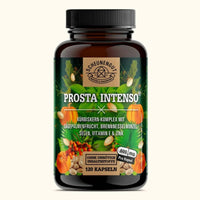
Our PROSTA INTENSO+ bundles the classics in one formula: saw palmetto fruit extract 15:1 (260 mg), pumpkin seed extract 15:1 (500 mg), nettle root extract 10:1 (120 mg), African plum tree extract (110 mg) and pine bark extract 25:1 (170 mg), plus zinc (5 mg), selenium (55 µg) and vitamin E (12 mg), all per daily serving of two capsules. Plum tree bark from Kenya, pine bark fresh from France, pumpkin seeds and nettle roots from Germany. Plant-based capsule shell, every batch tested in an independent lab, produced in Germany.
Prefer one without plum tree and pine bark? Then the pumpkin seed complex PROSTA INTENSO with saw palmetto fruit, nettle root, zinc and selenium is your pick, also two capsules a day. If you want to plan zinc in on purpose, reach for the Fadogia Agrestis power complex with 1,000 mg of fadogia extract 10:1 per daily serving, ashwagandha and zinc. And the Men's Power Trio set combines the prostate complex with maca, ginseng and selenium from Brazil nuts. Behind all of it stands the same attitude: Scheunengut has existed since 2012, without investors, with a focus on pure raw-material quality.
Frequently Asked Questions (FAQ)
Which plants are traditionally used for the prostate?
Four classics: saw palmetto (Serenoa repens), pumpkin seed, nettle root and the African plum tree (Pygeum africanum). All four have a long tradition in men's health and are still used in this context today.
What role does zinc play for men?
A central one. Zinc contributes to the maintenance of normal testosterone levels in the blood. Zinc contributes to normal fertility and normal reproduction. Zinc contributes to the protection of cells from oxidative stress. Selenium contributes to normal spermatogenesis. These functions relate to the nutrients themselves, not to a specific organ. Our PROSTA INTENSO+ contains both alongside the four plants.
What should I look for when buying herbal prostate products?
Three things: the plant part used (with nettle the root, not the leaf), a standardised extract instead of loose powder, and a transparent dosage. With combination products, every plant should list its amount so that you can compare products at all.
Do herbal products replace urological check-ups?
No. No food supplement replaces medical check-ups – not even a very long herbal tradition. Attend the recommended check-ups with a urologist and, for problems urinating, blood in the urine or pain, see a practice promptly.
From what age should I pay attention to the prostate?
Often from around the mid-40s the prostate changes with age – which is why regular urological check-ups are recommended from that age. You discuss the exact rhythm and start individually with your doctor.
Health notice: This guide is for general information purposes only and does not replace individual medical or pharmaceutical advice. Food supplements are not a substitute for a balanced, varied diet and a healthy lifestyle. If you have health concerns, are pregnant or breastfeeding, or are taking medication, please consult a doctor or pharmacist. How our guides are created →
Sources
- Urticae herba - herbal medicinal product (nettle herb, HMPC monograph) — EMA (European Medicines Agency) / HMPC, 2010
- How Can Nettles Be Processed? — Verbraucherzentrale Bayern (Bavarian Consumer Advice Center)
- A comprehensive review on the stinging nettle effect and efficacy profiles. Part II: Urticae radix — PubMed (Phytomedicine, Chrubasik et al.), 2007
- The Efficacy of Stinging Nettle (Urtica Dioica) in Patients with Benign Prostatic Hyperplasia: A Randomized Double-Blind Study in 100 Patien — PMC / Iranian Red Crescent Medical Journal, 2013