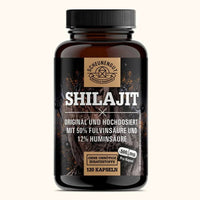
Shilajit (mumijo) is a mineral-rich natural resin containing fulvic acid and trace elements that has traditionally been used regardless of gender. Women look into it in connection with vitality, menopause, and skin and hair. There are no authorized EU health claims for this — we address this interest honestly and without making promises.
Shilajit has long been seen as a "men's topic" — yet more and more women are specifically searching for it. The reason: Shilajit (also known as Mumijo) is a mineral-rich natural resin from the high mountains of Asia that has been used in the Ayurvedic tradition for centuries, regardless of gender. Women are interested in it above all around the topics of vitality, general wellbeing, and the life phases where a lot changes. Honestly speaking: there are no approved health claims for Shilajit itself in the EU. What can be said factually is its traditional use and the strong search interest — and that's exactly what we lay out here clearly and without promises.
Why Shilajit Is in Demand Among Women Too
Anyone looking into natural substances sooner or later comes across Shilajit. For a long time it was seen mainly as something for men, but that falls short. In the Ayurvedic tradition, Shilajit was never tied to one gender — it was simply regarded as one of the most valuable natural resins there is. Today, women bring three main areas of interest to it: general vitality and everyday energy, the time around menopause, and the question of whether anything can be said about skin and hair.
These topics make sense, because they touch on life phases where many women pay closer attention to themselves. What matters to us here is an honest distinction: interest in Shilajit is real and rooted in tradition — but this expressly does not mean a medical effect against specific complaints. We explain in detail what Shilajit actually contains and where it comes from in our guide Shilajit — What Is It Good For?.
Traditional Context: What Shilajit Actually Is
Shilajit and Mumijo refer to the same thing: a dark, resin-like natural product that forms over very long periods of time in the rock crevices of high mountains. It's characterised by its content of fulvic acid and humic acid, along with numerous trace elements. Fulvic acid is the component that sets Shilajit apart from many other natural substances, and it's often cited as a quality marker.
In the Ayurvedic tradition, Shilajit was used across generations — as a natural resin credited with a high standing. This heritage is part of a thousands-of-years-old practice, but it doesn't replace a scientifically approved claim. That's exactly why we deliberately word things cautiously: we report on origin, composition, and tradition — not on healing effects. If you'd like to go deeper into the composition, you'll find the details under Shilajit, Mumijo & Fulvic Acid Explained.
Shilajit and Menopause — Looked at Honestly
"Shilajit menopause" is one of the most common searches from women on this topic — and we address it openly. Menopause is a natural life phase in which many women pay closer attention to diet, exercise, and wellbeing. That Shilajit comes into view here is down to its reputation as a traditional vitality resin and the growing interest in natural companions.
What we say very clearly here: there is no approved health claim stating that Shilajit works during menopause or influences the typical changes of this phase. Such promises would be disreputable — and we don't make them. What remains is the legitimate interest of many women in supporting themselves holistically during this time. If you're looking for well-founded suggestions for this life phase, you're better off with our dedicated guide Supporting Menopause Naturally — it covers everyday life, diet, and natural approaches, without empty promises.
Our position, then, is neither dismissive nor exaggerated: Shilajit is a traditionally used natural resin with fulvic acid and trace elements — we don't claim more than that, and we don't need to claim less either. This honesty is exactly what makes a good buying decision possible.
Skin & Hair: What Actually Matters With Nutrients
Searches like "Mumijo hair effect" and similar terms show how much skin and hair concern women. Here, a clean distinction is especially important — and it's also the most honest thing we can do. Because for Shilajit itself, there's no approved claim relating to skin or hair. Full stop.
But when it comes to nutrients that are actually permitted to be linked to skin and hair under EU rules, those are entirely different substances: zinc, biotin, and selenium have approved EU claims relating to the maintenance of normal hair and normal skin, respectively. It's important to note: these nutrients are not the characteristic components of Shilajit — Shilajit stands for fulvic acid, humic acid, and trace elements. So if you specifically want to do something for your hair, you should look into the right nutrients rather than approaching Shilajit with the wrong expectations.
That's exactly why we point you elsewhere here, honestly: everything about the relevant nutrients and their approved claims can be found in our guide Nutrients for Hair. That way, we don't mix together things that don't belong together — and you can make your decision on a clear basis.
Quality & Use: What Women Should Look For
If Shilajit interests you, quality is what decides everything. The market is confusing, and especially with a natural resin from the high mountains, it's worth taking a close look. Two things matter most: a traceable fulvic acid content and lab testing that proves purity and freedom from contaminants. Since Shilajit is a natural product, testing for heavy metals is especially important.
When it comes to actually taking it: less show, more substance. Capsules are practical because they deliver a consistent amount and are tasteless — a real advantage in daily life. If you prefer the classic resin form, dose it according to the manufacturer's instructions. Either way, a high-quality product with transparent labelling is always the better choice. You'll find a complete checklist under Buying Shilajit — What to Look For.
Our practical tip: look for suppliers who openly show lab results and state the fulvic acid content specifically, rather than advertising vaguely. If you buy on this basis, you get exactly what Shilajit traditionally stands for — a pure, tested natural resin. With that in mind, we recommend our lab-tested Mumijo Shilajit (50% fulvic acid) — transparently labelled and practical to use.
Frequently Asked Questions
Is Shilajit suitable for women too?
Shilajit is a traditionally used natural resin and was never tied to one gender in Ayurvedic tradition. Today, women are interested in it mainly in connection with vitality and wellbeing. This expressly does not come with a specific, gender-related healing effect.
Does Shilajit help with menopause?
No, we cannot and may not claim that. There are no approved health claims for Shilajit relating to menopause. The topic is searched for a great deal because many women want to support themselves holistically during this phase — you'll find more suggestions on that in our guide to menopause.
What's the difference between Shilajit and Mumijo?
There isn't one: Mumijo is simply another name for Shilajit. Both terms describe the same mineral-rich natural resin with fulvic acid, humic acid, and trace elements. "Mumijo" is used mainly in German- and Russian-speaking regions.
Can Shilajit do anything for skin and hair?
There's no approved claim for Shilajit itself relating to skin or hair. Nutrients with recognised EU claims in this area include zinc, biotin, and selenium — though these aren't the characteristic components of Shilajit. If you want to specifically support your hair, look into these nutrients instead.
What makes fulvic acid so special in Shilajit?
Fulvic acid is one of the characteristic components of Shilajit and is often used as a quality marker. A high, transparently stated fulvic acid content points to a high-quality product, ideally paired with lab testing for purity.
What should women look for when buying Shilajit?
What matters most is a traceable fulvic acid content and lab testing that proves purity and freedom from contaminants — especially important for a natural product from the high mountains. Suppliers who openly share lab results are preferable. You'll find a detailed checklist in our buying guide.
Health notice: This guide is for general information purposes only and does not replace individual medical or pharmaceutical advice. Food supplements are not a substitute for a balanced, varied diet and a healthy lifestyle. If you have health concerns, are pregnant or breastfeeding, or are taking medication, please consult a doctor or pharmacist. How our guides are created →