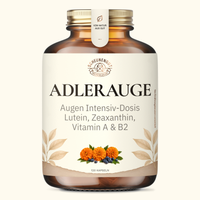
Zeaxanthin
Buy Zeaxanthin – Carotenoid from Marigold & Algae
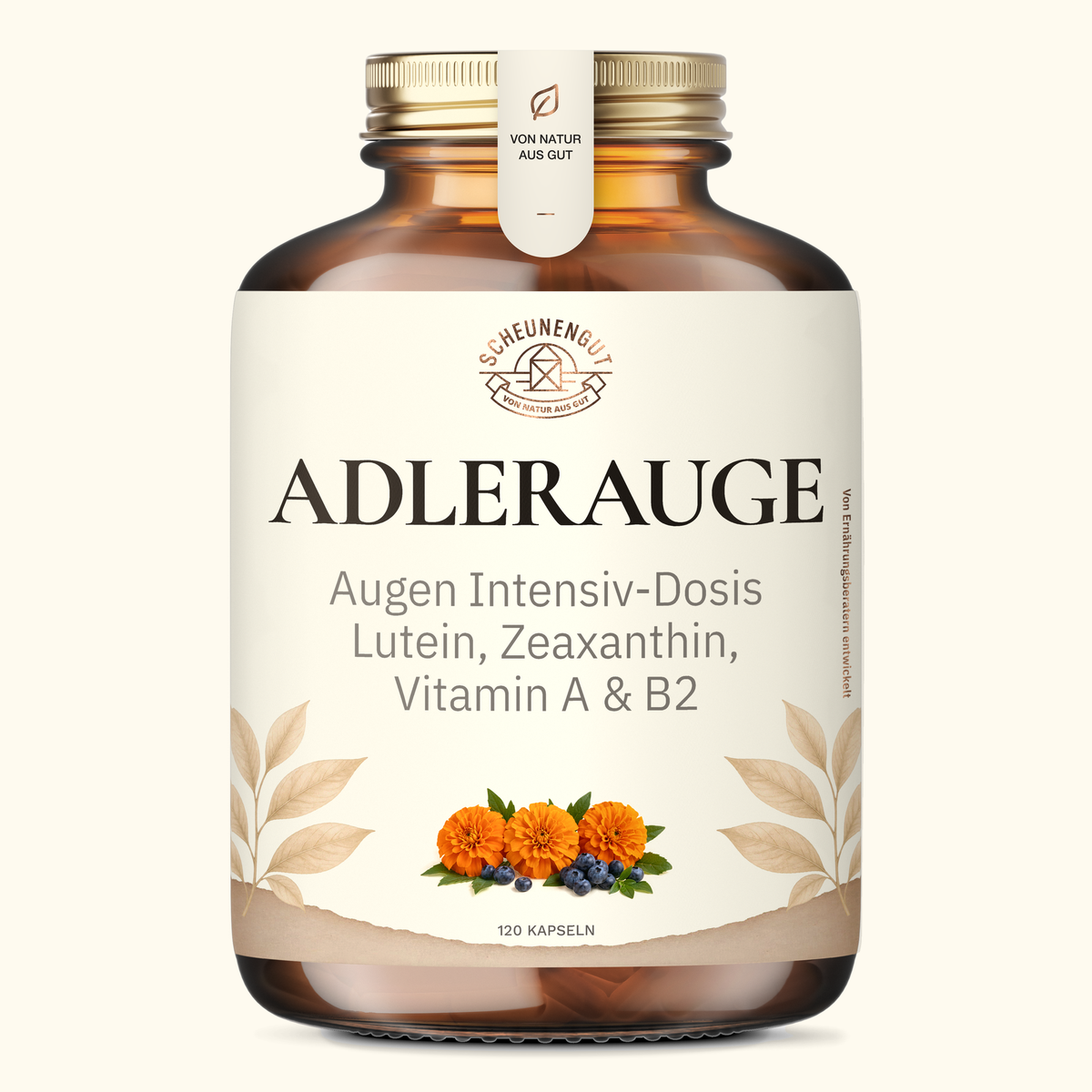
Zeaxanthin belongs to the xanthophyll group and is therefore one of the oxygen-containing carotenoids – yellow-orange plant pigments that count among the secondary plant compounds. Chemically, it is closely related to lutein and occurs naturally in many yellow and green plants as well as in the retina of the human eye. In this category you will find zeaxanthin products from Scheunengut – standardized to a defined content, vegan and lab-tested.
Origin & Extraction
Zeaxanthin is obtained mainly from the flowers of Tagetes (marigold) as well as from certain microalgae. The carotenoids are gently extracted from the plant material and then adjusted to a defined zeaxanthin content.
Standardization & Form
What matters is the standardized content, usually stated in milligrams per capsule. Zeaxanthin is mostly available as a capsule or softgel, often combined with lutein in the typical ratio. Combinations with astaxanthin and vitamin A are also common.
What to look for when buying
- Standardized, transparently declared zeaxanthin content in mg
- Origin from algae or Tagetes flowers
- Vegan, without unnecessary additives
- Independently lab-tested quality
Zeaxanthin at Scheunengut
We rely on standardized raw materials with clearly declared content. Thematically related is our category Eyes, Mouth & Teeth. All products are bottled and lab-tested in Germany and Europe (incl. Switzerland, Austria).

Häufige Fragen zu Zeaxanthin
What is zeaxanthin important for?
Zeaxanthin is a yellow-orange carotenoid that occurs naturally in the retina of the human eye, particularly in the area of sharpest vision. Together with its close relative lutein, it belongs to the xanthophylls, which people specifically obtain through their diet. This is why zeaxanthin is a popular ingredient in supplements related to the eyes.
What is zeaxanthin derived from?
Zeaxanthin is mainly obtained from marigold flowers (Tagetes) and from certain microalgae. The carotenoids are gently extracted from the plant material and then adjusted to a defined content. At Scheunengut, this makes our zeaxanthin standardized, vegan, and lab-tested, so you get a consistent amount in every capsule.
What's the difference between zeaxanthin and lutein?
Both are xanthophylls and are chemically closely related, differing only in the position of one double bond. In the eye, they settle in different zones of the retina, which is why they're often offered together. Many products combine lutein and zeaxanthin to cover both carotenoids in a sensible ratio.
What should I look for when buying zeaxanthin?
The standardized content, usually stated in milligrams per capsule, is what matters most. Look for a transparent declaration and a traceable origin from marigold or algae. Our zeaxanthin products are set to a defined content, vegan, and lab-tested, so you know exactly how much of the carotenoid you're taking.
Related guides for Zeaxanthin
Well-founded knowledge from our editorial team – free to read.