



Silymarin is the active complex from milk thistle fruits, led by silibinin. Antioxidant properties are described, and the plant is traditionally valued around liver and digestion. Because silymarin dissolves poorly in water, a standardised extract delivers far more than tea; what matters is the silymarin content per capsule.
Silymarin is the active complex from the fruits of milk thistle, led by silibinin, which according to a review makes up roughly 50 to 60% of the complex. The plant has been valued since antiquity around liver and digestion, and that is exactly why a close look at what is in the capsule pays off. Silymarin dissolves poorly in water, so a tea releases little of it, whereas a standardised extract delivers a fixed, comparable amount. For you as a buyer, one number counts in the end: how much silymarin per capsule is printed on the label.
Silymarin effects: what the complex is and what is known about it
Behind the name silymarin there is no single substance but a bundle of closely related flavonolignans, which besides the lead compound silibinin, also called silybin, includes silychristin and silydianin, and extracts are standardised on exactly this complex, which is what makes products comparable in the first place, whether they come from Greece or Italy. Nothing more is needed for that.
What research describes about silymarin can be put in plain language. The complex scavenges free radicals, stabilises cell membranes and can stimulate the body's own production of glutathione, the protective compound the cells make themselves. These are properties of a plant compound, not promises for particular complaints, and that is exactly how we classify them, namely as the basis for silymarin ranking among the most thoroughly studied plant compound complexes in Europe for decades. That is enough. A review also describes the side effects as rare and mild, mainly headaches, itching or a slight laxative effect.
Milk thistle effects in tradition: origin and use
Milk thistle (Silybum marianum) belongs to the daisy family and comes from the Mediterranean region and western Asia. It grows up to 1.5 metres tall with white-veined leaves and purple-red flower heads, and it is the small, hard fruits that are used, commonly called "seeds". The plant owes its German name to an old legend linking the white leaf veins to the Virgin Mary. A nice story.
For centuries it has grown in monastery gardens alongside other bitter plants such as artichoke and dandelion. The European Medicines Agency describes a traditional use of milk thistle fruits around digestion and liver function, based on long-standing use. For us the plant is therefore not a novelty on the shelf but one of the longest-known liver plants in Europe. Its family of bitter compounds, which also includes artichoke and dandelion, has become rare in modern, sweetness-driven cooking, while the silymarin complex in the fruits can be measured precisely.
Four terms are easily confused:
- Milk thistle: the whole plant (Silybum marianum).
- Milk thistle fruits: the part of the plant used, commonly called "seeds".
- Silymarin: the complex of flavonolignans from the fruits.
- Silibinin (silybin): the main component of the silymarin complex.
How much silymarin arrives? Tea, powder and extract compared
Silymarin is lipophilic and dissolves poorly in water. A brewed tea from crushed fruits therefore releases only a small share of the plant compounds, while a powder from ground fruits delivers the full fruit content with fibre and oil but no fixed silymarin amount. A standardised extract, by contrast, concentrates the complex to a declared share. Extract beats tea.
Inside the body, too, there is only half the story: according to a review, about 20 to 50% of the silymarin crude extract taken is absorbed in the digestive tract, silibinin reaches its peak in the blood after two to four hours and has a half-life of about six hours, and roughly 80% of it leaves the body again via the bile, with part of it returning through the gut. Methods such as micronisation and phospholipid complexes are used to improve absorption. The silymarin content of the fruits themselves also varies with variety, growing region, harvest time and storage, which is exactly why you are groping in the dark when you compare without a percentage figure.
How much silymarin per day? The dose at a glance
Most studies used 140 mg of silymarin three times a day, so 420 mg daily; the recommended daily amounts of individual products range from 420 to 600 mg according to the review. Our extract deliberately sits above that. One capsule contains 500 mg of milk thistle extract 25:1, of which 80% is silymarin, which is 400 mg of silymarin per capsule.
At the recommended serving of two to three capsules daily you reach 800 to 1,200 mg of silymarin. The 180 capsules in a tin last 90 days at two capsules and 60 days at three. How much fits your day is up to you, with the manufacturer's instruction on the pack remaining your yardstick, and a higher amount promises no extra benefit but only empties the tin faster.
Buying milk thistle extract: how to recognise quality
Two bags of ground fruits that look identical can contain very different amounts of flavonolignans. A standardised extract solves exactly this problem, because it is set to a fixed silymarin share so that every batch stays comparable. The same goes for other plant extracts such as turmeric, OPC or ginseng, and once you have understood that, you read the labels of plant supplements with very different eyes. One example: "500 mg milk thistle" sounds like a lot but says nothing about the silymarin share, whereas "500 mg extract with 80% silymarin" names 400 mg of the lead complex.
- a clear botanical name (Silybum marianum),
- declared silymarin content in percent and in milligrams per serving,
- extract ratio, such as 25:1, and the origin of the raw material,
- laboratory testing of every batch for purity and content,
- for capsules, an extract base rather than plain powder filling.
Taking it in practice: when and how to take milk thistle
Because silymarin likes fat, you take the capsules best after a meal containing some fat, with plenty of liquid. There is no fixed "morning or evening"; regularity and tying it to a meal are what count. Milk thistle is traditionally often combined with bitter plants such as artichoke and dandelion, so keep an eye on the total number of supplements you take.
In everyday life that means: if you barely eat breakfast, take the capsules with lunch, if you eat a hot meal in the evening, take them with that, and if you choose three capsules, spread them over two meals rather than swallowing everything at once.
If you take medication regularly, are pregnant or are breastfeeding, talk about taking it with your doctor or pharmacist beforehand. The same applies to a known allergy to the daisy family, to which milk thistle belongs. A short conversation is enough.
Milk thistle or artichoke? Why the two go well together
Artichoke brings cynarin and bitter compounds, milk thistle brings silymarin, and both belong to the classic bitter plants of European herbal tradition. If you want to combine them, you do not need to stack two supplements and set up a small pharmacy on the kitchen table every morning, because both plants are available together in one capsule. What matters is that the amount of every ingredient is on the label and not just a name in the ingredients list.
Matching Products from Scheunengut
Our milk thistle extract from Greek seeds is standardised to at least 80% silymarin, concentrated 25:1 and dual-extracted, once with water and once with food-grade alcohol. It comes in vegan capsules, without additives, colourings or fillers and without chemical solvents, and we have every batch tested in a laboratory. With 400 mg of silymarin per capsule the bar is set high. Many other labels lack exactly this percentage figure.
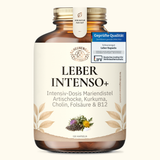
If you would like to pair milk thistle with further traditional bitter plants, there are two complexes. Leber Intenso bundles 600 mg of milk thistle extract (480 mg silymarin) in two capsules with artichoke, dandelion root and desmodium, vegan, with 180 capsules per tin. Leber Intenso+ adds turmeric extract, 100 mg of choline, which contributes to normal liver function and to normal lipid metabolism, as well as folic acid and vitamin B12. Behind all three stands a manufacturer that has existed since 2012, without investors and with a focus on pure raw material quality, with production in Germany and Europe (incl. Switzerland, Austria).
Frequently Asked Questions (FAQ)
What is the difference between milk thistle and silymarin?
Milk thistle is the whole plant (Silybum marianum). Silymarin is the active complex from its fruits, a bundle of flavonolignans with silibinin (silybin) as the main component. Extracts are usually standardised to their silymarin content.
What effect is silymarin said to have?
Antioxidant properties are described, such as scavenging free radicals and stabilising cell membranes. Traditionally, milk thistle is valued around liver and digestion. There are no promises for individual complaints; this is a well-studied plant compound.
Is milk thistle tea or an extract the better choice?
Silymarin is poorly soluble in water, so only a small share of the plant compounds passes into the tea. A standardised extract delivers a clearly higher, well-defined silymarin content, is easy to compare and easy to dose, without you having to count teaspoons or watch the brewing time. Tea remains the traditional, milder option for anyone who enjoys the ritual.
What should you look for in terms of quality?
The botanical name Silybum marianum, a declared silymarin content, a stated extract ratio, traceable origin and independent laboratory testing. For capsules, a standardised extract base counts for more than plain powder.
How much silymarin do you take per day?
Studies mostly used 140 mg three times a day, so 420 mg. Our capsule contains 400 mg of silymarin, so two to three capsules daily give 800 to 1,200 mg. The figure on the pack remains your yardstick.
How and when is milk thistle extract best taken?
After a meal containing some fat, because silymarin likes fat. There is no fixed "morning or evening"; regularity is what counts. If you combine milk thistle with other bitter plants, keep an eye on the total number of your supplements.
Can you take milk thistle alongside medication?
Plant compounds can interact with medication. Discuss taking it alongside medication, as well as use during pregnancy and breastfeeding, with your doctor or pharmacist beforehand.
Health notice: This guide is for general information purposes only and does not replace individual medical or pharmaceutical advice. Food supplements are not a substitute for a balanced, varied diet and a healthy lifestyle. If you have health concerns, are pregnant or breastfeeding, or are taking medication, please consult a doctor or pharmacist. How our guides are created →
Sources
- Does milk thistle help with fatty liver? — Verbraucherzentrale, 2026
- Silybi mariani fructus - herbal medicinal product — European Medicines Agency (EMA/HMPC)
- Impact of Silymarin Supplements on Liver Enzyme Levels: A Systematic Review — PubMed (Cureus, systematic review), 2023
- Silymarin: Unveiling its pharmacological spectrum and therapeutic potential in liver diseases—A comprehensive narrative review — PMC / Food Science & Nutrition, 2024