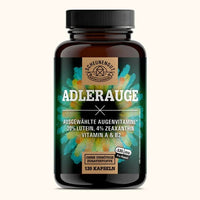
Taking your supplements reliably on the go comes down to three things: a weekly pill box instead of several large containers, solid forms like capsules and tablets instead of drops and powders, and anchoring the habit to something you do every day, like breakfast or your first coffee. Even on the go, store everything cool and dry, and never leave it in a hot car.
You know the situation: the tin sits on the shelf at home – and you're at the office, on the train or in a café. Between appointments, changing meals and journeys, your usual intake is the first thing to fall by the wayside. In the evening the half-emptied tin is still where it stood in the morning. Yet it is precisely regularity that decides the benefit of almost every preparation.
The short answer: anyone who wants to take supplements reliably on the go relies on three things – a weekly box instead of several large tins, solid dosage forms such as capsules and tablets instead of drops and powder, and a firm coupling to an everyday anchor such as breakfast or the first coffee. The rest is preparation: five minutes once a week.
The essentials in brief
- A weekly box makes intake on the go plannable and saves space.
- Solid forms (capsules, tablets) are more travel-friendly than drops and powder.
- Couple the intake to a fixed everyday point – that beats any resolution.
- Store cool and dry on the go too – don't leave it in the hot car.
- Always carry a small reserve to react to changed plans.
The right dosage form for on the go
Not every form is equally suited to mobile everyday life. Capsules and tablets can be pre-dosed, need little space and don't leak. Powder requires a shaker and liquid, drops can leak and fall under the 100 ml rule on flights. Anyone who has the choice reaches for solid forms when out and about – that doesn't mean you have to give up your favourite powder at home, but for the backpack the capsule is simply more practical. The differences are explored in Capsule, tablet, powder or drops.
| Form | Suitability on the go | Note |
|---|---|---|
| Capsule / tablet | very good | pre-dosable, leak-proof |
| Powder | limited | shaker and liquid needed |
| Drops / liquid | limited | risk of leaking, 100 ml rule on flights |
Using pill boxes correctly
The weekly box with daily compartments is probably the most practical aid of all: fill it once a week, and carry only a small container on the go – instead of several large tins. For individual days, a small, resealable tin is enough. What matters is dry storage, because in open compartments preparations are less protected from moisture than in the original tin with a desiccant. Anyone taking several preparations at different times keeps an overview with an intake plan and fills the box accordingly.
Anchoring the intake firmly in your day
The most common reason for forgetting is a missing routine – not a lack of will. That's why the trick of coupling the intake to an existing anchor point works: breakfast, the first coffee at the office, brushing your teeth. This habit coupling is considerably more reliable in everyday life than the resolution to „just remember“. Some preparations are ideally taken with a meal, others on an empty stomach – that depends on the substance. Whether morning or evening suits better is clarified in Intake rhythm: morning or evening; for combinations, Combining supplements correctly helps.
Storage on the go
Even on short journeys: heat and humidity are the biggest enemies. The shelf in the sunny car, a trouser pocket on a hot day, or the damp compartment in a sports bag are bad places. Better are an inner pocket in the backpack or the glove compartment in the shade. For longer stays in warm regions, it's worth looking at Storing supplements correctly in summer and Shelf life & storage.
Typical situations and matching solutions
- Office routine: small daily tin in the desk drawer, intake at the lunch break.
- Commuting: weekly box in the backpack, intake following a fixed routine at home or at the workplace.
- Short trip: daily requirement plus reserve, prefer solid forms.
- Sport and outdoor: details in Nutrients for hikers and outdoor.
Anyone who travels a lot will find further suggestions in Nutrients for frequent travellers and Supplements for the travel first-aid kit. To avoid typical pitfalls, Common mistakes with supplements is worthwhile.
Don't forget water – and what to do if you miss a dose
An often overlooked point: the liquid for taking them. Capsules and tablets should be swallowed with plenty of water, so they slide down well and dissolve in the stomach. A water bottle in your bag makes intake easier and at the same time supports your general fluid intake, especially on hot days. Don't force preparations down with just a sip of coffee – why that isn't a good idea depends on the substance; a good approach is shown in Coffee and supplements. And if an intake does get missed once: no cause for concern. With most preparations, regularity over weeks counts, not the single day. Don't take the forgotten portion twice over, but simply continue as normal the next day.
Create order and prepare cleverly
Anyone taking several preparations easily loses track in their luggage. A small, labelled pouch just for the supplements creates order and saves searching. The combination of a weekly box for everyday life and a small reserve in original packaging, in case plans shift, is practical. The real key, however, lies in preparation at home: take five minutes once a week, fill the box and stock the backpack – ideally on a fixed weekday like Sunday evening, coupled to an existing routine. This turns the good resolution into a habit that holds even on stressful days.
Matching guides and categories from Scheunengut
Compact, solid preparations are suitable for on the go. In Vitamins, minerals & trace elements you'll find many capsules and tablets to pre-dose, and for the daily base the Multivitamin area is worthwhile. You can go deeper with Capsule, tablet, powder or drops, Creating an intake plan, Intake rhythm: morning or evening, Common mistakes and Supplements for beginners. All Scheunengut products are made in Germany and lab-tested.
Frequently asked questions (FAQ)
How do I take supplements reliably on the go?
With three building blocks: a weekly box instead of several large tins, solid forms such as capsules and tablets, and a firm coupling to an everyday anchor such as breakfast or the first coffee. The preparation at home – five minutes once a week – is the real key.
Which dosage form is best suited for on the go?
Capsules and tablets. They can be pre-dosed, need little space and don't leak. Powder requires a shaker and liquid, and drops can leak and fall under the 100 ml rule on flights.
What do I do if I forget to take them on the go?
No cause for concern: with most preparations, regularity over weeks counts, not the single day. Don't take the forgotten portion twice over, but simply continue as normal the next day.
How do I store my preparations correctly on the go?
Cool and dry, away from heat and humidity. Avoid the sunny car, a trouser pocket on a hot day and damp sports-bag compartments; better are an inner pocket in the backpack or the glove compartment in the shade.
Health notice: This guide is for general information purposes only and does not replace individual medical or pharmaceutical advice. Food supplements are not a substitute for a balanced, varied diet and a healthy lifestyle. If you have health concerns, are pregnant or breastfeeding, or are taking medication, please consult a doctor or pharmacist. How our guides are created →
Sources
- Reference Values for Nutrient Intake — German Nutrition Society (DGE)
- BfR Questions and Answers on Food Supplements — German Federal Institute for Risk Assessment (BfR)
- Using Food Supplements Correctly — Verbraucherzentrale
- Micronutrients – When Is It Too Much? — Verbraucherzentrale