



Most of the time it comes down to the dose. The number on the label isn't a recommendation but a lower limit — it has to legally fit everyone, from the 50-kilo person to the 110-kilo person. With most products you can feel your way up: one capsule for 7 to 10 days, observe, then two.
You've been taking it for three weeks. Faithfully, every day, exactly as the tin says. And you notice: nothing. Before you shove the product into the back of the drawer — there's a reason this happens so often, and it's printed right on the pack. The number in the intake recommendation isn't a recommendation in the proper sense. It's a lower limit. You are very likely taking too little. And that is only one of eight reasons we'll go through here.
The most important number on the tin is the most cautious one
When our tins say "1 capsule daily", that doesn't mean "1 capsule is optimal". It means: At 1 capsule daily, we as the manufacturer guarantee safety — for everyone.
And that "for everyone" is the whole secret. This one number has to work for the 50-kilo woman and the 110-kilo man. For the 25-year-old and the 78-year-old. For people who take nothing else, and for those who already have three other supplements in the cupboard. For the perfectly healthy and for people with pre-existing conditions.
One number. For all. If you're looking for a recommendation that fits such different people at once, you inevitably end up right at the bottom. There's no other way — and we are legally required to calculate exactly like this.
The result: a figure that sits at the lower end for most people. It's the number at which nothing can go wrong — not the one at which the most happens. Anyone who takes it for the optimal dose has misunderstood its purpose. And then, well, notices nothing.
This is how you find your dose
With almost every food supplement you can dose individually — depending on your goal, your body and what you notice. That's not a grey area, it's the normal case, and it's the most common approach among our customers.
Here's how to go about it:
- Start with one capsule — for 7 to 10 days. Not two days. Your body needs the time, and you need it to judge at all whether anything is happening.
- Observe. Not with a magnifying glass, but across the week. What's different from before? What isn't?
- Then two capsules — again 7 to 10 days. And observe again.
- That's how you feel your way up until you notice where your point is, the point at which more brings nothing more.
- Write it down. Sounds fussy, but it's the difference between "I think it was better" and an answer. Three keywords a week in your notes app are enough.
The mistake almost everyone makes: they change two things at once or switch products after five days. Then you know nothing afterwards. One change. Seven to ten days. Observe.
But: for these substances the limit is real
Now the part we won't leave out — because "the recommendation is conservative" doesn't apply to everything. With some nutrients there's a real upper limit, and it's not a precaution but a limit.
The difference is simple: Water-soluble things your body doesn't need, you excrete. Fat-soluble vitamins and minerals accumulate. That's why for these, stay with the recommendation instead of experimenting.
- Vitamin D: Here your blood level sets the direction, not a blanket number. Have your 25-OH-D value measured, base the dose on it and measure again after a few months. Count the amount from all sources together and include your multivitamin. More on this in D3 + K2: How Much You Really Need.
- Zinc: Permanently high amounts affect the copper balance. More isn't better here, but at some point a problem.
- Selenium: The gap between sensible and too much is smaller with selenium than with almost anything else. Hands off high doses.
- Vitamin A: Fat-soluble, gets stored. Especially relevant if you stack several supplements.
- Iron: Not a substance to experiment with. Iron should be dosed when a blood test has shown that you need it — not on suspicion.
The rule of thumb: With plant extracts, amino acids and water-soluble vitamins you can feel your way up. With vitamin D you go by your blood level; with vitamin A, zinc, selenium and iron you stick to the stated amount. And if you take medication or a condition is in question, that's a matter for your doctor anyway — not for a guide.
The other seven reasons why you notice nothing
The dose is the most common reason. But not the only one. Go through this list before you give up on the product:
1. You gave up too early
You notice some things in days. Others fill a store over weeks that has been empty for years. Anyone who judges after ten days is, for many substances, simply judging too early. With iron, for example, it takes weeks to months before anything happens to the store — you can read about it in How Fast Does Iron Work for Iron Deficiency?.
2. You take it without fat
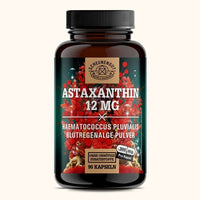
The most expensive mistake of all, and the most common one among morning swallowers. Vitamin D, vitamin K2, astaxanthin, lutein — all fat-soluble. Swallowed on an empty stomach with a glass of water, a good part of it never arrives. A spoonful of olive oil is enough, you don't need a fatty meal. Accordingly, you take our Vitamin D3 Depot + K2Pure® with a meal containing a little fat, one tablet every five days. The details are in Astaxanthin & Lutein: A Spoonful of Oil Gets More Out.
3. You wash it down with coffee
This mostly affects iron: the tannins in coffee and black tea bind it directly in the gut. A glass of water instead of the cup — and most of the problem is gone. Our iron bisglycinate with natural vitamin C is one tablet daily with a meal, taken with water instead of coffee. More on this in Iron and Coffee: How Your Iron Really Gets Absorbed.
4. You compare the wrong number
The classic with magnesium: "400 mg magnesium citrate" is not 400 mg magnesium. It's around 65. The rest is the partner the magnesium is attached to. Anyone who takes the big number on the front for the active substance may have been taking a fraction of what they believe for months. Always look for the elemental content per daily dose. With our Magnesium Complex it's right up front: 400 mg elemental magnesium in the daily dose of two capsules.
5. The product lacks the key ingredient
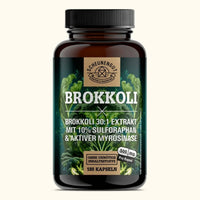
Best example broccoli: the sulforaphane you buy the capsule for isn't in there at all — only its precursor. Only the enzyme myrosinase turns it into sulforaphane, and many manufacturers leave it out. Without the enzyme you're buying a semi-finished product cheaply. You can read about it in Pomegranate & Broccoli: What Really Matters When Buying.
6. Your body makes something different out of it than your neighbour's
With pomegranate, your gut bacteria decide what becomes of the extract — and not everyone can do that equally well. Same preparation, two people, two different results. That's not down to the product, and no higher dose changes it.
7. You have the wrong expectation
Food supplements aren't a switch. Anyone expecting the aha moment an espresso delivers will be disappointed — even with a perfectly dosed, excellent product. Much of it works quietly, over weeks, and shows itself more in something not happening. That's not a consolation prize but an honest statement: if you're looking for an immediate, noticeable change, food supplements are rarely the right place for it.
What to look for when buying
If you want to readjust after all this, it's not the tin that decides but what's inside:
- The elemental content, not the compound. With minerals the only number that counts. If it isn't stated anywhere, that's an answer too — put the pack back.
- The form. Bisglycinate instead of sulphate, MK-7 instead of MK-4, sprout extract instead of powder. The form often decides more than the amount. Our magnesium bisglycinate and the K2Pure® in the Vitamin D3 Depot bank on exactly this.
- Enough room to feel your way up. A product whose recommended dose already uses up the maximum leaves you no room. One with a sensible capsule size does.
- Lab-tested, per batch. The proof that the number on the label is also in the capsule. For something you take every day, that's the minimum.
- An intake recommendation that also states the rhythm. "5,000 IU" on the front tells you nothing unless it also says at what interval.
Honestly put into context
Can it also be that a product simply does nothing for you? Yes. Not every substance does something for every person, and we won't tell you that every capsule works for everyone if only you dose it right. That would be a lie.
What we can tell you: the vast majority who say "it doesn't work" have one of the eight causes above — and the most common is the dose, because the number on the label systematically sits at the lower end. Before you write a product off, you've tested it fairly if you've taken a sufficient dose for long enough, with the right meal and without coffee on top. Before that, you simply don't know.
And if you're unsure whether you're lacking anything at all: a blood count costs little and ends the guessing. That applies especially to iron, vitamin D and B12 — where measuring makes more sense than trying. If you take medication or have a condition, it should be discussed with a doctor anyway.
Matching Products from Scheunengut
The Magnesium Complex states the number that matters: 400 mg elemental magnesium in the daily dose of two capsules, from four sources (tri-magnesium dicitrate, magnesium oxide, magnesium malate and magnesium bisglycinate). High-dose and easy to check by calculation. Magnesium contributes to normal muscle function and to the reduction of tiredness and fatigue.
If you prefer a single form, take the Magnesium Bisglycinate: chelated, vegan and gentle on the stomach, with 360 mg elemental magnesium in three capsules, taken with meals. Without additives, colourings or fillers.
With the Vitamin D3 Depot + K2Pure® we state not only the 5,000 IU (125 µg) per tablet but also the rhythm: one tablet every five days, which works out at 25 µg a day. On top come 100 µg vitamin K2 (MK-7). A tin of 180 tablets lasts 900 days. Vitamin D contributes to the maintenance of normal bones and to the normal function of the immune system. Not suitable for pregnant or breastfeeding women, children and adolescents.
If you need iron after the blood test, you get it in the Iron Bisglycinate with Natural Vitamin C: the iron is bound as a chelate to the amino acid glycine and is well tolerated, and the vitamin C comes from rose hip. One tablet daily with a meal. Iron contributes to the reduction of tiredness and fatigue. Vitamin C increases iron absorption.
Scheunengut has existed since 2012, without investors and with a focus on pure raw-material quality. Every batch goes through the lab so that the label says what is in the capsule. Checking the maths is expressly welcome.
Frequently Asked Questions (FAQ)
May I take more than it says on the pack?
With most products yes — and most of our customers do exactly that. The figure on the label is the amount for which we guarantee safety for everyone, regardless of age, weight or history. That is why it sits at the lower end. The exception is fat-soluble vitamins and minerals such as zinc, selenium, vitamin A and iron — for those you stick to the amount on the label. With vitamin D you base the dose on your blood level (25-OH-D).
Why is the intake recommendation set so low?
Because it has to fit everyone. A single number covers the 50-kilo woman and the 110-kilo man, young and old, healthy and those with pre-existing conditions. Anyone looking for a recommendation that applies to such different people at once inevitably ends up at the bottom. We are legally required to do this. It is the number at which nothing can go wrong — not the one at which the most happens.
How do I find my personal dose?
Feel your way up. Start with one capsule for 7 to 10 days and observe. Then two capsules, again 7 to 10 days, observe again. That way you notice where your point is, the point at which more brings nothing more. Important: only ever change one thing at a time, otherwise you won't know afterwards what it was down to.
How long do I have to take something before I can judge it?
At least 7 to 10 days per dose level — and for anything that fills a store, considerably longer. With iron, for example, it takes weeks to months. Ten days is often simply too early for a verdict.
Why does the website say something different from my tin?
Stick to the label on your product — it belongs to exactly the batch you are holding. Both are recommendations in any case, not rules, and both sit at the lower end for the same reason.
I notice nothing despite a higher dose. What's the reason?
Go through the list: judged too early, taken without fat, washed down with coffee, compared the wrong number on the label, got a product without the key ingredient — or an expectation that food supplements can't meet. Most of the time it is one of these points. And sometimes a substance simply does nothing for you; that happens too.
Can I take several capsules at once or should I spread them out?
With most products you can take them together. Spreading them out is mainly worthwhile if your stomach is sensitive — then two smaller portions across the day are more comfortable than one big one. And take them with a meal, with a little fat for fat-soluble substances.
How do I know whether I'm taking too little at all?
Do the maths. Look on the back for the elemental content per daily dose — not the big number on the front. With minerals the difference is huge: "400 mg magnesium citrate" is around 65 mg magnesium. If that number is far below what would make sense for you, you have your answer.
Health notice: This guide is for general information purposes only and does not replace individual medical or pharmaceutical advice. Food supplements are not a substitute for a balanced, varied diet and a healthy lifestyle. If you have health concerns, are pregnant or breastfeeding, or are taking medication, please consult a doctor or pharmacist. How our guides are created →
Sources
- The intake recommendation of my Scheunengut product differs from the website – which is correct? — Scheunengut Knowledge Base, 2026
- Vitamin D: Frequently Asked Questions — German Nutrition Society (DGE)
- Scientific Opinion on Dietary Reference Values for zinc — EFSA NDA Panel, 2014
- Selected Questions and Answers on Magnesium — German Nutrition Society (DGE), 2025
- Effects of dietary fats on the bioaccessibility and bioavailability of carotenoids — Nutrition Reviews, 2022