



Vitamin K contributes to normal blood clotting and to the maintenance of normal bones. K1 is in kale, spinach and broccoli, K2 in natto, cheese and eggs. For supplements K2 as MK-7 is common. With anticoagulants such as Marcumar, only after talking to your doctor.
Vitamin K contributes to normal blood clotting and to the maintenance of normal bones. Those are the two authorised statements, and they explain why this vitamin matters despite living in the shadow of D and C. There are two families, namely K1 from leafy greens and K2 from fermented foods, cheese and eggs, and for supplements it is mostly K2 as MK-7 that counts, because it stays in the blood for days. If you take anticoagulants such as Marcumar, clear any vitamin K intake with your doctor first. No exceptions.
What vitamin K does in the body
Your body needs vitamin K to build clotting factors in the liver. Without them, a wound no longer stops bleeding reliably. Vitamin K also works in bone metabolism, although you notice that as little as you notice clotting, as long as everything runs smoothly.
The authorised statements are short. Vitamin K contributes to normal blood clotting. Vitamin K contributes to the maintenance of normal bones. You may not promise more, and you do not need more for everyday benefit: clotting and bones are two things you do not feel as long as they work.
How much is enough? The German Nutrition Society gives an estimated value of 70 µg a day for men and 60 µg for women aged 25 to 50. From 51 it is 80 µg for men and 65 µg for women. These values refer to diet, not to a capsule.
K1, K2, MK-4, MK-7: who is who?
Several related compounds hide behind the name “vitamin K”. The short version:
- Vitamin K1 (phylloquinone) is made by plants. You find it in kale, spinach, broccoli and herbs. It is the form that carries most of the intake in a normal diet.
- Vitamin K2 (menaquinones) is made by bacteria. It is in cheese, eggs, butter, liver and in natto, the fermented soy dish from Japan.
- MK-4 is the short-lived K2 variant. In a study of healthy women, MK-4 could not be detected in the blood after a single dose.
- MK-7 is the long-lived variant. It stays in the blood for days instead of hours. That is why it is in most K2 supplements.
What is the practical difference? You get K1 from your plate, while K2 is rarer in a typical diet. Anyone who eats little cheese and few eggs and has never tried natto takes in far less K2 than K1. That is why supplements almost always contain K2 and not K1, because K1 reaches your body with lunch anyway on a varied diet, while K2 tends to fall by the wayside.
Where vitamin K is found: foods with numbers
Vitamin K1 is easy to get. The figures per 100 grams, roughly rounded because they vary with source, variety and preparation:
- Kale: around 817 µg
- Parsley (leaf): around 790 µg
- Spinach: around 305 µg
- Broccoli, cooked: around 270 µg
- Lamb's lettuce: around 200 µg
Just 100 g of kale is far above the daily estimated value. A plate of spinach with an egg covers the day in a single meal.
One trick belongs here: vitamin K is fat-soluble. Your body only absorbs it together with fat. Sauté kale in olive oil, dress lamb's lettuce with oil, serve spinach with scrambled egg. Raw salad without fat gives you much less. For K2: natto is the strongest source, followed by cheese, butter and eggs. If you do not like natto, you will get K2 in small portions in everyday life.
Do you need a supplement?
Honestly: for K1, usually not. If you regularly eat cabbage, spinach or herbs, you are above the estimated value. K2 looks different. Here it is worth taking an honest look at your diet over the last week and at everything else you swallow in vitamins before you put something new in the cupboard.
A K2 supplement fits especially if you
- hardly eat natto, hard cheese or eggs, for example in vegan cooking,
- take vitamin D3 in winter and want to think about your bones too,
- are over 50 and look after the maintenance of normal bones,
- take no anticoagulants, because for everyone else the warning section further down applies.
Vitamin K and vitamin D3: why the two sit side by side on the shelf
The common thread is bone. Vitamin D contributes to the normal absorption and utilisation of calcium and phosphorus. Vitamin D contributes to the maintenance of normal bones. Vitamin K contributes to the maintenance of normal bones. Two vitamins, one subject. That is why many supplements contain both in one tablet, and anyone who chooses vitamin D in winter anyway does not need two tubs in the bathroom.
If you take vitamin D in a high dose, adding K2 right away makes sense. That is exactly what our Vitamin D3 Depot + K2Pure® is built for: 5,000 IU (125 µg) vitamin D3 and 100 µg vitamin K2 as MK-7 in one tablet. How to set the dose by your blood level is in the guide on vitamin D and K2 together, which you will find below.
Vitamin K deficiency: the first sign and the risk groups
A deficiency shows in clotting itself. Blood clots less well, and bleeding stops with more difficulty. That is a case for your doctor, not for a vitamin pack. A clotting value in the blood shows whether something is off.
Deficiency is rare on a normal diet. Those more affected have certain liver and bowel conditions, severely impaired fat absorption or long-term medication that affects vitamin K status. Newborns are a group of their own: that is why they receive vitamin K from the paediatrician after birth.
The pattern behind this: symptoms are a reason for a blood test. Self-diagnosis from a list does not replace one. You will find more detail in the guide on vitamin K deficiency.
Anticoagulants such as Marcumar: this is where to be careful
This is the most important section of this guide. Vitamin K directly affects blood clotting. If you take coumarin-type anticoagulants, for example phenprocoumon (Marcumar) or warfarin, you cannot supplement vitamin K like everyone else. More vitamin K can weaken the effect of the medicine.
That applies to K2 as well. Even small amounts of MK-7 can interact with coumarins. So with anticoagulants you take no vitamin K supplement unless your doctor has agreed. He or she sets the dose of the medicine by your clotting values.
And vegetables? The German Heart Foundation does not advise cutting out cabbage and spinach. What matters is to eat similar amounts of vitamin K from day to day so clotting does not fluctuate. Newer blood thinners of the DOAC type are generally not affected. If in doubt, ask.
How to take K2: meal, rhythm, daily plan
The basic rule is simple: with a meal that contains some fat. The breakfast egg, a spoon of oil in the salad, a handful of nuts or a piece of cheese with bread are quite enough, you do not have to rebuild a meal or weigh anything.
An example day: breakfast with wholemeal bread, egg and cheese, plus the tablet. At lunch kale or spinach with olive oil. In the evening salad with nuts. That puts K1 and K2 on the table, and vitamin D3 is covered by the depot.
You take this depot just one tablet every 5th day. On the calendar that is easy: tablet on Sunday, the next on Friday, then Wednesday, and so on. On average that is 1,000 IU D3 and 20 µg K2 a day. Because both vitamins are fat-soluble, the body stores them and needs no daily top-up.
What to look for in vitamin K supplements
The tubs on the shelf look alike and differ in what is inside, often more strongly than the label reveals at first glance. These points separate a good supplement from an arbitrary one:
- MK-7 instead of MK-4. The long-lived form makes sense for supplements. If the tub only says “vitamin K2” without a form, half the information is missing.
- Micrograms declared. The amount in µg, not just “with K2”.
- Branded raw material. K2Pure® names its origin and purity. In our depot it is used with over 99 % all-trans.
- Dose divided by rhythm. One tablet every five days is not a daily ration but a depot dose. Work out the daily amount yourself.
- Lab testing per batch. We have raw materials and every finished batch tested independently.
- Price per day. Do not compare the tub, compare the days it lasts.
And the “test winner” lists? They mostly compare price and stars. Content, form and rhythm often fall off the table. We cannot offer a seal, and we do not claim one. We show you the numbers so you can compare for yourself.
Matching Products from Scheunengut
Our Vitamin D3 Depot + K2Pure® combines both in one tablet: high-dose 5,000 IU (125 µg) vitamin D3 and 100 µg vitamin K2 as the branded raw material K2Pure® (MK-7, over 99 % all-trans). You take it just every 5th day. A tub of 180 tablets lasts 900 days. The tablet is vegan, independently lab-tested and made in Europe (DE, AT, CH +). Vitamin K contributes to normal blood clotting and to the maintenance of normal bones. Vitamin D contributes to the normal absorption and utilisation of calcium and phosphorus and to the normal function of the immune system. The depot is not suitable for pregnant or breastfeeding women, children or adolescents. With anticoagulants only after talking to your doctor.
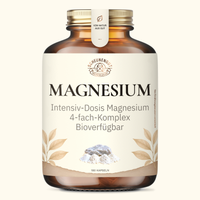
The Magnesium Complex goes well with it: four bioavailable magnesium sources with 400 mg of elemental magnesium per daily dose. Magnesium contributes to the maintenance of normal bones and to normal muscle function. Scheunengut stands behind both products: since 2012, without investors, with a focus on pure raw-material quality.
Frequently Asked Questions (FAQ)
What does vitamin K do?
Vitamin K contributes to normal blood clotting and to the maintenance of normal bones. The body needs it to build clotting factors in the liver. It also works in bone metabolism.
What is the difference between vitamin K1 and K2?
Plants make K1, and it is in kale, spinach and broccoli. Bacteria make K2, and it is in natto, cheese, eggs and butter. For supplements K2 as MK-7 is common because it stays in the blood for a long time.
Can I take vitamin K1 and K2 together?
Yes, through food anyway. Both usually arrive on the plate together. With supplements K2 is generally enough, because K1 is covered by cabbage and salad. With anticoagulants the rule is: only after talking to your doctor.
Which foods contain a lot of vitamin K?
Kale (around 817 µg per 100 g), parsley, spinach, broccoli and lamb's lettuce for K1. For K2, natto, cheese, butter and eggs deliver the most. Have them with a little fat, because vitamin K is fat-soluble.
What is the first sign of a vitamin K deficiency?
Blood clots less well. That is a reason to see a doctor, not to self-diagnose. On a normal diet deficiency is rare, and the risk groups are people with certain liver and bowel conditions and newborns.
When is the best time to take vitamin K?
With a meal that contains some fat. The time of day does not matter. With our depot you take one tablet every 5th day.
Can I take vitamin K with Marcumar?
Only after talking to your doctor. Vitamin K, K2 included, can affect the action of coumarin-type anticoagulants such as phenprocoumon or warfarin. Eat as evenly as possible and do not change anything on your own.
Health notice: This guide is for general information purposes only and does not replace individual medical or pharmaceutical advice. Food supplements are not a substitute for a balanced, varied diet and a healthy lifestyle. If you have health concerns, are pregnant or breastfeeding, or are taking medication, please consult a doctor or pharmacist. How our guides are created →
Sources
- Vitamin K — Austrian Health Portal (gesundheit.gv.at)
- Phenprocoumon and green vegetables: no-go or no problem? — PTA in Love, 2024
- Vitamin K-containing dietary supplements: comparison of synthetic vitamin K1 and natto-derived menaquinone-7 — Schurgers LJ et al., Blood 109(8):3279–3283, 2007
- Comparison of menaquinone-4 and menaquinone-7 bioavailability in healthy women — Sato T et al., Nutrition Journal 11:93, 2012
- Vitamin K and nutrition — Rheumatism League Switzerland, 2023
- Foods with vitamin K: natural vitamin K1 and K2 — Gelbe Seiten guide, 2024