



Yes, you can take zinc and magnesium together, even in one meal. At usual amounts they don't interfere. Only at very high zinc amounts over a long time did one study find a drop in magnesium balance. In practice: zinc with lunch, magnesium after dinner, and add up the zinc from all your supplements.
Yes, you can take zinc and magnesium on the same day, even in the same meal. At the amounts usual in supplements, they don't get in each other's way. It only becomes an issue when zinc stays at very high amounts over a long period: in one study, magnesium balance fell then.
Your plan in one sentence: zinc with lunch, magnesium after dinner, both in the amount printed on the label. If you prefer it simple, take both with dinner, as long as the zinc dose stays small.
Why the two don't disturb each other in everyday life
Magnesium works in muscle and nerve. Zinc works in immune defence, skin and cell division. Their jobs barely overlap, which is exactly why both so often turn up together in sports formulas.
The benefits the EU permits for the two read like two halves of a day:
- Magnesium contributes to normal muscle function, to the normal functioning of the nervous system and to normal energy-yielding metabolism. Magnesium also contributes to the reduction of tiredness and fatigue.
- Zinc contributes to the normal function of the immune system, to the maintenance of normal hair, skin and nails and to normal cognitive function. On top of that, zinc contributes to the maintenance of normal testosterone levels in the blood.
If you sweat a lot, train hard or eat plant-based, you reach the limits of both minerals sooner than most people. Wholegrains and pulses do supply zinc, but they contain phytate, which binds it in the gut. That is no reason to skip beans. It is a reason not to plan zinc too tightly. If you regularly eat meat, cheese and eggs, on the other hand, you already cover a large part of your needs at the table, and a capsule usually pays off only in phases of higher demand, such as during training or in the cold season.
At what zinc dose magnesium suffers
The worry behind the question has a true core. If you take a lot of zinc a day for months, your magnesium balance gets worse. That was shown in a study of postmenopausal women.
At usual amounts, we know of no study that shows a notable inhibition. That doesn't mean there is zero interaction. It means that in the range of ordinary capsules, separating them isn't a must.
More important than any separation is the sum. Zinc sits in multivitamins, immune complexes and men's formulas, and then there are zinc capsules and your food. Add up on the labels what a day comes to. A complex with 5 or 10.5 mg of zinc per daily dose barely adds up, even if a multivitamin joins in. If the total stays high over time, have it checked by a doctor.
With magnesium, the gut works as an alarm system. That's handy, because you notice at once. Too much in one go loosens the stool. Then you cut the dose or split it over two times of day, which is better tolerated anyway.
How to fit both into your day
- Zinc with a meal. On an empty stomach it upsets some people's stomach. Lunch or breakfast works, and a slice of bread is enough. The Maca Complex Stammkraft provides 10.5 mg of zinc in the daily dose of three capsules, the Fadogia Power Complex 5 mg in two capsules. Both fit with lunch.
- Magnesium in the evening. After dinner or after training, when you have a fixed point anyway. There is no authorised sleep claim for magnesium, but there is one for the normal functioning of the nervous system and for normal psychological function. In the Magnesium Complex that is two capsules with 400 mg of elemental magnesium in total. The Magnesium Bisglycinate delivers 360 mg in three capsules, spread over your meals, the last one with dinner.
- Both together? That's fine. Choose dinner then and keep the zinc amount small. High zinc doses belong with lunch.
- A gap? If you want to separate them, two to three hours is enough. That is a rule of thumb, not a measured value.
You do need a gap from medication, though. Some antibiotics, such as tetracyclines and quinolones, bind minerals like magnesium and zinc in the gut and lose effect as a result. Ask your pharmacy about the right interval before you swallow both on the same morning. The same goes for thyroid medication and for bisphosphonates, where a fixed interval from minerals often applies; the package leaflet will say.
ZMA: what's in the sports capsule
ZMA combines zinc, magnesium and vitamin B6 in an evening capsule. The dose from the well-known study by the supplier was 30 mg zinc, 450 mg magnesium and 10.5 mg vitamin B6, taken 30 to 60 minutes before sleep. That is far more zinc than in usual capsules.
What does it do? Zinc contributes to the maintenance of normal testosterone levels in the blood. The claim says no more than that. An independent study in trained men did not confirm that ZMA lifts hormones or strength above the normal range: hormones, body composition and strength did not differ from the control group.
Our verdict: you don't need ZMA. Dosing zinc and magnesium separately is cheaper, more flexible and lets you choose when the zinc goes in.
With selenium, vitamin C or vitamin D in the same go
Selenium fits. Selenium contributes to the normal function of the immune system, just like zinc. Three trace elements at lunch are no problem if you add up the labels. More on this in the guide on selenium and zinc.
Vitamin C disturbs neither zinc nor magnesium. It contributes to the normal function of the immune system. Also worth knowing: vitamin C increases iron absorption. That only matters if you take iron too, and then the rule is to put zinc and iron into different meals, even when vitamin C joins in.
Vitamin D and magnesium are a pair with a backstory. Magnesium sits in the enzymes that convert vitamin D into its active form. Vitamin D itself contributes to the maintenance of normal muscle function, just as magnesium contributes to normal muscle function. Take the vitamin D with a meal that contains some fat, and the magnesium in the evening. Our Vitamin D3 Depot with K2Pure® turns that into one tablet every five days: 5,000 IU of vitamin D3 plus 100 µg of vitamin K2 (MK-7), vegan, 180 tablets per tub. Vitamin K contributes to the maintenance of normal bones.
The real zinc competitors are iron and copper
When zinc competes with something for absorption, it isn't magnesium. High-dose iron pushes down zinc absorption if both arrive in the gut at the same time. If you are on a course of iron, put the zinc capsule into a different meal.
Then there is copper. Permanently high zinc amounts can strain your copper supply, and the body needs copper for connective tissue, nerves and iron transport. That is the real reason not to treat zinc as “more is better”. If you supplement more than a few milligrams in the long run, keep an eye on the copper content of your diet.
Which forms suit the combination
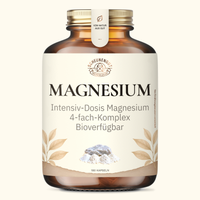
With magnesium, the compound helps decide absorption and tolerance. Bisglycinate and citrate are considered gentle on the stomach, oxide delivers the most magnesium per gram. Our Magnesium Complex builds on exactly this mix: tri-magnesium dicitrate, magnesium malate, magnesium bisglycinate and natural magnesium oxide from the Dead Sea, four forms with different absorption speeds in one capsule. More important than any name is the line “elemental magnesium” on the label, because only that figure compares products fairly. On the Complex it reads 400 mg, which is 107 % of the nutrient reference value.
The same goes for zinc. Bisglycinate, citrate and gluconate are common forms. Watch the amount of elemental zinc: 100 mg of zinc gluconate equals roughly 14 mg of zinc. If you don't do that sum, you can easily land above or below your target. In the Fadogia Power Complex the zinc is a bisglycinate, at 5 mg per daily dose.
Matching Products from Scheunengut
We don't carry a plain zinc supplement, and no ZMA either. Instead, zinc sits in two complexes, which keeps the sum easy. The Fadogia Power Complex contains 5 mg of zinc (50 % of the nutrient reference value) in the daily dose of two capsules, plus 1,000 mg of fadogia agrestis extract 10:1 and 150 mg of ashwagandha extract. The Maca Complex Stammkraft brings 10.5 mg of zinc (105 %) in three capsules, combined with maca, cordyceps, tribulus and ginseng extracts and L-citrulline. Zinc contributes to the maintenance of normal testosterone levels in the blood. Zinc contributes to normal fertility and reproduction. Both complexes are built for men who demand a lot of themselves at work and in sport, and because the zinc is already in the daily dose, you need no extra capsule for the lunch part of your plan.
The magnesium comes from the Magnesium Complex: four magnesium sources and 400 mg of elemental magnesium, high-dose, in just two capsules with a plant-based shell. No additives, colourings or fillers. Magnesium contributes to normal muscle function, to the normal functioning of the nervous system and to normal energy-yielding metabolism. If you want it especially gentle on the stomach, choose the Magnesium Bisglycinate: a chelate of magnesium and glycine, vegan, 360 mg of elemental magnesium in three capsules. For the vitamin D side of your plan there is the Vitamin D3 Depot with K2Pure®: 5,000 IU of D3 and 100 µg of K2 in one tablet, one every five days. At that intake, a tub of 180 tablets lasts 900 days.
We have been around since 2012, without investors and with a focus on pure raw-material quality. That is why we have the raw materials and every finished batch tested in independent labs; you will find the current lab report as a file on the product page. That applies to every tub. The Magnesium Complex and the Magnesium Bisglycinate are made in Europe (DE, AT, CH +). If you tolerate larger amounts poorly, split the daily dose over two times of day and stick to the recommended intake.
Frequently Asked Questions (FAQ)
Can I take zinc and magnesium at the same time?
Yes. At usual amounts the two don't get in each other's way, and you can take them in the same meal. Only at very high zinc amounts over a long time did magnesium balance fall in one study. Add up the zinc from all your supplements.
Should I take zinc and magnesium in the morning or the evening?
Zinc is best with a meal during the day, magnesium after dinner. That fits into everyday life, spares your stomach and separates the two as a side effect. You can take magnesium before bed, but there is no authorised sleep claim for it. Take zinc before bed only with something in your stomach.
Do zinc and magnesium need a gap?
Not at normal amounts. Put high zinc doses with lunch and the magnesium in the evening, and the gap of several hours takes care of itself. Keep a gap from iron supplements and from certain antibiotics, though.
Can you take zinc, selenium and magnesium together?
Yes. Selenium and zinc get along, and both contribute to the normal function of the immune system. Take zinc and selenium with lunch, magnesium in the evening, and add up the amounts on the labels.
Do zinc and magnesium go with vitamin C and vitamin D?
Yes. Vitamin C disturbs neither of them. Vitamin D and magnesium complement each other, because magnesium sits in the enzymes that activate vitamin D. Take vitamin D with a little fat and magnesium in the evening.
Is ZMA better than zinc and magnesium taken separately?
No. The zinc amount in the ZMA dose from the supplier's study is far higher than in usual capsules, and an independent study found no benefit for hormones or strength. Single products are more flexible to dose and cost less.
What does combining zinc and magnesium do?
They complement each other: magnesium contributes to normal muscle function and to the reduction of tiredness and fatigue, zinc to the normal function of the immune system. That holds for the nutrients, not for every capsule. Amount and tolerability decide.
Health notice: This guide is for general information purposes only and does not replace individual medical or pharmaceutical advice. Food supplements are not a substitute for a balanced, varied diet and a healthy lifestyle. If you have health concerns, are pregnant or breastfeeding, or are taking medication, please consult a doctor or pharmacist. How our guides are created →
Sources
- BfR assesses recommended maximum daily intake of magnesium from food supplements — German Federal Institute for Risk Assessment (BfR), 2017
- A moderately high intake compared to a low intake of zinc depresses magnesium balance and alters indices of bone turnover in postmenopausal women — Nielsen FH, Milne DB, European Journal of Clinical Nutrition, 2004
- Effects of zinc magnesium aspartate (ZMA) supplementation on training adaptations and markers of anabolism and catabolism — Wilborn CD et al., Journal of the International Society of Sports Nutrition, 2004
- Role of Magnesium in Vitamin D Activation and Function — Uwitonze AM, Razzaque MS, The Journal of the American Osteopathic Association, 2018
- Magnesium – reference values for nutrient intake — German Nutrition Society (DGE), 2021