



Yes, you can take calcium and vitamin D together, and no gap is needed. Vitamin D contributes to the normal absorption/utilisation of calcium and phosphorus. Take vitamin D with a meal that contains some fat and spread calcium across lunch and dinner. You do need a gap from iron and thyroid tablets.
Yes, take them together. Calcium and vitamin D, whether as D3 or under the name cholecalciferol, don't interfere with each other. They need each other. Vitamin D contributes to the normal absorption/utilisation of calcium and phosphorus, and calcium on its own doesn't get as far in the gut.
The question is often asked the other way round: don't you have to keep vitamin D and calcium apart because they somehow get in each other's way? No. You do need a gap with other combinations, and we list them below. The everyday plan is short: vitamin D with breakfast and a little fat, calcium spread across your meals, and a check beforehand on whether you take any medicines that don't get along with calcium.
What vitamin D does for calcium in the gut
Calcium is the building material that goes into your bones and teeth every day, and it sends signals to muscles and nerve cells on the side. Calcium is needed for the maintenance of normal bones, is needed for the maintenance of normal teeth and contributes to normal muscle function. Vitamin D is the door opener. The German Nutrition Society (DGE) puts it like this: vitamin D makes sure more calcium gets from the gut into the blood, and it regulates calcium and phosphate metabolism. Vitamin D contributes to the maintenance of normal bones. Vitamin D contributes to the maintenance of normal teeth. Vitamin D contributes to the maintenance of normal muscle function.
If one of the two is missing, the other does less. When your calcium intake falls short, your body takes what's missing from your bones, and that account can't be overdrawn indefinitely. When vitamin D falls short, even the good calcium from your cheese sandwich is used less well. Neither is worth skimping on.
Where does “don't take them together” come from?
Gap rules do exist. They just apply to other partners of calcium. The three that matter most:
- Thyroid tablets (levothyroxine): the Pharmazeutische Zeitung, a German pharmacists' journal, recommends at least two, better four hours between the tablet and calcium. In practice: tablet in the morning, 30 minutes before breakfast, calcium at lunch or dinner.
- Iron: the evidence here is thin. The Pharmazeutische Zeitung calls the gap “traditional knowledge” and finds no study showing poorer absorption when the two are taken together. If you take iron, put it in the morning and calcium later anyway. It costs nothing. More on this in our article on iron and calcium.
- Some antibiotics (gyrase inhibitors): for these, the Pharmazeutische Zeitung gives gaps of two to six hours from divalent minerals such as calcium. The patient leaflet tells you which one applies to your medicine.
For the pair calcium and vitamin D, no such rule exists. If you've read “not together”, you probably have real rules in mind, just for the wrong pair. We haven't found a source that asks for a gap between exactly these two.
How to fit both into your day
Two principles are enough. Vitamin D with fat, calcium in portions.
For vitamin D there's a clean measurement. In a study of 50 healthy older adults, everyone received a single dose of 50,000 IU at breakfast, some with a fat-free meal, the others with a fat-containing one (30% of calories from fat). Twelve hours later, the peak vitamin D3 level in the blood was around 32% higher in the people who ate fat. The study tells you something about the absorption of a single dose. It doesn't show what ends up in your blood value after months. Butter on your bread, yoghurt, a handful of nuts: you need nothing more.
For calcium, the DGE advises spreading the intake across several meals rather than taking it all at once. If you supplement, split the amount between lunch and dinner instead of getting the whole daily portion over with a sip of water after brushing your teeth. A day looks like this:
- Morning: breakfast with fat, plus vitamin D (with the Vitamin D3 Depot + K2Pure® that is one tablet every fifth day only). Thyroid tablet 30 minutes before, iron (if needed) together with vitamin C but without calcium.
- Lunch: first portion of calcium with the meal.
- Evening: second portion of calcium with dinner.
If there's only one meal you reliably remember, take both there. A routine you stick to beats the perfect plan you give up after two weeks because it doesn't fit your life. Your body has vitamin D stores. It doesn't come down to the minute. The Vitamin D3 Depot + K2Pure® is built for exactly that: 5,000 IU in one tablet that you take every fifth day with breakfast and some butter or yoghurt. In between, you get a break.
How much calcium and how much vitamin D do you need?
Calcium: the DGE gives a reference value of 1,000 mg a day for adults. Between the ages of 15 and 19 it's 1,200 mg. The best sources are dairy products (the DGE names them first), green vegetables such as broccoli and kale, seeds and nuts, and mineral water with more than 150 mg of calcium per litre. Work out your diet first. That's the step most people skip. Our view: if you have dairy or calcium-rich water every day, you rarely need a calcium supplement on top. If you eat vegan or can't tolerate milk, look more closely.
Vitamin D: when your body isn't making its own, the DGE reference value is 20 µg a day. That's 800 IU, since 1 µg equals 40 IU. From October to March, according to the DGE, the sun isn't strong enough for your skin to make enough. Your blood value shows whether you should supplement. The DGE sees supplements as an option when a deficiency has been confirmed, for example in risk groups.
The upper limit for calcium: EFSA considers 2,500 mg of calcium a day tolerable, counted from food and supplements together. According to the DGE, too much calcium over a long period can raise blood calcium, with urinary stones and impaired kidney function as possible consequences. For vitamin D, no flat figure counts. Your blood level sets the dose: have 25-hydroxyvitamin D measured, match the amount to that value and ask your practice how often a re-check makes sense. Going higher only works on medical advice.
Do you need vitamin K2 as well?
Many packs say D3 plus K2, often with a nod to calcium. Exactly two statements are authorised for vitamin K: Vitamin K contributes to the maintenance of normal bones and contributes to normal blood clotting. The idea that K2 steers calcium to the right place in your body is popular. It isn't an authorised claim.
Whether you take D3 and K2 together is therefore a matter of convenience and preference: one tub instead of two. The Vitamin D3 Depot + K2Pure® has both in one tablet: 5,000 IU of vitamin D3 and 100 µg of vitamin K2 as K2Pure® (MK-7, over 99% all-trans). It doesn't mean you need extra calcium. If you take blood thinners, clear vitamin K with your doctor first. Why the combination is recommended so often is covered in our guide to vitamin D3 and K2.
When to ask before you start
A few situations belong in a doctor's hands first, because what's in your blood decides as much as what's on the pack:
- Thiazide-type water tablets: they reduce the amount of calcium you excrete in urine. That's why the prescribing information of a calcium and vitamin D medicine calls for checking serum calcium. You take extra calcium and vitamin D here only with your doctor's go-ahead.
- Dekristol or other vitamin D from your doctor: the total amount has to be right. Extra calcium is something to discuss.
- Kidney stones or reduced kidney function: according to the DGE, both are possible consequences of too much calcium. If you're already affected, have your amounts set by a doctor.
- Pregnancy and breastfeeding: agree amounts with your OB-GYN or midwife.
That sounds like a lot of caution. It's four cases. For most healthy adults, none of them applies.
What to look for when buying
- The vitamin D form: D3 (cholecalciferol) is the form in our Vitamin D3 Depot + K2Pure® too, there with 5,000 IU per tablet. Make sure it's stated explicitly on the label.
- The unit: manufacturers give vitamin D in IU or µg. Convert (1 µg = 40 IU) before you compare. 5,000 IU is 125 µg.
- The calcium on the label: does the amount refer to the calcium or to the whole compound? Calcium carbonate is roughly 40% calcium by weight, so 1,000 mg of carbonate gives about 400 mg of calcium.
- Combination products: check the calcium amount against your diet. The upper limit counts food and capsule together.
- The ingredients list: the shorter, the fewer fillers you have to think about.
Matching Products from Scheunengut
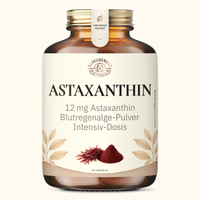
The Vitamin D3 Depot + K2Pure® covers the vitamin D side of your daily plan. One tablet holds 5,000 IU of vitamin D3 (125 µg cholecalciferol) and 100 µg of vitamin K2 as K2Pure® (MK-7), high-dose and due only every fifth day. A tub of 180 tablets lasts 900 days that way. On average that comes to 1,000 IU (25 µg) a day. Vitamin D contributes to the normal absorption/utilisation of calcium and phosphorus. Vitamin D contributes to the maintenance of normal bones. Vitamin K contributes to the maintenance of normal bones. The tablet is vegan, with microcrystalline cellulose as filler. It is made in Europe (DE, AT, CH +). The high-dose depot is not suitable for pregnant or breastfeeding women, or for children and teenagers. Take it with a meal that contains some fat.
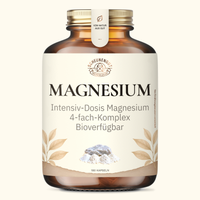
Scheunengut has been around since 2012, without investors and with a focus on pure raw-material quality, and because purity is the yardstick, we have raw materials and every finished batch independently lab-tested before they end up in a tub. A calcium-only supplement is not part of our range, and calcium is in our Electrolyte Complex, together with magnesium, potassium, sodium and chloride (360 tablets). If bones and muscles are on your mind, add magnesium. The Magnesium Complex delivers 400 mg of elemental magnesium from four magnesium sources. Two capsules are enough. Magnesium contributes to the maintenance of normal bones. Magnesium contributes to normal muscle function.
Frequently Asked Questions (FAQ)
Can you take calcium and vitamin D together?
Yes, and it makes more sense than taking them apart. Vitamin D contributes to the normal absorption/utilisation of calcium and phosphorus. You don't need a gap, neither minutes nor hours. The simplest way is to take both with a meal that contains some fat.
Why do some people say you shouldn't take vitamin D and calcium together?
Most likely, rules for other pairs get applied to this one. A gap is needed between calcium and iron, calcium and thyroid tablets, and calcium and some antibiotics. For calcium and vitamin D, the German Nutrition Society (DGE) describes the opposite, a partnership: vitamin D makes sure more calcium gets from the gut into the blood.
Do I have to take calcium and vitamin D3 at exactly the same time?
No. A few minutes either way don't matter, because your body has vitamin D stores. What counts is that you take it regularly at all. If there's only one meal a day you reliably remember, take both there. Larger amounts of calcium are better split across two meals.
Can you take vitamin D3, K2 and calcium together?
Yes, that works too. Vitamin K contributes to the maintenance of normal bones and to normal blood clotting. You don't need extra calcium just because K2 is in the product. If you take blood thinners, talk to your doctor about vitamin K first.
Calcium and vitamin D: morning or evening?
Vitamin D suits breakfast with a little fat, and you spread calcium across lunch and dinner. The time of day doesn't decide the benefit, the meal matters more. If you take a thyroid tablet in the morning, calcium waits for later anyway.
Can I take Dekristol and calcium together?
Dekristol is a vitamin D3 medicine that a doctor has usually prescribed for you. Discuss extra calcium with them, because the amount and your blood values need to be looked at together. Don't add anything on your own here.
How much calcium and vitamin D is too much?
For calcium, EFSA gives 2,500 mg a day as the tolerable total intake, from food and supplements combined. According to the DGE, staying well above that for a long time risks kidney problems. For vitamin D, only a blood test for 25-hydroxyvitamin D shows where you stand. Match the dose to it and discuss higher amounts with your doctor.
Health notice: This guide is for general information purposes only and does not replace individual medical or pharmaceutical advice. Food supplements are not a substitute for a balanced, varied diet and a healthy lifestyle. If you have health concerns, are pregnant or breastfeeding, or are taking medication, please consult a doctor or pharmacist. How our guides are created →
Sources
- Vitamin D: frequently asked questions and answers — German Nutrition Society (DGE)
- Calcium: frequently asked questions and answers — German Nutrition Society (DGE)
- Reference values for calcium — German Nutrition Society (DGE), 2013
- Dietary fat increases vitamin D-3 absorption — Journal of the Academy of Nutrition and Dietetics (Dawson-Hughes et al.), 2015
- Thyroid hormones and polyvalent cations — Pharmazeutische Zeitung (German pharmacists' journal), 2007
- Iron plus calcium: an interaction? — Pharmazeutische Zeitung (German pharmacists' journal), 2016