



Vitamin D is fat-soluble and is absorbed better together with dietary fat. It is best to take it with a normal meal that contains some fat. Oil-based drops or capsules already bring the fat carrier along and are therefore more independent of the meal.
Vitamin D is one of the most popular food supplements, especially in the low-light months. Again and again you read that you should take vitamin D together with fat so that the body absorbs it better. But is that true – and how big is the difference really? We compare taking it with and without fat, explain the background and give a practical recommendation. The approved EU claims for vitamin D are included.
The short answer
Vitamin D is a fat-soluble vitamin. This means: the body absorbs it better together with dietary fat. In practice this does not mean that you have to drink extra oil – it is entirely sufficient to take the preparation with or directly after a meal that contains some fat. The approved EU claims: vitamin D contributes to the normal absorption and utilisation of calcium and phosphorus. Vitamin D contributes to the maintenance of normal bones. And vitamin D contributes to the normal function of the immune system.
Why vitamin D is fat-soluble
Vitamins are roughly divided into water-soluble and fat-soluble ones. Vitamin D belongs to the second group, as do vitamins A, E and K. Fat-soluble vitamins are absorbed in the intestine similarly to dietary fats: they become embedded in small fat droplets and are taken up by the body via this route. If dietary fat is completely absent, absorption can turn out lower. That is why, with fat-soluble vitamins, the combination with a fat-containing meal makes sense.
This applies not only to vitamin D: with vitamins A, E and K too, dietary fat plays a role in absorption. Anyone who generally rounds off their meals with some high-quality oil, nuts, egg or dairy products thereby supports the utilisation of several fat-soluble vitamins at once. This simple habit makes the topic uncomplicated in everyday life.
Taking vitamin D with fat
Taking it together with fat is regarded as the more favourable route. If you take your vitamin D preparation with a meal that contains fat – for example a breakfast with egg and avocado, a yoghurt with nuts or a lunch with some oil – this supports absorption. Many studies suggest that simultaneous fat intake improves the availability of vitamin D.
Particularly practical: oil-based preparations such as drops or capsules with an oil carrier already bring the fat along. With such products, absorption is good even when the meal itself is rather low in fat, because the oil carrier provides the fat solubility directly.
Taking vitamin D without fat
If you take vitamin D on an empty stomach or with a completely fat-free meal – for example only with water or with a fat-free snack – absorption can turn out lower. This applies above all to preparations in tablet or powder form without an oil carrier. This is not a total loss: even without additional fat a part is absorbed, but tends to be less efficient than with fat.
So anyone who swallows their preparation in the morning on an empty stomach with a glass of water and afterwards drinks a fat-free drink may give away part of the possible absorption. This is the main reason why taking it without any source of fat is rather discouraged.
Direct comparison: with or without fat
If you put both variants side by side, a clear picture emerges:
- Absorption: tends to be better with fat, because vitamin D is fat-soluble.
- Oil-based preparations: bring the fat along and are therefore more independent of the meal.
- Tablets and powder without an oil carrier: benefit most clearly from a fat-containing meal.
- Taking on an empty stomach: possible, but tends to be less efficient.
- Everyday suitability: taking it with the largest fat-containing meal of the day is easy to implement.
The effort for the better variant is minimal: it is enough to choose the right timing.
Which forms of administration are there?
Vitamin D is offered in various forms, and the question of fat is closely connected with this. Oil drops contain the vitamin already dissolved in a carrier oil, often based on MCT or olive oil. Soft capsules work similarly and enclose the vitamin together with oil. With these forms the fat carrier is included from the outset. Tablets and powder without added oil, by contrast, contain no fat of their own – here the combination with a fat-containing meal is particularly important in order to support absorption. Anyone who knows which form they use can adjust their timing accordingly: with oil-based products you are more flexible, with fat-free forms it is worth deliberately reaching for a meal. Our Vitamin D3 Depot + K2Pure® is a tablet. Reaching for a meal with some fat is quickly done here: egg, avocado or a spoonful of olive oil on your breakfast bread are enough.
Why vitamin D is a topic in winter
The body forms vitamin D above all by itself when the skin gets enough sunlight. In our latitudes, however, the sun stands so low in the winter half of the year that the body's own production declines significantly. Many people also spend most of their time indoors. This explains why vitamin D becomes such a frequent topic particularly in the dark months and why some people then consider supplementing. Whether that makes sense for you depends on your personal status – this can be determined via a blood test. Regardless of this, the following applies: if supplementing is done, the combination with some fat improves the absorption of the fat-soluble vitamin.
Vitamin D and vitamin K2
Vitamin D is often offered together with vitamin K2. The background: vitamin D contributes to the normal absorption and utilisation of calcium and phosphorus, and vitamin K contributes to the maintenance of normal bones. Both vitamins are fat-soluble, which is why the same rule of thumb applies to combination preparations as to pure vitamin D: with a meal containing some fat, absorption is supported. Oil-based combination products already bring the fat carrier along. This very combination is in our Vitamin D3 Depot + K2Pure®: 5,000 IU vitamin D3 (125 µg) and 100 µg vitamin K2 in one tablet, the K2 as K2Pure® (menaquinone MK-7). You take one tablet every 5th day, ideally with a meal containing some fat.
Recommendation for practice
The simplest and most effective rule is: take your vitamin D preparation with a main meal that contains some fat. For many, breakfast or lunch is ideal. You do not have to additionally eat any special high-fat foods – a normal dish with some oil, butter, egg, cheese, nuts or avocado is entirely sufficient. With oil-based drops or capsules you are more flexible anyway, because the oil carrier brings the fat solubility along. With the depot you only remember the rhythm: one tablet every 5th day with a fat-containing breakfast. The tub of 180 tablets lasts 900 days that way.
Regularity is also important: vitamin D unfolds its contribution through the continuous supply, not through a single intake. A fixed place in the daily routine – for example always at breakfast – helps not to forget the intake.
Honestly classified and medical note
Whether and in which dosage a vitamin D supplement makes sense for you depends on your individual situation, for example on the season, your time spent outdoors and your personal status. There is no fixed figure for everyone. Have your vitamin D level in the blood (25-OH-D) determined and base the dose on it. You discuss higher daily amounts with your doctor, especially with kidney disease and when you take medication. Pregnant and breastfeeding women as well as children and adolescents do not take our depot. Food supplements do not replace a balanced diet and a healthy lifestyle.
Matching Products from Scheunengut
If you do not want to rethink the fat rule every day, take a depot. The Vitamin D3 Depot + K2Pure® contains 5,000 IU vitamin D3 (125 µg) and 100 µg vitamin K2 as K2Pure® per tablet, high-dose and as a plant-based tablet. You take one tablet every 5th day with sufficient fluid, ideally with a meal containing some fat. The tub of 180 tablets lasts 900 days that way. The depot is not suitable for pregnant or breastfeeding women, or for children and adolescents.
On the nutrients in it: vitamin D contributes to the normal absorption and utilisation of calcium and phosphorus. Vitamin D contributes to the maintenance of normal bones. Vitamin D contributes to the maintenance of normal muscle function. Vitamin D contributes to the normal function of the immune system. Vitamin K contributes to the maintenance of normal bones.
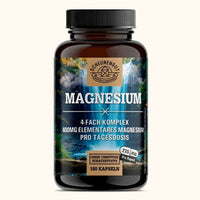
For the rest of the daily plan we have the Magnesium Complex: four magnesium sources (tri-magnesium dicitrate, magnesium oxide, magnesium malate and magnesium bisglycinate), 400 mg elemental magnesium in two capsules, to be taken at any time of day, with a plant-based capsule shell. 180 capsules last 90 days. Magnesium contributes to normal muscle function. Magnesium contributes to normal energy-yielding metabolism.
We have been making Scheunengut since 2012, without investors and with a focus on pure raw-material quality. We have raw materials and every finished batch tested independently in the lab before anything reaches you.
Frequently asked questions (FAQ)
Do I really have to take vitamin D with fat?
It is advisable. Since vitamin D is fat-soluble, it is absorbed better together with dietary fat. But it is enough to take the preparation with a normal meal containing some fat. Additional oil is not necessary.
Is a completely normal meal enough as a source of fat?
Yes. A usual main meal with some oil, butter, egg, cheese, nuts or avocado provides enough fat to support absorption. You do not have to additionally eat any particularly high-fat foods.
What about oil-based vitamin D drops?
Oil-based drops and capsules already bring the fat carrier along. As a result, absorption is good even with a low-fat meal, and you are more flexible with the timing than with tablets or powder without an oil carrier.
Can I also take vitamin D on an empty stomach?
It is possible, but absorption tends to turn out lower, above all with tablets and powder without an oil carrier. Anyone who prefers to take their preparation in the morning best combines it with a breakfast that contains some fat.
At what time of day should I take vitamin D?
A fixed time of day is less important than the combination with a fat-containing meal and regularity. Many choose breakfast or lunch because the intake can be built into the routine well in this way.
How do I take the Vitamin D3 Depot from Scheunengut?
One tablet every 5th day with sufficient fluid, ideally with a meal containing some fat, for example a breakfast with egg or avocado. One tablet contains 5,000 IU vitamin D3 and 100 µg vitamin K2 as K2Pure®. It is not suitable for pregnant or breastfeeding women, or for children and adolescents.
Health notice: This guide is for general information purposes only and does not replace individual medical or pharmaceutical advice. Food supplements are not a substitute for a balanced, varied diet and a healthy lifestyle. If you have health concerns, are pregnant or breastfeeding, or are taking medication, please consult a doctor or pharmacist. How our guides are created →
Sources
- German Nutrition Society: reference values vitamin D — DGE, 2012
- EU Regulation 432/2012 on approved health-related claims — EUR-Lex, 2012
- Vitamin D – Health-Influencing Factors A–Z — Robert Koch Institute (RKI), 2026