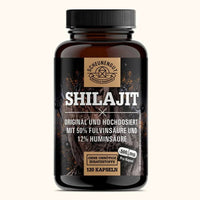
A D3 preparation (cholecalciferol) dissolved in oil is recommended, with a clearly stated amount in IU or µg and lab testing – ideally, dosage should be based on your blood level. D3 is the form the body produces itself via the skin. Vitamin D contributes to the maintenance of normal bones and muscle function.
The cursor is hovering in the shopping cart, and you're staring at three vitamin D products that differ in price by a factor of three and yet all say "high-dose" on the front. Which is the right one? Short and to the point: buy a D3 supplement (cholecalciferol) dissolved in oil, with a clearly declared amount in IU or µg, lab-tested - and ideally set the dosage according to your blood level. Everything else - drops or capsule, with or without K2 - is fine-tuning to fit your routine. Vitamin D contributes to the maintenance of normal bones, to normal muscle function, to the normal function of the immune system and to the normal absorption of calcium (EU-approved). This buyer's guide walks you calmly through the four decisions.
The Key Points at a Glance
- D3 (cholecalciferol) is the form the body also produces itself via the skin - for most people the first choice.
- Vitamin D is fat-soluble - an oil carrier and taking it with a meal improve absorption.
- Drops allow fine dosing, capsules/softgels are practical for a fixed routine.
- 1 µg = 40 IU - the same amount, just written differently. Always convert to one unit.
- The right dosage is guided by the blood level - if in doubt, check with a doctor.
Why Vitamin D of All Things So Often Ends Up in the Cart
Vitamin D is a special case: strictly speaking it is less a "vitamin" than a prohormone that your body produces itself in the skin under UV-B light. It is hard to cover through diet - meaningful amounts are found almost only in fatty fish, a little in egg yolk and in UV-treated mushrooms. In the body, the absorbed D3 is first converted in the liver and then in the kidney into the active form, which docks onto receptors in almost every cell. That is why vitamin D is involved in so many processes - from the incorporation of calcium into the bones to processes in the immune system.
The seasonal catch: at our latitudes, from around October to March the sun sits so low that the UV-B radiation is barely enough for skin synthesis - even on a winter walk. This is precisely what makes vitamin D the supplement with the clearest seasonal logic. More on this in The dark season: light & vitamin D and Nutrients when there's little sunlight.
What Research Is Investigating
Well-established textbook knowledge is the role of vitamin D in calcium and bone metabolism and its involvement in the function of the immune system - the approved statements are based on this too. Beyond that, research is studying vitamin D in many further contexts, for instance around muscle strength, mood in the dark season and immune processes. One fascinating strand of research deals with the question of why vitamin D status regularly drops in northern countries in winter and what intake is sensible. Much of this is the subject of ongoing studies and cannot be interpreted as a product promise - what remains clearly established is the nutrient character and the dependence on sunlight.
Step 1: D3 or D2?
There are two forms: D3 (cholecalciferol), which the skin also produces in sunlight, and D2 (ergocalciferol) from mushrooms. Most supplements contain D3 - the obvious choice, because it matches the body's own pathway. The difference is explained in Vitamin D3 vs. D2. Vegan D3 is obtained from lichen instead of wool grease - how you recognise this is shown in Recognising vegan food supplements.
Step 2: Drops or Capsules?
Both work well - what's decisive is that the vitamin D is dissolved in oil, because as a fat-soluble substance it is best absorbed that way. Plain pressed tablets without a fat carrier are less ideal. The detailed weighing-up is in Vitamin D: drops or capsules?, and the fundamental question is clarified in Capsule or softgel?
| Criterion | Drops (in oil) | Capsules / softgels |
|---|---|---|
| Dosage | adjustable to the drop | fixed amount per unit |
| Absorption | dissolved in the carrier oil, very good | softgels are oil-based, very good |
| On the go | take the bottle along | especially practical |
| Ideal for | individual, blood-level-oriented dosing | a fixed daily routine |
Step 3: With or Without K2?
The D3+K2 combination is one of the most popular topics of all, because both vitamins play a role in bone and calcium metabolism: vitamin D promotes calcium absorption, and vitamin K contributes to the maintenance of normal bones and to normal blood clotting. Why many take both together is explained in Vitamin D3 & K2: the combination and Vitamin D & K2 together. Important: anyone taking anticoagulant medication (blood thinners) should definitely check the K2 combination with a doctor beforehand.
IU or µg? Understanding the Units in 20 Seconds
Two units regularly cause confusion when buying vitamin D: International Units (IU) and micrograms (µg). Both mean the same thing. The conversion: 1 µg = 40 IU. So "20 µg" is 800 IU, "25 µg" is 1000 IU. Anyone comparing two products always converts to the same unit - otherwise figures that are in truth the same appear dramatically different. A look at the percentage of the reference value additionally helps, as shown in Reading the label correctly.
Step 4: The Right Dosage
The right amount is individual and is guided by the blood level and the season. The framework is set out in Vitamin D: dosage, blood level & winter. Whether there is any need at all is put into context by Vitamin D deficiency: signs. How quickly the status changes is described in Vitamin D: how long until it takes effect? If a deficiency is suspected, the rule is: have the level determined by a doctor rather than dosing very high on suspicion - vitamin D is fat-soluble and is stored.
Quality, Carrier Oil and Storage
How you recognise a good supplement is summarised in Vitamin D supplement: recognising quality - key words: a high-quality carrier oil (e.g. MCT or olive oil), lab testing, a clear declaration, few additives. Because the oil suffers over time, it prefers cool, dry, dark storage - not on the sunny windowsill. General rules on this: Shelf life & storage and Expired: what to do? Common combination questions are answered by Magnesium & vitamin D, Calcium & vitamin D and Omega-3 & vitamin D.
Common Mistakes When Buying Vitamin D
- Choosing vitamin D without an oil carrier - as a fat-soluble vitamin it belongs in an oil-based form, otherwise it is absorbed less well.
- Dosing very high on suspicion, without knowing the blood level - better to have it determined first.
- Overlooking the K2 combination with blood thinners - here medical consultation is mandatory.
- Thinking of summer and winter the same way - the need is seasonal, see Food supplements & the sun.
Food Sources: Why Diet Reaches Its Limits Here
For most vitamins, diet is the obvious first source - with vitamin D that is the exception. Meaningful amounts are found almost only in fatty sea fish (salmon, mackerel, herring, eel), in egg yolk, in a little liver and in UV-treated mushrooms. Even someone who regularly eats fatty fish covers only a part of the need through it. The reason is simple: vitamin D is evolutionarily designed for production via the skin, not for intake via the plate. That is exactly why, in the sun-poor winter half of the year, targeted supplementation comes to the fore - unlike, say, vitamin C, which is plentiful in fruit and vegetables. Anyone wanting to know how this translates into a sensible everyday routine will find practical guidance in Nutrients when there's little sunlight.
Which Vitamin D Supplement Suits You?
- You want to dose finely and flexibly: drops in oil are ideal, because you can align the amount to the drop with your blood level.
- You want a simple, fixed routine: softgels or capsules with a clear amount per unit are uncomplicated and travel-friendly, see Capsule or softgel?
- You're interested in the bone combination: a D3+K2 product bundles both - with blood thinners, check with a doctor beforehand.
- You live vegan: look for D3 from lichen, see Recognising vegan food supplements.
Honestly Put Into Context
Vitamin D is the supplement topic with the clearest logic: the body's own production depends on sunlight, and in the winter half of the year the sun sits too low. Targeted intake in winter is sensible for many - supported by approved statements on bones, muscles, the immune system and calcium absorption. What does not hold: "more helps more". Because vitamin D is stored, very high doses on suspicion are not the way. The best strategy is unspectacular: a well-declared, oil-based D3 supplement, dosage guided by the blood level, and if in doubt with medical support.
Matching Products from Scheunengut
All variants - drops, capsules, with and without K2 - can be found in the Vitamin D category. For the popular combination, Vitamin K is worthwhile, for the overall picture Vitamins and around the immune system. All supplements are lab-tested and made in Germany.
Frequently Asked Questions (FAQ)
Is vitamin D3 or D2 better?
D3 (cholecalciferol) is the form the body also produces itself in the skin in sunlight, and it is in most supplements. D2 (ergocalciferol) comes from mushrooms. For most people D3 is the obvious choice; vegan D3 is obtained from lichen.
How much vitamin D should I take?
The right amount is individual and is ideally guided by the blood level and the season, because in winter there is barely any of the body's own production. If a deficiency is suspected, have the level determined by a doctor rather than dosing very high on suspicion - vitamin D is fat-soluble and is stored.
1 µg or 1 IU - what's the difference?
Both describe the same amount, just expressed differently: 1 µg of vitamin D corresponds to 40 IU. So a product with 20 µg contains 800 IU, and 25 µg is 1000 IU. When comparing products, always convert to the same unit.
Should I combine vitamin D with K2?
The D3+K2 combination is popular because both play a role in bone and calcium metabolism. Whether it makes sense in an individual case depends on the individual situation. Anyone taking anticoagulant medication (blood thinners) should definitely check the K2 combination with a doctor beforehand.
Health notice: This guide is for general information purposes only and does not replace individual medical or pharmaceutical advice. Food supplements are not a substitute for a balanced, varied diet and a healthy lifestyle. If you have health concerns, are pregnant or breastfeeding, or are taking medication, please consult a doctor or pharmacist. How our guides are created →
Sources
- Vitamin D | DGE (Reference Values) — German Nutrition Society (DGE)
- Selected Questions and Answers on Vitamin D — German Nutrition Society (DGE)
- New Reference Values for Vitamin D (Press Release) — German Nutrition Society (DGE), 2021