



Better not at the same time if your calcium comes from a supplement: a 600 mg calcium supplement halved zinc absorption in measurements. Take zinc at lunch and calcium at dinner. You don't need to avoid calcium from milk and cheese. Also add up the zinc in all your supplements.
Better not to take them in the same go once your calcium comes from a supplement. Calcium and zinc compete for the route into your blood, and in one study a calcium supplement taken with a meal halved zinc absorption. That's the short version. The long one is more relaxed: you don't have to give up cheese or set an alarm, you just need two different meals.
Your plan in one sentence: zinc at lunch, calcium (and magnesium) at dinner, and add up all the zinc amounts on your labels. If you cover your calcium through food alone, there's much less to watch. More on that further down.
Why Calcium Gets in Zinc's Way
In the gut, the two compete for the way into the blood. That's measured, not made up: a 600 mg calcium supplement taken with a meal halved the zinc absorbed from that very meal. In a second trial, both calcium carbonate and calcium citrate pushed the rise of zinc in the blood well down. The authors place the competition with the elemental calcium itself. So the form of calcium doesn't save you.
An effect also shows up over weeks. When roughly 470 mg of calcium was added to a normal diet, as milk or as a calcium phosphate supplement, the body took up about 2 mg less zinc a day, net. Not much? The recommended intake for adults is 7 to 16 mg a day, depending on how much phytate comes from grains and wholemeal foods. Two milligrams less is no rounding error there. The measurements were made in postmenopausal women, and whether the same holds for younger people is open.
One detail is worth a look at the label: an addition of just under 8 mg of zinc directly in the calcium supplement made up for the loss. So check whether your calcium supplement contains zinc itself.
Is This a Reason to Worry? The Research Shows Two Sides
The picture isn't entirely uniform. In growing girls on 1,000 mg of calcium a day as calcium citrate malate, zinc balance showed no difference once they had adapted. And an analysis of existing measurement data even found that zinc from calcium-rich food was absorbed slightly better. The suspected reason: calcium binds the phytate that would otherwise hold on to zinc. Surprising.
Both findings hold. Calcium in food and calcium in a tablet don't behave the same way, and a habitual, moderate intake works differently from a burst of 500 to 600 mg at once next to the zinc capsule, with a different amount, a different meal and a different duration. That's an interpretation, not proof. For practical purposes it's enough: leaving a gap costs you nothing. Meeting at the wrong moment costs you zinc.
How to Spread Both Across Your Day
- Zinc with breakfast or lunch. Zinc contributes to the normal function of the immune system and to the maintenance of normal hair, skin and nails. A meal with some protein is a good setting, because protein favours zinc absorption. Our Fadogia Kraftkomplex supplies zinc as bisglycinate, plus fadogia extract 10:1 (1,000 mg per daily dose) and ashwagandha extract. Its two capsules a day belong with lunch.
- Calcium with dinner. Calcium contributes to the maintenance of normal bones and to normal muscle function. In the evening it no longer stands in the way of the zinc from midday. Our Electrolyte Complex brings calcium together with magnesium, potassium, sodium and chloride in one formula, suited to the evening or post-workout meal.
- Vitamin D with the calcium. Vitamin D contributes to the normal absorption/utilisation of calcium and phosphorus. The two belong on the same plate. Our Vitamin D3 + K2 does this with 5,000 IU of D3 and 100 µg of K2Pure® in a depot tablet that is only due every fifth day.
- How many hours apart? None of the studies tested different gaps. As a practical rule: as far apart as your day allows, with at least one meal in between.
Milk, Yoghurt, Cheese: What About Calcium From Food?
No reason to cut anything out, quite the opposite. The reference intake for calcium in adults is 1,000 mg a day. You just don't swallow the zinc capsule with a big glass of milk or a bowl of yoghurt. Full stop. The same applies to a high-protein breakfast: the milk protein casein slightly inhibits zinc absorption in studies, unlike other protein sources.
In practice: zinc with bread, egg or oats with nuts. Yoghurt and cheese later. Nothing more.
Calcium, Magnesium and Zinc: The Three-Way Plan
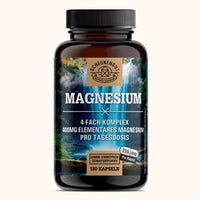
Many people search for the trio because it often turns up together in bone sets and mineral complexes. According to the available data, magnesium does not disturb calcium: 826 mg of extra magnesium did not change calcium absorption in one trial. The two can go together in the evening. Our Magnesium Bisglycinate brings 360 mg of elemental magnesium a day for that, chelated and gentle on the stomach.
Zinc against magnesium only becomes an issue at high amounts. Zinc intakes of 50 mg a day and more lowered magnesium balance. Those are very high amounts. With ordinary capsules you won't reach that range.
Magnesium contributes to normal muscle function, to normal functioning of the nervous system and to the reduction of tiredness and fatigue. Together with calcium and vitamin D, that makes an evening that's no longer a maths problem. Selenium stays with the zinc. Selenium contributes to the normal function of the immune system, just like zinc, and the conflict here is calcium against zinc, not selenium.
When Iron Is Involved: Who Disturbs Whom?
Calcium slows several players at once. In trials with wheat rolls, 300 to 600 mg of it cut iron absorption by 50 to 60 percent. Even 165 mg of calcium from milk, cheese or calcium chloride did the same. And iron can inhibit zinc absorption when it is taken together with zinc in a supplement. When the same amount of iron was added as fortification in a meal, the effect did not appear.
For all three minerals that means three time slots. Iron in the morning, zinc at midday, calcium in the evening. Sounds like organisation. It is just a sequence you write on the tubs once, and after that it runs by itself alongside breakfast, work and dinner. More on the pairs is in our guides on iron and calcium and on iron and zinc.
The Numbers to Look For on the Label
Add up all your supplements, plus what you eat. For zinc, the total from all sources counts, and the label gives the recommended daily amount. If you take high amounts long term, talk to your doctor. For calcium the upper limit is 2,500 mg. That is all you need to remember.
Your everyday intake adds up. Zinc turns up in surprisingly many tubs, from the multivitamin to the immune complex to the skin-and-hair capsule, and each one looks harmless on its own. So add it all up before you buy another zinc capsule.
Who Should Look Especially Closely
If you eat a lot of grains and wholemeal foods, you lose zinc to phytate anyway. Your need sits at the upper end of the 7 to 16 mg range. If a calcium supplement comes on top, the two belong at separate meals. The same goes for older people, because the series of measurements with the clearest long-term inhibition was run in postmenopausal women, and calcium amounts of up to 1,500 mg a day have been suggested for that age group. So: separate them. And high calcium doses are a matter for your doctor, not a self-experiment, if kidney function is reduced.
Matching Products from Scheunengut
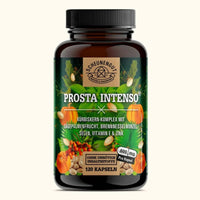
For the lunch window we have zinc in three complexes. The Fadogia Kraftkomplex for the active man combines zinc bisglycinate with fadogia extract 10:1 (1,000 mg per daily dose) and ashwagandha extract 10:1. In Stammkraft, zinc sits alongside maca, tribulus, ginseng and cordyceps; in PMS Intenso, alongside chasteberry, lady's mantle and saffron. Zinc contributes to the maintenance of normal testosterone levels in the blood, to normal fertility and reproduction and to the normal function of the immune system. All three come in plant-based capsules, free of additives, colourings and fillers.
For the evening window, the Electrolyte Complex supplies calcium, magnesium, potassium, sodium and chloride in 360 tablets, with no added sugar and no unnecessary additives or release agents, built for sport and active days. Calcium contributes to the maintenance of normal bones. Vitamin D3 + K2 goes with it, high-dose with 5,000 IU of D3 and 100 µg of K2Pure® (vitamin K2 as MK-7, over 99% all-trans): one tablet every fifth day, and 180 tablets last 900 days. Vitamin D contributes to the normal absorption/utilisation of calcium and phosphorus. Vitamin K also contributes to the maintenance of normal bones.
Magnesium Bisglycinate with 360 mg of elemental magnesium a day is vegan and free of additives, colourings and fillers. Magnesium contributes to the maintenance of normal bones. That fits the evening plan. And for the iron morning in the three-way plan there is Iron Bisglycinate with natural vitamin C from rosehip.
Scheunengut has existed since 2012, without investors and with a focus on pure raw-material quality. The raw materials come straight from the producer, everything is made in Germany, and every batch goes to an independent laboratory.
Frequently Asked Questions (FAQ)
Can you take zinc and calcium together?
Better not as supplements at the same meal. In measurements, a 600 mg calcium supplement cut zinc absorption noticeably, in one case by half. Put zinc at lunch and calcium at dinner. You don't need to avoid calcium from ordinary food.
How far apart should zinc and calcium be?
There's no measurement for that, because only taking them together was tested. As a practical rule, leave at least one meal in between: zinc at lunch, calcium in the evening. That's simpler than any hour-counting.
Can you take calcium, magnesium and zinc together?
Calcium and magnesium can share the evening, but zinc belongs at a different meal. In one trial, extra magnesium did not change calcium absorption. Magnesium and zinc only get in each other's way at very high zinc amounts.
When is the best time to take calcium, magnesium and zinc, including vitamin D3?
Zinc with breakfast or lunch; calcium, magnesium and vitamin D3 with dinner. Vitamin D contributes to the normal absorption/utilisation of calcium and phosphorus, which is why it goes with the calcium meal. This is a practical plan.
Can you take calcium, zinc and selenium all at once?
Better spread out: zinc and selenium at lunch, calcium in the evening. Selenium contributes to the normal function of the immune system, just like zinc. The known conflict is between calcium and zinc, not between selenium and zinc.
Which minerals compete for absorption, and how do I spread them over the day?
In measurements, calcium reduced the absorption of zinc and of iron, and iron in a supplement can slow zinc. The plan with three time slots: iron in the morning, zinc at midday, calcium in the evening. Magnesium goes with the calcium in the evening.
Is calcium from milk a problem for zinc?
In part, yes. An extra 470 mg of calcium from milk lowered zinc balance by around 2 mg a day. In daily life that's no reason to give up dairy. Just don't swallow your zinc capsule with a milky coffee or a bowl of yoghurt.
Health notice: This guide is for general information purposes only and does not replace individual medical or pharmaceutical advice. Food supplements are not a substitute for a balanced, varied diet and a healthy lifestyle. If you have health concerns, are pregnant or breastfeeding, or are taking medication, please consult a doctor or pharmacist. How our guides are created →
Sources
- High dietary calcium intakes reduce zinc absorption and balance in humans — Wood RJ, Zheng JJ, American Journal of Clinical Nutrition, 1997
- The effect of calcium carbonate and calcium citrate on the absorption of zinc in healthy female subjects — Argiratos V, Samman S, European Journal of Clinical Nutrition, 1994
- Zinc balance in adolescent females consuming a low- or high-calcium diet — McKenna AA et al., American Journal of Clinical Nutrition, 1997
- Mathematical model of zinc absorption: effects of dietary calcium, protein and iron on zinc absorption — Miller LV, Krebs NF, Hambidge KM, British Journal of Nutrition, 2013
- Calcium: effect of different amounts on nonheme- and heme-iron absorption in humans — Hallberg L et al., American Journal of Clinical Nutrition, 1991
- Dietary factors influencing zinc absorption — Lönnerdal B, Journal of Nutrition, 2000
- Effect of magnesium on the intestinal absorption of calcium in man — Spencer H et al., Journal of the American College of Nutrition, 1994
- Maximum level proposals for calcium in foods including food supplements — German Federal Institute for Risk Assessment (BfR), 2021