



Chasteberry is a cycle plant: the EU monograph names only the days before your period as its use. In perimenopause you can try it if nothing speaks against it. After your last period it has no purpose. Weight and blood pressure aren’t in the monograph, and heavy bleeding belongs with your gynaecologist first.
Chasteberry is a cycle plant, and that decides almost everything. While you still have periods in perimenopause, you can try it, as long as nothing on the caution list further down applies to you. If your last period was a year ago, though, it has lost the only occasion it is traditionally used for. Hot flushes, weight and blood pressure don’t appear in the EU monograph on the plant at all.
Plenty of women search for exactly this combination anyway. That’s understandable: everyone knows chasteberry from the shelf of women’s herbs, and in midlife the cycle starts to slip. Here is what can be said about the plant at this stage, what stays open, and where your gynaecologist comes before the capsule.
What chasteberry stands for – and what its monograph leaves out
Chasteberry, botanically Vitex agnus-castus, is made from the dried fruits of a shrub native to the Mediterranean. The European Medicines Agency (EMA) has published a monograph on it, dated March 2018. The indication is narrow: as a traditional herbal medicinal product, the fruit is intended for mild symptoms in the days before the period, based on long-standing use alone.
Anything else? Nothing. Menopause, hot flushes, sleep, mood, weight, blood pressure: none of it is listed as an indication. Weight and blood pressure are also missing from the reported side effects. The mechanism is open too. According to the monograph, the mechanism of action is not known. Findings on prolactin and dopamine come from preliminary studies, a lowering of raised prolactin levels in humans has not been convincingly shown, and the results on binding to oestrogen receptors are contradictory.
There is no authorised health claim under the EU regulation for chasteberry. So with it we talk about what is established: origin, extract, tradition. It has belonged to European herbal lore since antiquity.
Perimenopause: when the cycle wobbles, so does the reason to take it
The menopause transition rarely starts with the end of bleeding. It starts with its reshaping. The NHS lists a change in your periods as one of the first signs: they come more or less often, and the bleeding gets heavier or lighter, until at some point it stops altogether. Menopause means twelve months without a period.
That is awkward for chasteberry. Its traditional frame is the days before your period. If the period arrives after three weeks one time and after six the next, that frame blurs. Where does the window before the period begin, the one the plant would be meant for?
There is also a measuring problem that deserves an honest mention. The monograph lists cycle disorders among the reported side effects, and how often they occur is unknown. So if your cycle tips over while you’re taking it, you can’t say whether perimenopause or the plant is to blame. The two can’t be separated. A cycle diary still helps you and your doctor read the pattern, even though it can’t answer the question of cause.
As long as a cycle is still there, our chasteberry fits this phase: an especially high-dose extract from the ripe vitex fruit, one capsule daily, at any time of day.
After your last period: no cycle, no purpose
Twelve months without bleeding, and the NHS speaks of menopause. From here on there are no days before a period any more. No cycle, no job to do. The only frame of use in the monograph leads nowhere. Anyone who reaches for chasteberry now takes a cycle plant without a cycle. The monograph describes no use for this situation.
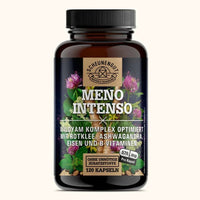
Other things take centre stage in this phase. The NHS lists hot flushes, night sweats, sleep problems, low mood, weight gain around the middle, heart palpitations and joint pain. For this stage of life we have built a complex of its own: Meno Intenso, with wild yam, red clover, Siberian rhubarb, ashwagandha and valerian, plus iron, vitamin B6, B12 and folic acid. Chasteberry is not in it.
Heavy bleeding: get it checked first, then experiment
The question comes up often: chasteberry for heavy bleeding in menopause? It isn’t intended for that. Heavier bleeding is one of the possible changes of perimenopause, but the NHS advises booking an appointment if you bleed more than before. And any bleeding that appears after twelve months without a period needs to be checked. Even once. Even if it is just spotting or brownish discharge.
So the order is: gynaecologist first, then decide. A plant with an unknown mechanism, with cycle disorders among its reported side effects, is the wrong experiment while the bleeding is unexplained. The best thing you can bring to the appointment is a calendar showing how long and how heavy your bleeds were.
Does chasteberry cause weight gain in menopause?
According to the monograph, weight gain isn’t on the list. Reported are allergic reactions up to swelling of the face, difficulty breathing and swallowing, skin rash, hives and acne, headache, dizziness, nausea, abdominal pain and cycle disorders. How often these occur is unknown. That’s no free pass. A list like this contains only what has been reported.
The scales creeping up at this stage of life has a more obvious cause anyway. The NHS lists weight gain, often around the middle, as a symptom of the menopause. The German Heart Foundation describes the mechanism: oestrogen levels fall while testosterone levels rise, and women store more fat in the abdomen, which in turn produces hormones that stimulate appetite and push blood pressure up. So if you weigh two kilos more after three months of capsules, you have two suspects, and the menopause explains a gain like that all by itself.
Blood pressure in menopause: what chasteberry has to do with it
The question shows up in search queries because blood pressure really does become an issue in this phase. According to the German Heart Foundation, the risk of high blood pressure doubles with menopause because oestrogen levels drop. Oestrogen keeps blood vessels elastic, and for many women excess weight, anxiety and sleep problems add further risk factors. Their advice: stay alert and measure regularly.
Chasteberry is missing from this equation. The EU monograph names blood pressure neither among the side effects nor among the interactions, but that is a finding about the documentation, not proof that nothing ever happens to any woman. If you take blood pressure medication, show your doctor the pack at your next check-up. What counts is the measured value, not how you feel.
Who should ask first – or skip it
The monograph lists a number of precautions. For women in midlife, these are the ones that count:
- Pregnancy and breastfeeding: not recommended. As long as periods still come, pregnancy isn’t ruled out in perimenopause either.
- Hormone medication: if you take oestrogens or anti-oestrogens, for example as part of hormone therapy, ask your doctor first. According to the monograph, interactions with oestrogens, anti-oestrogens and dopamine agonists and antagonists can’t be ruled out.
- Hormone-sensitive cancer: if you have or have had an oestrogen-sensitive cancer, talk to your doctor first.
- Pituitary gland: if you have a history of pituitary disease, ask beforehand too. With prolactin-producing tumours, the plant may mask symptoms.
- Allergy: hypersensitivity to the plant is a reason not to take it.
One more point from the monograph: in two studies with repeated dosing in rats (4 and 26 weeks), there were signs of liver damage. If you already have liver problems, don’t take the capsule on your own initiative.
Four plants, four roles: chasteberry, lady’s mantle, wild yam, black cohosh
Lady’s mantle is a native meadow plant that has accompanied women through several life stages in European folk medicine. It traditionally sits next to chasteberry. Our cycle complex PMS Intenso contains both together. The chasteberry cautions then apply to it too.
Wild yam supplies the plant compound diosgenin. It is not a hormone, and the idea that the root delivers “natural progesterone” isn’t correct. With us it is in Meno Intenso, and also on its own as a high-dose extract with 20% diosgenin. Black cohosh, a North American woodland perennial, has long been the classic menopause plant. Its preparations carry a liver warning.
As a rule of thumb from tradition: chasteberry and lady’s mantle belong to the cycle, wild yam and black cohosh to the time around its end.
How to go about it if you want to try it for three months
Go through the caution list first. Then look at the product: the label should name the ripe fruit as the plant part, the extract ratio and the daily dose. With our chasteberry, the ingredient list gives the extract ratio, and the intake recommendation is one capsule daily with sufficient liquid. A ratio of 5:1 means that five parts of dried fruit make one part of extract.
The monograph provides for a duration of three months. If your symptoms persist after that, it’s time to talk to your doctor, even if your calendar hasn’t shown anything clear by then. Keep a calendar alongside: bleeding yes or no, heaviness, sleep, hot flushes. After three months you’ll see in black and white whether anything has moved.
Then your calendar decides.
Matching Products from Scheunengut
Scheunengut has been around since 2012, with no investors and a focus on pure raw-material quality. Every batch goes to independent labs, and you’ll find the latest lab report on the product page.
Our Chasteberry is an especially high-dose extract from the ripe vitex fruit. The plants are Greek, and the batches come from growing areas around Crete. Extraction runs twice, with water for the water-soluble and with alcohol for the fat-soluble constituents, entirely without chemical solvents. One capsule a day, about 8 cents. It suits you if you still have a cycle and want to take the plant on its own.
PMS Intenso is a cycle complex with seven plants: chasteberry, lady’s mantle, silverweed, saffron, lemon balm, vervain and griffonia. Vitamin C, vitamin B6 and zinc are added. Vitamin B6 contributes to the regulation of hormonal activity, and zinc contributes to normal acid-base metabolism. Daily dose: two capsules, best after a meal.
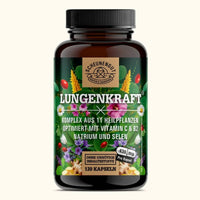
Meno Intenso is our menopause complex, and it contains no chasteberry. Inside are wild yam extract with 20% diosgenin, red clover extract with 8% isoflavones, Siberian rhubarb as a source of phytoestrogens, ashwagandha, valerian, iron bisglycinate, vitamin B6, vitamin B12 as methylcobalamin and folic acid. Folate contributes to normal psychological function, and vitamin B12 contributes to the normal function of the nervous system. One capsule daily, in the morning after the first meal, vegan, about 37 cents a day. If you’re on hormone therapy or have a hormone-sensitive history, talk to your doctor first.
Frequently Asked Questions (FAQ)
Can you take chasteberry during menopause?
In perimenopause, while periods still come, you can try it if nothing on the caution list applies. After your last period it has no purpose, because the monograph only knows the days before the period. If you’re on hormone therapy, ask your doctor first.
Can you combine chasteberry and lady’s mantle in menopause?
Both sit side by side in tradition, both belong to the cycle, and together they are in PMS Intenso. But for the time after your last period, this combination is no more intended than chasteberry on its own. The chasteberry cautions apply to the combination too.
Does chasteberry cause weight gain in menopause?
Weight gain isn’t among the side effects reported in the EU monograph. Weight gain around the middle is part of menopause itself, according to the NHS and the German Heart Foundation. The scales are a menopause topic here.
What are people’s experiences with chasteberry in perimenopause?
Reports online range from thrilled to disappointed, and none of them can be checked. We don’t make up experiences. Your own calendar over three months is the more reliable answer.
Can you take chasteberry for heavy bleeding in menopause?
It isn’t intended for that. Heavy or more frequent bleeding gets checked by a doctor first. So does any bleeding after twelve months without a period, spotting included. Only after that is it worth thinking about plants.
Does chasteberry affect blood pressure in menopause?
The EU monograph names blood pressure neither among side effects nor among interactions. According to the German Heart Foundation, the risk of high blood pressure rises as oestrogen falls. Measure your blood pressure regularly, and if you take medication, show your doctor the pack.
How long should you take chasteberry?
The monograph provides for three months. If symptoms persist after that, see your doctor. Your calendar decides whether you stay with it.
Health notice: This guide is for general information purposes only and does not replace individual medical or pharmaceutical advice. Food supplements are not a substitute for a balanced, varied diet and a healthy lifestyle. If you have health concerns, are pregnant or breastfeeding, or are taking medication, please consult a doctor or pharmacist. How our guides are created →
Sources
- European Union herbal monograph on Vitex agnus-castus L., fructus (EMA/HMPC/606742/2017) — European Medicines Agency (EMA), 2018
- Agnus castus fruit (Agni casti fructus) — European Medicines Agency (EMA)
- Menopause: Symptoms — NHS
- Menopause: These Heart Risks Women Should Know About — German Heart Foundation (Deutsche Herzstiftung)