



Yes, you can take iron and magnesium on the same day, just not in the same dose. One trial found less iron absorption after magnesium hydroxide, a second did not. The plan costs nothing: iron with vitamin C in the morning, magnesium after dinner, several hours in between.
Yes, you can take iron and magnesium on the same day. You don’t have to swallow them in the same minute: with iron, spacing them costs nothing and may pay off. Iron goes in the morning, magnesium after dinner. That’s the whole plan. It works even though the data on this combination are thinner than many guides make out. Honestly: there is no ban, just a habit that has proved its worth.
Each mineral has its own job. Iron contributes to normal formation of red blood cells and haemoglobin, and to the reduction of tiredness and fatigue. Magnesium contributes to normal muscle function, to the normal functioning of the nervous system and to normal energy-yielding metabolism. Two jobs, two times of day. Done.
What has actually been measured for magnesium and iron in the gut
The worry behind the question: magnesium might slow down iron absorption. That is only partly backed up. The human studies we found worked with magnesium hydroxide, the ingredient in heartburn remedies.
It started in 1998 with a group around Kevin Wallace. They gave 13 healthy men roughly 5 mg of iron per kilogram of body weight, followed an hour later by magnesium hydroxide, 4.5 g per gram of iron. The rise of iron in the blood came out about 46 percent smaller than without magnesium. A year later other authors tested the same thing on 16 men: 10 mg of iron per kilogram as ferrous sulphate, then 5 mg of magnesium hydroxide per mg of iron half an hour later. This time there was no statistically significant difference. Two trials, two results.
Add an older paper from 1986 that compared several antacids. One with aluminium and magnesium hydroxide did not significantly reduce iron absorption. Sodium bicarbonate and calcium carbonate, on the other hand, pushed the rise of iron in the blood down by 50 and 67 percent respectively. When the calcium carbonate sat inside a multivitamin-mineral tablet, the effect didn’t appear. The authors suspect that the tablet’s vitamin C bound the iron in a way that let it arrive anyway; they haven’t proved it.
Let’s put that in context. Both trials with magnesium simulated an iron overdose. At 70 kilograms of body weight, 5 mg per kilogram is 350 mg of iron at once. Look at your label and compare. For magnesium citrate, bisglycinate or oxide in capsule doses, we found no controlled human study. That means there is no proof of interference. There is no proof of an all-clear either.
Why you should separate them anyway
When the data are open, effort decides. And the effort here is zero. Something else speaks for separate times: if your stomach acts up, two separate doses tell you at once which of the two minerals is behind it, whereas with a shared dose you would have to guess. Iron in the morning and magnesium in the evening are two fixed points in your day, and they’re easier to remember than a joint dose at 12:40. Besides, iron has a genuine weak spot when it comes to company, and it lies elsewhere: calcium. People who took 165 mg of calcium from milk, cheese or calcium chloride along with their iron absorbed 50 to 60 percent less iron in a trial with 126 participants.
This applies to mixed products too. An electrolyte mix with calcium is, as far as iron is concerned, not a magnesium supplement but a calcium supplement. It belongs on the other side of the day as well. You’ll find more on this pair in our guide to iron and calcium.
How to put both into your day
- Morning: iron with vitamin C, with water or a glass of juice, before breakfast or with a small meal. Our iron bisglycinate brings natural vitamin C from rose hip along: iron and vitamin C sit in the same tablet. Milk, cheese, coffee and tea come later.
- Midday: zinc and vitamin D, each with a proper meal. Our vitamin D3 + K2 is a depot with 5,000 IU: one tablet every five days.
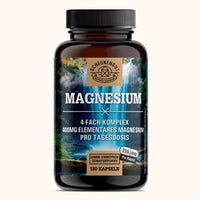
- Evening: magnesium after dinner. If you split the amount, the first half goes with lunch and the second in the evening. Our magnesium bisglycinate delivers 360 mg of elemental magnesium in three capsules, the magnesium complex 400 mg in two.
That leaves several hours between iron and magnesium, even on days when you take the magnesium portion earlier because you’re out in the evening and dinner is late. Research doesn’t give an exact number from which it is safe. The two-hour rule from calcium is a rule of thumb, not a measured limit for magnesium. If you can’t tolerate iron on an empty stomach, take it with a small meal without dairy. The chelate form is made for that: in iron bisglycinate, the iron is attached to glycine, without the typical stomach pressure. The gap to the magnesium stays.
Where does the vitamin C belong?
With the iron. Vitamin C increases iron absorption, and that is exactly why it is in the combination. It has nothing to do with the magnesium. If your iron supplement has the vitamin C built in, you’re done. In our iron bisglycinate it comes from rose hip. If you take vitamin C separately, put it with the iron capsule in the morning rather than in the evening with the magnesium.
By the way, you shouldn’t conclude from the 1986 paper that vitamin C smooths over every interaction. It was one case with calcium carbonate in a single tablet, not a general law. The benefit still stands: with vitamin C, more of your iron arrives.
Adding zinc: then the plan has three parts
Many people ask about the triple combination of zinc, magnesium and iron. Here the assignment matters. Iron can reduce zinc absorption when both are swallowed together as supplements. When the same amounts are in a meal, a review found no such effect. That is why zinc goes with lunch and not with the iron in the morning. Zinc contributes to the normal function of the immune system, and you get nothing of that if it loses out to the iron.
Zinc and magnesium get along at the usual amounts, so you can put the two into the same meal without a guilty conscience if that makes your day easier. How far you can go there is covered in our guide to zinc and magnesium. For iron and zinc alone, there is a separate article with the rule of thumb on dosing.
Evening magnesium: one portion or two?
The German Federal Institute for Risk Assessment (BfR) advises splitting magnesium from food supplements into at least two doses a day. The reason is tolerability: too much at once can cause diarrhoea, and most of the studies behind the recommendation used two or more portions. According to the BfR, the symptoms go away by themselves within one to two days.
For your plan, that means one portion with lunch and one after dinner. With the magnesium bisglycinate that goes smoothly: one capsule with lunch, two after dinner, 360 mg of elemental magnesium in total. The magnesium complex with 400 mg manages it with two capsules, one with each meal. The iron then stands alone in the morning, and a few hours separate the iron capsule from the first magnesium portion. If you get by with less magnesium, take only the evening portion. That’s fine too.
When your day looks different: shifts, evening workouts, travel days
The clock times aren’t sacred. The order is. If you work shifts, take the iron after waking and the magnesium before sleep, whether that is 6 am and 2 pm or 3 pm and 7 am. If you train in the evening, put the magnesium after the workout and the iron on the next morning. On travel days, it’s enough not to put the two in the same hand: iron in the carry-on pill box for the morning, magnesium with the hotel dinner.
And if you forget a dose? Then you don’t make it up twice. You carry on as normal the next day. With iron in the morning and magnesium in the evening, you have plenty of chances to get back into the rhythm anyway.
When to look more closely
Whether your iron stores are empty at all, only a blood test shows. So you don’t take iron on suspicion but with a value in hand. How to read it is covered in our article on iron levels.
If you take heartburn medication, ask. Magnesium hydroxide is exactly such an active ingredient, and there are other antacids in this group. The same goes for prescribed iron supplements: your pharmacy knows what the gap to your other medication should look like.
Matching Products from Scheunengut
Scheunengut has been around since 2012, with no investors and a focus on pure raw-material quality. Raw materials and finished products of every batch go to independent labs, and you’ll find the latest lab report on the product page.
For the morning: iron bisglycinate + natural vitamin C. The iron comes as a chelate on glycine, highly bioavailable and well tolerated. The vitamin C comes from rose hip, and vitamin C increases iron absorption. Vegan, made in Germany, lab-tested batch by batch. About 9 cents a day.
For the evening there are two routes. The magnesium bisglycinate is chelated, gentle on the stomach and high-dose: 360 mg of elemental magnesium in a daily dose of three capsules, vegan, with no additives, colourings or fillers, about 26 cents a day. Magnesium contributes to normal muscle function. If you want fewer capsules, take the magnesium complex: four magnesium sources (citrate, malate, bisglycinate and oxide) deliver 400 mg of elemental magnesium in two capsules, about 22 cents a day.
Two more building blocks cover the rest of your day. Our vitamin D3 + K2 comes as a depot with 5,000 IU and 100 µg of K2Pure®. At one tablet every five days, 180 tablets last 900 days. That holds. Vitamin D contributes to the normal function of the immune system. The electrolyte complex bundles magnesium, potassium, calcium, sodium and chloride for sport and hot days. It contains calcium, so it belongs on the other side of the day from your iron. We don’t carry zinc separately.
Frequently Asked Questions (FAQ)
Can you take iron and magnesium together?
Yes, on the same day. Just not in the same dose: with magnesium hydroxide, iron absorption dropped by about 46 percent in one trial, and not in a second. The safer solution costs nothing: iron in the morning, magnesium in the evening.
How far apart should magnesium and iron be?
Several hours work well, for example iron before breakfast and magnesium after dinner. There is no measured minimum gap for magnesium. The two-hour rule comes from calcium and is only a rule of thumb here.
Can you take iron, magnesium and vitamin C together?
Yes. Vitamin C increases iron absorption. It belongs with the iron capsule in the morning. The magnesium still goes in the evening, because it gets nothing from the vitamin C. Our iron bisglycinate has natural vitamin C from rose hip built in and saves you the extra.
Can you take zinc, magnesium and iron together?
On the same day, yes; in one dose, no. Iron in the morning, zinc with lunch, magnesium in the evening. Taken together as supplements, iron can reduce zinc absorption; in a meal, that wasn’t seen.
Can you take vitamin D, iron and magnesium on the same day?
Yes, if you spread them over the day: iron in the morning, vitamin D with lunch, magnesium in the evening. How magnesium and vitamin D fit together is explained in a guide of its own.
Should I take iron tablets and magnesium in the morning or the evening?
Iron in the morning, magnesium in the evening. If you can’t tolerate iron on an empty stomach, take it with a small meal without dairy and keep the evening for the magnesium.
Health notice: This guide is for general information purposes only and does not replace individual medical or pharmaceutical advice. Food supplements are not a substitute for a balanced, varied diet and a healthy lifestyle. If you have health concerns, are pregnant or breastfeeding, or are taking medication, please consult a doctor or pharmacist. How our guides are created →
Sources
- Effect of magnesium hydroxide on iron absorption following simulated mild iron overdose in human subjects — Wallace KL et al., Academic Emergency Medicine, 1998
- Effect of magnesium hydroxide administration on iron absorption after a supratherapeutic dose of ferrous sulfate in human volunteers: a randomized controlled trial — Snyder BK, Clark RF, Annals of Emergency Medicine, 1999
- The effect of antacids on the absorption of simultaneously ingested iron — O'Neil-Cutting MA, Crosby WH, JAMA, 1986
- Calcium: effect of different amounts on nonheme- and heme-iron absorption in humans — Hallberg L et al., American Journal of Clinical Nutrition, 1991
- Dietary factors influencing zinc absorption — Lönnerdal B, Journal of Nutrition, 2000
- BfR assesses maximum daily intake of magnesium in food supplements (press release 50/2017) — German Federal Institute for Risk Assessment (BfR), 2017