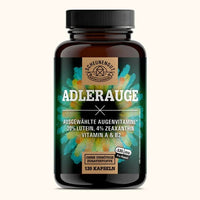

Turmeric and omega-3 are often mentioned together because both are fat-soluble and therefore pair well with a meal containing some fat. It's best to take them together with food; for curcumin, pay attention to bioavailability (often combined with piperine), and for omega-3, check the EPA and DHA content on the nutrition label.
Turmeric and omega-3 tend to show up together in guides, forums, and on store shelves. If you're looking into a balanced diet and sensible supplementation, you'll run into both fairly quickly – the golden-yellow root from Indian cuisine and the long-chain fatty acids found in fish or algae oil. That raises an obvious question: can you actually take turmeric and omega-3 together, and is there anything to keep in mind if you do?
This guide takes a fact-based look at the topic. The goal isn't to promise you an effect, but to help you understand what the two actually have in common in practical terms: why they're so often mentioned in the same breath, how to combine them sensibly in everyday life, and what to look for when choosing a product. One thing upfront: a lot of far-reaching claims circulate around turmeric that aren't backed by authorized European health claims. That's why we stick to the verifiable facts here and draw a clear line between what's actually confirmed for omega-3 and what can only be described – not claimed – for turmeric.
Turmeric, Curcumin, and Omega-3 in Brief
Turmeric – also known as yellow root, botanically Curcuma longa – is the rhizome of the plant and has been a staple of South and Southeast Asian cooking for centuries. As a spice, it's what gives curry blends their signature color. The most talked-about compound in the root is curcumin, a plant compound from the curcuminoid family that's responsible for its intense yellow color. Curcumin is fat-soluble and, on its own, is poorly absorbed by the body – a point that becomes important later when it comes to combining the two.
Omega-3 refers to a family of polyunsaturated fatty acids. The ones most relevant to your diet are the long-chain marine fatty acids EPA (eicosapentaenoic acid) and DHA (docosahexaenoic acid), found mainly in oily saltwater fish and algae oil, along with the plant-based precursor ALA (alpha-linolenic acid) from flaxseed oil, walnuts, or rapeseed oil. EPA and DHA have EU-authorized, scientifically evaluated health claims. Specifically: EPA and DHA contribute to normal heart function – a claim that applies to a daily intake of at least 250 mg of EPA and DHA.
One important point of context: there are currently no authorized health claims in the EU for turmeric or curcumin. Everything you read here about turmeric is therefore purely descriptive – covering culinary use, solubility, and absorption, not any particular effect.
Why So Many People Combine Turmeric and Omega-3
There are several understandable, entirely practical reasons why the two are so often mentioned together:
- Both are fat-soluble. Curcumin and the omega-3 fatty acids EPA and DHA are better absorbed by the body when dietary fat is present at the same time. Taking them together with a meal that contains some fat suits both of them well.
- They belong to the same general interest area. Many people who look into omega-3 are already paying attention to a mindful, nutrient-rich diet – and turmeric is a popular spice within that same world. So the two topics naturally overlap in people's everyday lives, regardless of any specific effect.
- Practical bundling. If you're already taking one supplement with a meal, it's easy to take a second one at the same time. That's simply a matter of routine, and it makes everyday supplementation more convenient.
So this isn't about any claimed combined effect – it's about the practical things the two have in common: the same solubility, the same timing, the same area of interest. That's exactly what makes combining them so organizationally convenient.
How to Sensibly Combine Turmeric and Omega-3
Because both are fat-soluble, the best shared framework practically suggests itself: a meal that contains some fat.
Together, With a Meal That Contains Fat
The simplest approach is to take your turmeric or curcumin product together with your omega-3 at one of your main meals. A bit of oil, nuts, avocado, cheese, or any other fat-containing food on your plate creates favorable conditions for both fat-soluble substances. Whether it's breakfast, lunch, or dinner is secondary – what matters is that fat is part of the meal. A capsule taken on an empty stomach, by contrast, isn't ideal for either substance. Tying your supplement routine to a fixed meal also means you're less likely to forget it and makes it easier to stick with over the weeks – an often underestimated factor, since consistent intake usually matters more with supplements than the exact timing. If you'd like to know which time of day works best for your omega-3, there's a dedicated guide on the best time to take omega-3.
Curcumin Bioavailability and Piperine
Curcumin is considered poorly bioavailable – the body absorbs only a small amount of it from plain turmeric powder. That's why many curcumin products include additional ingredients intended to improve absorption. The best known is piperine, a component of black pepper that's frequently listed in combination products. Other formulations rely on micellar or oil-based carriers. A look at the ingredient list will tell you which route a given product takes. Here, too, context matters: these formulations relate purely to the absorption of the substance, not to any health effect.
Omega-3 and the Practicalities of Taking It
With omega-3, dosage matters just as much as fat does. How much EPA and DHA makes sense for you depends on your diet – if you rarely eat fish, you're starting from a different place than someone who eats several fish meals a week. The guide on how much omega-3 per day gives you an overview. And if you're wondering whether – and for how long – ongoing supplementation makes sense, the article on how long you should take omega-3 can help. Curcumin and omega-3 don't interfere with each other when taken together – they simply share the same favorable setting, namely a fat-containing meal, which makes it easy to plan them side by side.
What to Look for When Choosing a Product
Whether combined or taken separately, quality comes down to what's actually inside the capsule. Two figures are worth a closer look.
Curcumin Content, Not Just Turmeric Quantity
Packaging often advertises a large amount of "turmeric." What's actually more meaningful, though, is the stated curcumin or curcuminoid content, since curcumin only makes up a small fraction of the raw root. High-quality products state the curcumin content or a standardized extract explicitly, rather than just listing the total amount of turmeric powder. Also check whether – and which – bioavailability-enhancing ingredient (such as piperine) is included. An extract labeled with a defined curcuminoid percentage is much easier to evaluate than a plain gram figure for "turmeric," which can hide very different actual amounts of curcumin.
EPA and DHA Content, Not Just Total Oil
The same principle applies to omega-3: it's not the amount of "fish oil" or "algae oil" that counts, but the EPA and DHA content. A product with 1000 mg of oil can deliver very different amounts of EPA/DHA. Since the authorized claim about normal heart function is tied to at least 250 mg of EPA and DHA per day, it's worth reading the per-serving figures carefully. The guide on recognizing omega-3 quality explains how to tell good oils from weaker ones, looking at TOTOX value, potency, and purity. If you want structured help deciding between products in general, the omega-3 buying guide is a good place to start. And if the fishy taste has put you off so far, it's worth checking out omega-3 without a fishy taste or burping.
An Honest Assessment
In fairness, it's worth being clear about what this combination is – and what it isn't. Taking turmeric and omega-3 together is, above all, a practical choice: both are fat-soluble, both suit the same fat-containing meal, and both fit easily into one routine. This doesn't claim any special combined benefit beyond the sum of the individual ingredients.
For omega-3, there are evaluated claims – for example, that EPA and DHA contribute to normal heart function (from 250 mg daily). For turmeric and curcumin, by contrast, there are no authorized health claims in the EU; the way they're described here remains deliberately descriptive. If you use turmeric, you're using it as part of your diet, not as a proven remedy with a guaranteed effect. That distinction isn't just a technicality – it helps you read marketing promises realistically and keep your expectations of a combination product grounded.
One more point concerns your individual situation. Curcumin is linked to the gallbladder and bile ducts; if you have issues there, gallstones, or a known condition, you should check with a doctor before taking it. The same applies if you take medication – blood thinners in particular – or if you're pregnant or breastfeeding. Supplements are not a substitute for a varied diet or medical advice. If in doubt, talking to a doctor or pharmacist is the right way forward.
Health notice: This guide is for general information purposes only and does not replace individual medical or pharmaceutical advice. Food supplements are not a substitute for a balanced, varied diet and a healthy lifestyle. If you have health concerns, are pregnant or breastfeeding, or are taking medication, please consult a doctor or pharmacist. How our guides are created →
Sources
- Regulation (EU) No 432/2012 – List of permitted health claims made on foods — Approved health claims for EPA and DHA, including normal heart function (from 250 mg/day), 2012
- EFSA Panel on Dietetic Products, Nutrition and Allergies (NDA): Scientific Opinion on EPA and DHA and maintenance of normal cardiac function — Scientific assessment of the claim on EPA/DHA and normal heart function, 2010
- Curcumin in food supplements: Acceptable daily intake may be exceeded — German Federal Institute for Risk Assessment (BfR), Opinion No. 040/2021, 2021
- European Medicines Agency (EMA/HMPC): Community herbal monograph on Curcuma longa L., rhizoma — Monograph on turmeric root with guidance on bile ducts and usage restrictions, 2018