



Yes, you can take zinc and omega-3 together. They use different routes in the gut and don't interfere with each other. Take both with a meal that contains some fat, such as cheese, egg or salmon. Only iron needs to be kept several hours apart from zinc.
Yes, you can take zinc and omega-3 together, even in the same meal. They travel through the gut by different routes and don't get in each other's way. One rule stays: take both with food, and the omega-3 ideally with a meal that contains some fat. Do that and you've got everything out of the timing there is to get. No alarms, no spacing rules for the rest of the day.
The same goes for the bigger combinations many people search for: zinc with vitamin D and omega-3, with selenium, with vitamin C or with magnesium. More on those below. And on the one exception that actually matters.
Why zinc and omega-3 don't get in each other's way
Zinc is a trace element. It is absorbed in the small intestine via transport pathways that other minerals compete for, iron for example. EPA and DHA, on the other hand, are fats. With the help of bile acids and digestive enzymes they are broken into fine droplets and pass through the gut wall that way. Two different mechanisms. No shared door. No queue.
To be straight about it: we found no study that measures zinc and EPA/DHA directly against each other. What we did find are the factors that affect each side on its own. For zinc absorption, the review by Lönnerdal (2000) names phytate from cereals, iron in a supplement and protein in the meal. For omega-3, the review by Schuchardt and Hahn (2013) names the chemical form, the fat content of the meal and the capsule formulation. The other nutrient doesn't appear in either summary.
That doesn't create a duty to separate anything. It leaves you with a small job for your plate, and it's quickly done.
How to fit both into your day
The simplest option: both capsules at lunch, provided there's fat on the plate, which is most days with cheese, eggs or fish. Cheese, egg, avocado, nuts, olive oil, a piece of salmon. The omega-3 gets its fat, the zinc gets a full stomach. Some people don't tolerate zinc well on an empty stomach. A slice of bread usually fixes that. If your zinc comes in a complex, the same applies. Our Stammkraft supplies 10.5 milligrams of zinc in three capsules, PMS Intenso 10 milligrams in two, and both suit lunch.
The reason is simple: omega-3 is absorbed much better with a fatty meal than with a glass of water on an empty stomach. With ethyl ester capsules the difference is especially large. If you swallow your capsule with a quick espresso standing up, you waste a good part of it, whether or not a zinc tablet sits next to it.
If you'd rather split them, that works too:
- Breakfast with egg or cheese on bread: the zinc.
- Dinner with olive oil or fish: the omega-3.
- Nothing in between that you need to think about.
For the zinc meal, one thing applies: skip the wholegrain bowl with bran. According to Lönnerdal, phytate, found in cereals and pulses, has a strong negative effect on zinc absorption. Protein in the meal tends to help. The boiled egg beats the muesli. Obvious, really.
Zinc, vitamin D, selenium, vitamin C, magnesium: when it's more than two capsules
Vitamin D is fat-soluble, like omega-3, so the fat in your omega-3 meal helps it along. Vitamin D contributes to the normal function of the immune system, and so does zinc. Nothing speaks against taking all three in one meal, and if you only eat one meal with fat in the morning anyway, you save yourself two separate times to remember. Our Vitamin D3 Depot with K2 brings 5,000 IU of vitamin D3 and 100 micrograms of K2 (MK-7) in one tablet that you take only every fifth day, ideally with the meal that has fat.
Selenium and vitamin C are unremarkable. We know of no inhibition between either of them and zinc or omega-3, and zinc, selenium and vitamin C often sit together in one immune product. Zinc also contributes to the maintenance of normal hair, skin and nails, and selenium contributes to the maintenance of normal nails. Here the total counts, not the gap between doses. Add up every label. Yes, every one, so you don't end up with a very high zinc amount without noticing. It happens easily when a multivitamin, an immune complex and a single zinc capsule are all open in the cupboard on the same day.
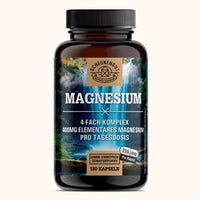
With magnesium there is a real finding, but with small print. Only with sustained, very high zinc intakes did magnesium balance fall in one study (Nielsen and Milne, 2004). Below that, we know of nothing that shows a meaningful inhibition. Magnesium contributes to normal muscle function and fits well into the evening. Our Magnesium Bisglycinate supplies 360 milligrams of elemental magnesium in three capsules that you take with meals, the last one with dinner. Your lunch with zinc and omega-3 is unaffected.
The one case where you should separate: iron
If you take iron alongside zinc, a gap really is due here. Lönnerdal describes how iron can inhibit zinc absorption when both are given together as a supplement. When the same amount of iron comes in an ordinary meal, the effect doesn't show.
In practice: high-dose iron and high-dose zinc don't belong in the same hand. Iron in the morning, zinc at lunch. That simple. Several hours apart is a sensible rule of thumb. Our Iron Bisglycinate with natural vitamin C from rose hip belongs in the morning, and vitamin C increases iron absorption. For the omega-3 nothing changes; it can join the zinc meal.
How much zinc, how much EPA and DHA?
For zinc, the total from all sources counts, so food plus supplements. With several zinc products the amount adds up fast. The German Federal Institute for Risk Assessment (BfR) advises caution with zinc supplements taken as several products. That means you have to do the adding yourself: multivitamin, immune complex, zinc capsule.
Zinc contributes to the normal function of the immune system. Zinc also contributes to the maintenance of normal hair, skin and nails. You don't need peak doses for that. Regularity beats any record dose that you drop after three weeks because your stomach won't play along.
With omega-3, what counts is the EPA and DHA inside, not the “1000 mg fish oil” on the front of the pack. EPA and DHA contribute to the normal function of the heart. DHA contributes to the maintenance of normal brain function and to the maintenance of normal vision. The European Food Safety Authority (EFSA) considers supplemental EPA and DHA combined of up to 5 grams a day safe for adults (as of 2012). If you take blood thinners or have a heart condition, talk through the dose with your doctor first.
When buying: the form matters for both
With omega-3, the chemical form is part of the answer. EPA and DHA from triglycerides are absorbed much better than from ethyl esters (Lawson and Hughes, 1988). If the label says “triglyceride form” or “natural triglycerides”, that's the better variant. If it says nothing, ask the manufacturer before you put the pack in your basket and go looking on the back later. It sounds like a detail, but it's the point where good products separate from arbitrary ones: lay the labels of two brands side by side and sort them not by price but by what they say about form and daily amount. After that, look at the daily dose. How much EPA, how much DHA, not just the total oil, because only these two fatty acids carry the authorised claims. On our Mamasmilch it's printed openly on the label: 300 milligrams of omega-3, of which 30 milligrams DHA, per daily dose of three capsules.
With zinc, look at the compound. Lönnerdal lists amino acids such as histidine and methionine, and organic acids such as citrate, as substances that favour zinc absorption and are used in zinc supplements. Zinc citrate and amino-acid-bound forms such as bisglycinate are therefore sensible candidates. In our Fadogia complex the zinc comes as bisglycinate. The amount is listed on the label as elemental zinc, and that's the figure you add up for your total.
Matching Products from Scheunengut
Zinc and omega-3 come to you from a house that has worked without investors since 2012 and puts pure raw-material quality first. Every batch goes to an independent lab. The current lab report is attached as a file to every product page. Both nutrients sit in complexes, each with its own focus.
Stammkraft is the maca complex for active men, with cordyceps, tribulus, ginseng and L-citrulline. It contains 10.5 milligrams of zinc in three capsules, 105 per cent of the nutrient reference value. At three capsules a day the tub of 180 capsules lasts 60 days. Zinc contributes to the maintenance of normal testosterone levels in the blood. Zinc contributes to normal fertility and reproduction. The Fadogia Agrestis strength complex brings 1,000 milligrams of fadogia extract 10:1 and ashwagandha, plus 5 milligrams of zinc as bisglycinate in two capsules. At two capsules a day, 60 capsules last 30 days. For women around the cycle there is PMS Intenso, a gentle complex with chasteberry, lady's mantle and saffron. Two capsules supply 10 milligrams of zinc and 1.4 milligrams of vitamin B6, 100 per cent each, so 90 capsules last 45 days. Vitamin B6 contributes to the regulation of hormonal activity. Zinc contributes to the normal function of the immune system.
Omega-3 is in Mamasmilch, the nursing complex with activated fenugreek extract, fennel, folic acid, choline and vitamin B12. Three capsules contain 300 milligrams of omega-3, of which 30 milligrams DHA. At two capsules a day the tub of 120 capsules lasts 60 days. DHA contributes to the maintenance of normal brain function. DHA contributes to the maintenance of normal vision. Made for the breastfeeding period.
Then the range for the rest of your daily plan: the Vitamin D3 Depot with K2 for the meal with fat, the Iron Bisglycinate with Vitamin C for the morning, far away from the zinc, and the Magnesium Bisglycinate with 360 milligrams of elemental magnesium for the evening. All vegan, all lab-tested.
Frequently Asked Questions (FAQ)
Can you take zinc and omega-3 together?
Yes. Zinc is a trace element, EPA and DHA are fats, and they use different routes in the gut. We found no study showing that they inhibit each other. Take both with a meal that contains some fat; as a rule, that's enough.
Can you take zinc, vitamin D and omega-3 together?
Yes, it's a well-worn trio. Vitamin D is fat-soluble and benefits from the fat in the meal where you take your omega-3 anyway. Vitamin D and zinc both contribute to the normal function of the immune system. The zinc simply comes along to the table.
Can you take zinc, selenium or vitamin C with omega-3?
Yes. We know of no inhibition for any of these combinations, and zinc, selenium and vitamin C are often in the same product. For zinc and selenium, watch the total across all labels rather than the gap between doses. The zinc belongs with food, the omega-3 with a meal that has fat.
Can I take zinc, magnesium and omega-3 on the same day?
Yes. Magnesium balance only fell with sustained, very high zinc intakes. With capsule amounts no gap is needed. Magnesium suits the evening, zinc and omega-3 suit lunch.
Should I take zinc and omega-3 on an empty stomach or with food?
With food. Omega-3 needs fat in the stomach to be absorbed well, and many people tolerate zinc better on a full stomach. Just don't make the zinc meal a bowl of bran: phytate from cereals slows zinc absorption. A cheese sandwich, an egg or a piece of salmon works better.
Do I need to keep iron apart from zinc and omega-3?
From zinc, yes; from omega-3, no. If iron is in the same supplement as zinc, it can inhibit zinc absorption. So take high-dose iron several hours apart from the zinc, for example iron in the morning and zinc at lunch. You don't need to move anything for the omega-3.
Health notice: This guide is for general information purposes only and does not replace individual medical or pharmaceutical advice. Food supplements are not a substitute for a balanced, varied diet and a healthy lifestyle. If you have health concerns, are pregnant or breastfeeding, or are taking medication, please consult a doctor or pharmacist. How our guides are created →
Sources
- Dietary factors influencing zinc absorption — Lönnerdal B, Journal of Nutrition, 2000
- Bioavailability of long-chain omega-3 fatty acids — Schuchardt JP, Hahn A, Prostaglandins Leukotrienes and Essential Fatty Acids, 2013
- A novel omega-3 free fatty acid formulation has dramatically improved bioavailability during a low-fat diet compared with omega-3-acid ethyl esters: the ECLIPSE study — Davidson MH et al., Journal of Clinical Lipidology, 2012
- Human absorption of fish oil fatty acids as triacylglycerols, free acids, or ethyl esters — Lawson LD, Hughes BG, Biochemical and Biophysical Research Communications, 1988
- A moderately high intake compared to a low intake of zinc depresses magnesium balance and alters indices of bone turnover in postmenopausal women — Nielsen FH, Milne DB, European Journal of Clinical Nutrition, 2004
- EFSA assesses safety of long-chain omega-3 fatty acids — European Food Safety Authority (EFSA), 2012