



Yes, you can take zinc and vitamin D together, ideally in a meal with some fat. The fat helps the vitamin D, and the food is easier on your stomach with zinc. Magnesium, omega-3 and K2 fit in; iron goes with another meal. Vitamin D contributes to the normal function of the immune system, and so does zinc.
Yes, zinc and vitamin D go together. You can take both on the same day, even in the same meal. Two things make the difference: vitamin D needs fat on the plate, and zinc sits best with food. A lunch or dinner with a little oil, cheese or fish covers both. There's a bonus at cell level too: in the scientific literature, zinc counts as a partner when vitamin D does its work inside the cell.
Why zinc and vitamin D complement each other
Both meet at the immune system. Vitamin D contributes to the normal function of the immune system, and so does zinc. Vitamin D also contributes to the maintenance of normal bones and to the maintenance of normal muscle function, while zinc contributes to the maintenance of normal hair, skin and nails. Each brings its own contributions.
In the body they even work in one place. Vitamin D acts through a receptor in the cell. According to a 2024 review, zinc helps that receptor take the right shape so it can read genes.
That's cell biology. It doesn't show that a zinc capsule raises your vitamin D blood level, and the review itself notes that clinical studies are missing. So you take both because each makes its own contribution. Not because one doubles the other.
Vitamin D with fat, zinc with food: what your day looks like
Vitamin D is fat-soluble. A study with a single dose of vitamin D3 showed that people who took it with a breakfast containing fat had clearly more vitamin D3 in their blood twelve hours later than after a fat-free breakfast. The type of fat made no difference.
You take zinc with a meal because many people tolerate it badly on an empty stomach. That's a rule of thumb, not a measured quantity. What slows absorption is phytates in wholegrains, pulses and seeds. Phytate is therefore treated as an inhibitor, and the requirement is scaled accordingly: depending on phytate intake, adults should reach between 7 and 16 mg of zinc a day. If you eat a vegan or wholegrain-heavy diet, plan a little more generously for zinc.
Three plans that work in everyday life:
- Everything with lunch. Vitamin D and zinc together, with a little fat in the meal. Done.
- Split. Vitamin D with breakfast, with an egg or cheese on bread, zinc with dinner. This is the option for anyone who takes capsules in the morning anyway.
- Everything in the evening. Both with dinner, as long as the zinc amount stays small.
In the “Everything with lunch” plan, our Vitamin D3 Depot + K2Pure® is the practical answer: one tablet delivers 5,000 IU (125 µg) of vitamin D3 and 100 µg of vitamin K2, and you take it only every 5th day. The zinc simply carries on on the days in between. A pack of 180 tablets lasts 900 days this way.
The amount decides how well you tolerate it. At zinc doses of 150 mg a day, headache, stomach cramps and nausea were common. That isn't comparable to normal capsules. It only shows where the stomach gives up.
With magnesium: the three-way combination
The most common follow-up question is whether magnesium can join in. Yes. And it's the most obvious addition. According to the review, the body needs magnesium as a cofactor to bind vitamin D to its transport protein, convert it into the active form and build the receptors in the cells. A low magnesium level can therefore slow down the vitamin D chain.
Magnesium contributes to normal muscle function and to the reduction of tiredness and fatigue. You put it in the evening: after dinner or after training. That gives you a daily plan with two fixed points:
- Lunch: vitamin D and zinc
- Dinner or after: magnesium
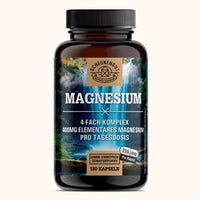
For the evening we have two building blocks. The Magnesium Complex delivers 400 mg of elemental magnesium from four sources in 2 capsules, the Magnesium Bisglycinate 360 mg in 3 capsules, particularly gentle on the stomach. Magnesium also contributes to the normal function of the nervous system and to normal energy-yielding metabolism.
And omega-3, vitamin C or K2 on top?
Omega-3. The capsule goes with a meal. Lunch with omega-3, vitamin D and zinc works in one go. The meal supplies the fat for the vitamin D. That omega-3 improves vitamin D absorption has not been shown. DHA contributes to the maintenance of normal brain function.
Vitamin C. It contributes to the normal function of the immune system, like zinc and vitamin D. The sources we read for this guide describe no interference between the three.
Vitamin K2. Vitamin D and K2 influence each other in metabolism, the same review writes. Vitamin K contributes to the maintenance of normal bones. Our Vitamin D3 Depot brings 100 µg of K2Pure® (MK-7) in every tablet. It says nothing there about an interaction with zinc. The BfR advises: if you take anticoagulants of the coumarin type, keep your vitamin K intake as constant as possible and take supplements containing vitamin K only under medical supervision.
Iron doesn't belong in the same hand as zinc
The question often arrives as “iron, zinc, vitamin D”. There is a catch here, but it sits between iron and zinc, not with vitamin D. The European Food Safety Authority (EFSA) evaluated the evidence in 2024. Result: when iron and zinc are swallowed together on an empty stomach or with a drink, the iron can lower zinc absorption. Taken together with a meal, most studies showed no such effect. And there is no evidence that iron affects zinc absorption when the two are not taken together.
In practice, that means: put iron and zinc on different meals. Then the question no longer matters. Vitamin C increases iron absorption. So it fits the iron meal better than the zinc meal.
How much of each: amounts
Zinc. Zinc is often in several supplements at once, so check the labels and add up the total from food and supplements. The 5 mg of zinc in the Fadogia Strength Complex or the 10 mg in PMS Intenso are small amounts. If you take clearly more over the long term, talk to your doctor.
Vitamin D. How much vitamin D you need shows in your blood value (25-OH-D), so set the dose by that. Talk to your doctor about higher amounts. 1 µg equals 40 IU. The depot replaces your daily supplement, it doesn't come on top: one tablet with 125 µg every five days averages 25 µg a day. A second vitamin D supplement alongside it only makes sense with your blood value in hand.
Vitamin D deficiency and zinc: what a blood test can tell you
Whether you need more vitamin D isn't shown by a symptom but by the blood value 25-OH-D. Have your doctor measure it before you settle on an amount.
With zinc, the blood test is of limited use. The serum value fluctuates even in the same person and drops during inflammation. A doctor therefore interprets it together with the CRP value. The review advises that when low vitamin D is found, you should also look for a deficiency of magnesium, zinc and vitamin K. That is a medical work-up and no reason to swallow three capsules unchecked.
Matching Products from Scheunengut
Scheunengut has been around since 2012, with no investors behind us and a focus on pure raw-material quality. We have raw materials and every finished batch tested by an independent lab. For this daily plan we have the matching building blocks.
Vitamin D3 Depot + K2Pure®. High-dose with 5,000 IU (125 µg) of vitamin D3 per tablet, plus 100 µg of K2Pure®, the branded vitamin K2 (MK-7, over 99% all-trans). You take just one tablet every 5th day, a pack of 180 tablets lasts 900 days, and it costs only €0.02 a day. Vegan, made in Germany. Vitamin D contributes to the normal function of the immune system and to the maintenance of normal bones, especially in the dark months when the sun barely produces any vitamin D. Vitamin K contributes to the maintenance of normal bones. The tablet goes with a meal that contains fat. The high-dose depot is not suitable for pregnant or breastfeeding women, children or adolescents; with anticoagulant medication, only after speaking to your doctor.
Magnesium Complex. Four magnesium sources instead of one: tri-magnesium dicitrate, magnesium oxide, magnesium malate and magnesium bisglycinate add up to 400 mg of elemental magnesium in 2 capsules. Made in Germany, lab-tested, €0.22 a day. Magnesium contributes to normal muscle function and to the reduction of tiredness and fatigue.
Magnesium Bisglycinate. The chelate in which every magnesium is bound to two molecules of the amino acid glycine: 360 mg of magnesium in 3 capsules, particularly gentle on the stomach, taken with meals. Vegan capsules without additives, colourings or fillers, every batch lab-tested, €0.26 a day.
Zinc. We don't sell a standalone zinc supplement or a standalone omega-3 supplement. Zinc is found in two of our complexes: in the Fadogia Strength Complex with 5 mg of zinc (50% of the nutrient reference value) in 2 capsules, plus 1,000 mg of Fadogia extract 10:1 and ashwagandha, and in PMS Intenso with 10 mg of zinc (100%), chasteberry, lady's mantle and saffron. Zinc contributes to the maintenance of normal testosterone levels in the blood. Zinc also contributes to the normal function of the immune system. Both complexes count toward your daily amount.
Frequently Asked Questions (FAQ)
Can you take vitamin D and zinc together?
Yes. The two don't interfere, and you can take them in the same meal. Choose a meal with some fat, such as lunch with oil, cheese or fish. The fat helps the vitamin D, and the food is easier on your stomach with zinc. Just add up the zinc in all your supplements.
Can you take vitamin D, zinc and magnesium together?
Yes. The simplest plan: vitamin D and zinc with lunch, magnesium after dinner. Magnesium sits in the enzymes that convert vitamin D in the body, so the three complement each other. If you prefer it simpler, take all three with dinner, as long as the zinc amount stays small. With us, the evening building block is the Magnesium Complex: 400 mg of elemental magnesium from four sources in 2 capsules.
Can you take zinc and vitamin D3 K2 together?
Yes. Vitamin D3 belongs with a meal that contains fat anyway, and zinc fits in there. Our Vitamin D3 Depot + K2Pure® contains 100 µg of K2 (MK-7) per tablet. None of the sources we read for this guide describes an interaction between zinc and K2. If you take anticoagulant medication, check with your doctor beforehand whether vitamin K is suitable for you.
Can you take omega-3, vitamin D and zinc together?
Yes. Take all three with lunch or dinner. The fat for the vitamin D comes from the meal. The capsule gives you EPA and DHA. DHA contributes to the maintenance of normal brain function.
Can you take vitamin C, zinc and vitamin D together?
Yes. All three have an authorised contribution to the normal function of the immune system. The sources we read describe no interference between them. Take them with one meal, ideally with a little fat for the vitamin D. Only if you also take iron should you pick a different time for it than for zinc.
Is it OK to take iron, zinc and vitamin D together?
Vitamin D and zinc, yes. Iron is better kept apart. According to EFSA, iron can lower zinc absorption when both are swallowed on an empty stomach or with a drink. With a meal, most studies showed no effect. Put iron and zinc on different meals anyway, then you don't have to think about it.
Do I need extra zinc if I have a vitamin D deficiency?
That can only be settled in the blood, not by how you feel. Zinc doesn't replace vitamin D, and vitamin D doesn't replace zinc. Whether your vitamin D level is low shows in the 25-OH-D value at the doctor's. The blood zinc value fluctuates a lot and drops during inflammation, so your doctor interprets it in context.
Health notice: This guide is for general information purposes only and does not replace individual medical or pharmaceutical advice. Food supplements are not a substitute for a balanced, varied diet and a healthy lifestyle. If you have health concerns, are pregnant or breastfeeding, or are taking medication, please consult a doctor or pharmacist. How our guides are created →
Sources
- Taking high single doses of vitamin D via food supplements at intervals of days or weeks poses health risks (Opinion 31/2025) — German Federal Institute for Risk Assessment (BfR), 2025
- Dietary fat increases vitamin D-3 absorption — Dawson-Hughes B et al., Journal of the Academy of Nutrition and Dietetics, 2015
- Zinc, Magnesium and Vitamin K Supplementation in Vitamin D Deficiency: Pathophysiological Background and Implications for Clinical Practice — Bleizgys A, Nutrients, 2024
- Scientific opinion on the tolerable upper intake level for iron – Section 3.5.7 Zinc absorption — EFSA NDA Panel, EFSA Journal 22(6):e8819, 2024
- The effect of zinc supplements on plasma zinc and copper levels and the reported symptoms in healthy volunteers — Samman S, Roberts DC, Medical Journal of Australia, 1987