



Yes, you can take vitamin C and zinc together, most simply at breakfast or lunch. A study with up to 2 g of vitamin C found no effect on zinc absorption. What matters is the zinc amount across all products, food included.
Yes, you can take vitamin C and zinc together: in one tablet, in one glass, with one meal. The two don't get in each other's way. Back in 1979, a research team measured what happens when zinc meets 0.5, 1 or 2 g of vitamin C. Blood zinc levels did not change.
The catch lies elsewhere: in the amount of zinc that adds up across all the products you take in a day. Your plan in one sentence: zinc with food, vitamin C whenever it suits you, and add up the zinc amounts on every label.
Why vitamin C and zinc go well together
Iron is the exception. Vitamin C increases iron absorption, which is why people swallow iron tablets with a glass of orange juice. That doesn't carry over to zinc. Even 2 g of vitamin C did not improve absorption. Vitamin C doesn't slow zinc down either.
To be honest: the study is old, small and tested zinc sulphate. We found no evidence that vitamin C reduces zinc absorption.
What the EU permits for the two overlaps at two points:
- Vitamin C contributes to the normal function of the immune system, contributes to the protection of cells from oxidative stress and contributes to the reduction of tiredness and fatigue. Vitamin C also contributes to normal collagen formation for the normal function of skin.
- Zinc contributes to the normal function of the immune system and contributes to the protection of cells from oxidative stress. Zinc contributes to the maintenance of normal hair, skin and nails. Zinc also contributes to normal cognitive function.
Immune system and cell protection. That's why the pair so often ends up in the same product, in our range for example in the Stammkraft Maca Complex.
How to fit both into your day
The simplest solution has nothing to do with spacing. Put both on breakfast or lunch: with bread, with muesli, with a hot meal. That's the easiest routine to remember. And your stomach has something to work on.
You can get it all from one portion without doing any sums: the Stammkraft Maca Complex brings 10.5 mg of zinc and 51 mg of vitamin C with the 3 capsules of the daily dose. Three capsules with lunch, and the plan for the pair is done. Women around their cycle will find the same combination in PMS Intenso, with 10 mg of zinc and 100 mg of vitamin C in a maximum of 2 capsules.
If you prefer to take vitamin C separately, you won't harm the zinc: zinc with the main meal, vitamin C as an effervescent drink in the afternoon, both work.
Only one rule is worth keeping: don't take zinc on an empty stomach if it makes you queasy. Try it, and take it with food if it sits heavy. Whether zinc sits better in the morning or in the evening is covered in the guide "Zinc in the morning or evening".
The vitamin C requirement is 95 mg for women and 110 mg for men, and the Verbraucherzentrale (German consumer advice centre) points out that around 200 g of kiwi or orange already covers it. A capsule tops up days with little fruit.
The amount of zinc is the sticking point, not the combination
With zinc, the amount from all sources combined counts. Food counts too, and as soon as several zinc-containing products come together on the same day, say a multivitamin, an immune complex and a single capsule, the amounts add up unnoticed. That's why every label belongs in one calculation. Every single one.
What happens with too much? Nausea. Vomiting. Other gut complaints. Over months, high-dose zinc can also interfere with the absorption of copper and iron. The zinc amounts in the cold studies, 45 to 276 mg a day, have nothing to do with food supplements. Those are medicinal doses.
So it's best to work out once what adds up on a normal day: multivitamin, immune complex, zinc tablet, plus your food. Each product on its own looks harmless. Four of them together don't. If the total stays high over time, have it checked by a doctor.
With our complexes, the zinc amount is on the label: 10.5 mg in Stammkraft, 10 mg in PMS Intenso, 5 mg in the Fadogia strength complex (zinc as bisglycinate). Each of them is a modest amount on its own. Plenty of room.
With vitamin C there is more room. EFSA assumed that up to 1,000 mg on top of food does not cause digestive complaints; above that, the risk rises. What your body doesn't need, it excretes. At 3 to 4 g a day, bloating, cramps and diarrhoea join in.
Adding magnesium: how a pair becomes a trio
Many people ask about vitamin C, zinc and magnesium together. Our suggestion: vitamin C and zinc at lunch, magnesium after dinner. Not a must, just a rhythm that, almost by accident, keeps the two minerals apart.
Magnesium contributes to normal muscle function, to the normal functioning of the nervous system and to the reduction of tiredness and fatigue. That suits an evening after training or a long working day. If you prefer it simple, take everything with one meal. In that case, keep the zinc amount small.
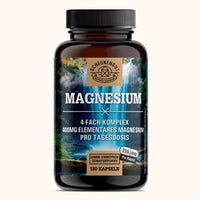
For the evening, the Magnesium Complex fits, with 400 mg of elemental magnesium from four magnesium sources in 2 capsules. Gentler on the stomach is the Magnesium Bisglycinate: chelated, vegan, 360 mg of elemental magnesium in 3 capsules.
If magnesium loosens your bowels too much, split the daily dose across two times, for example after dinner and before bed. More on this duo is in the guide "Can you take zinc and magnesium together?".
Where you really need a gap: iron, copper, medication
With iron it works the other way round. If you take an iron supplement, vitamin C helps outright, since it increases iron absorption. Zinc and iron, on the other hand, go on different meals. The details are in the guide "Iron and zinc: together or apart?".
For iron we have Iron Bisglycinate with natural vitamin C from rosehip. Vitamin C increases iron absorption. Iron at breakfast, zinc at lunch, so the two stay on separate meals.
Copper is the second point: if you take a lot of zinc long term, keep an eye on your copper intake. The guide "Zinc and copper" shows what matters.
If you take medication regularly, ask at the pharmacy whether a time gap applies for zinc or vitamin C. It depends on the active ingredient.
Two groups should look more closely at vitamin C. If you are prone to kidney stones, regularly take no more than 1 g a day, as the Verbraucherzentrale relays the advice of the BDI. With hereditary iron storage disease (haemochromatosis), a maximum of 500 mg vitamin C a day applies, food included, and you take supplements only on medical advice. Ascorbic acid can also attack tooth enamel, so don't push lozenges around your mouth for hours.
And colds? What the research says
Many people reach for this combination because the days are getting shorter. What has been studied:
Zinc: according to the Verbraucherzentrale, a 2024 Cochrane review most likely finds little or no benefit for prevention. At very high amounts, mainly as lozenges, illness lasted on average about two days less. Vitamin C: according to the Verbraucherzentrale, the studies reviewed could not show that preventive vitamin C eases colds, with a possible exception for people under extreme physical strain or in very cold surroundings.
What's left? Both nutrients contribute to the normal function of the immune system when you get enough of them. The combination replaces neither sleep nor exercise nor a meal with vegetables.
How to spot a good vitamin C and zinc combination
- Zinc per daily dose in mg. Read the line carefully: with zinc gluconate, the amount of the compound is often in the foreground, and 100 mg of zinc gluconate works out at roughly 14 mg of zinc.
- The forms. Zinc as bisglycinate, citrate or gluconate, vitamin C as ascorbic acid, a buffered form or acerola. The guides "Zinc: bisglycinate or gluconate?" and "Buying zinc: what to look for" sort out the differences.
- Additives and ratio. Effervescent and lozenge products often contain sweeteners and flavourings; the ingredients list shows it. In a combination product the ratio is fixed, with two single products you set both amounts yourself.
Matching Products from Scheunengut
Scheunengut has been around since 2012, without investors, with a focus on pure raw-material quality. Every batch goes to an independent lab, and we attach the latest report to the product page. We don't sell pure zinc or pure vitamin C. Both sit together in two complexes, and the amounts are on the label.
Stammkraft Maca Complex for men who demand a lot of themselves at work and in sport: 3 capsules a day with 10.5 mg of zinc and 51 mg of vitamin C from acerola, plus 300 mg of maca extract 10:1, 150 mg of tribulus extract 15:1 and 150 mg of Panax ginseng extract. Zinc contributes to the maintenance of normal testosterone levels in the blood. Zinc also contributes to normal fertility and reproduction. Vitamin C contributes to normal energy-yielding metabolism. Made in Germany, without unnecessary additives, colourings and fillers.
PMS Intenso for women around their cycle: a maximum of 2 capsules a day with 10 mg of zinc, 100 mg of vitamin C and 1.4 mg of vitamin B6, plus 150 mg of chaste tree extract 5:1 and lady's mantle extract. Vitamin B6 contributes to the regulation of hormonal activity. Vitamin C contributes to the reduction of tiredness and fatigue.
For the evening trio: the Magnesium Complex with 400 mg of elemental magnesium and the chelated, vegan Magnesium Bisglycinate with 360 mg. Magnesium contributes to normal energy-yielding metabolism. Magnesium also contributes to normal psychological function. If you need iron, take Iron Bisglycinate + Natural Vitamin C, chelated iron with vitamin C from rosehip, lab-tested batch by batch.
Frequently Asked Questions (FAQ)
Can you take vitamin C and zinc together?
Yes. A study with up to 2 g of vitamin C found no effect on zinc absorption. Take them together or apart, whatever fits your day. More important than timing is the amount of zinc you take in across all products combined.
When is the best time to take vitamin C and zinc?
Simplest is together at breakfast or lunch. Most people tolerate zinc better with a meal than on an empty stomach. You can take vitamin C at any time. There is no rule about fixed times.
Can you take vitamin C, zinc and magnesium together?
Yes. A practical rhythm: vitamin C and zinc at lunch, magnesium after dinner. If you would rather take everything with one meal, keep the zinc amount small and the magnesium within the serving size on the label.
Is there any reason not to take vitamin C and zinc together?
That the two interfere with each other is not proven. You need a gap from iron supplements, and with medication you ask the pharmacy. The most common mistake is too much zinc from several products on the same day, not the combination itself.
How much zinc should a vitamin C and zinc tablet contain?
Stick to the serving size on the label, and remember that your food counts too. Add up the zinc from every product: a multivitamin, an immune complex and a single supplement often all contain zinc. Our complexes carry 5 to 10.5 mg per daily dose.
Do vitamin C and zinc help with colds?
Vitamin C and zinc contribute to the normal function of the immune system. As prevention against colds, the benefit is not proven according to the Verbraucherzentrale. For zinc, very high amounts, far above food supplement levels, showed an illness about two days shorter on average.
Health notice: This guide is for general information purposes only and does not replace individual medical or pharmaceutical advice. Food supplements are not a substitute for a balanced, varied diet and a healthy lifestyle. If you have health concerns, are pregnant or breastfeeding, or are taking medication, please consult a doctor or pharmacist. How our guides are created →
Sources
- Studies on the bioavailability of zinc in man. III. Effects of ascorbic acid on zinc absorption — Solomons NW, Jacob RA, Pineda O, Viteri FE, American Journal of Clinical Nutrition, 1979
- Maximum level proposals for vitamin C in foods including food supplements — German Federal Institute for Risk Assessment (BfR), 2021
- More zinc for colds? — Verbraucherzentrale (German consumer advice centre)
- Vitamin C - surprisingly healthy? — Verbraucherzentrale (German consumer advice centre), 2025