



Yes, iron and vitamin D don't interfere with each other and fit into the same day. It works best at two times: iron in the morning with vitamin C, without coffee or milk, vitamin D with your biggest meal and a little fat. B12 goes with either one, magnesium belongs in the evening.
Yes, iron and vitamin D fit into the same day. They don't get in each other's way, not even if you swallow both in the same hour. It still works better with two time slots: iron in the morning with vitamin C, vitamin D with the biggest meal of the day. The reason isn't a quarrel between the two. It's what each one needs to be absorbed well, and the studies we looked at one by one show that fairly clearly. Iron wants a quiet stomach and no coffee. Vitamin D wants fat on the plate. Keep them apart and you get more out of both. That's all there is to it.
Iron contributes to normal formation of red blood cells and haemoglobin. Iron contributes to the reduction of tiredness and fatigue. Vitamin D contributes to the normal absorption/utilisation of calcium and phosphorus and to the maintenance of normal bones. Two jobs with nothing in common, which is exactly why they often share a shelf: for women, vegans, endurance athletes, and anyone who sees little sun in winter.
Iron in the morning, vitamin D at lunch: why two time slots work better
For iron, the thing that matters in daily life has been measured: absorption was best in the morning, with water or a glass of orange juice, away from meals and coffee. Coffee cut absorption sharply, coffee with breakfast even more, and that despite the vitamin C in the orange juice. In the afternoon, less tended to get through than in the morning, when the iron hormone hepcidin runs higher. Orange juice alone beat breakfast several times over.
With vitamin D it's the other way round. It is fat-soluble and wants to go into a meal. Taken with the largest meal of the day, blood levels of vitamin D rose noticeably more than before. A second trial gave everyone the same amount of vitamin D3 and compared a fat-free breakfast with two fatty ones. With fat in the stomach, vitamin D3 in the blood climbed clearly higher. The type of fat made no difference.
So iron wants to stay away from food, and vitamin D wants to be with it. Sounds contradictory. It isn't. Two time slots give both what they want. No extra effort. Done.
Does vitamin D get more out of your iron?
You read this a lot. The background: hepcidin, which throttles iron absorption in the gut, dropped clearly in a small trial after a single, very high dose of vitamin D. A much larger twelve-month trial with daily amounts, on the other hand, saw no change in blood iron markers, hepcidin included. Our conclusion: interesting in the lab, no reason to take your iron any differently in real life. Nothing to change. Vitamin D doesn't replace iron, and iron doesn't replace vitamin D. Each gets its own place in the day.
How to spread both across your day
- Morning, after getting up: iron with vitamin C, plus water or a glass of orange juice. Vitamin C increases iron absorption. Our daily plan uses iron bisglycinate with natural vitamin C from rose hip, so you save yourself the second reach into the cupboard. Coffee comes later.
- Midday, with your biggest meal: vitamin D3 with K2. Eggs, cheese, fish, nuts or a spoonful of olive oil on your salad are enough as a source of fat.
- Evening, after dinner: magnesium, if you take it.
Vitamin D is easy when you choose a depot. Scheunengut's Vitamin D3 Depot + K2Pure® is high-dose, with 5,000 IU D3 + 100 µg branded Vitamin K2 (MK-7) per tablet, and it only needs to be on your table every fifth day. Put the next date in your calendar five days ahead and take the tablet with lunch. On the other four days, iron in the morning stays your only appointment. After two weeks it's a ritual you no longer notice, because it hangs on your lunch rather than on a time of day you'd have to remember.
What if you can't tolerate iron on an empty stomach?
Then take it with a small meal: a slice of bread with jam, an apple, a yoghurt with no coffee alongside. You give up some absorption, as the breakfast trial shows, but a capsule sitting in the cupboard does nothing for you. What matters in the end is that you stick to the plan on busy days and don't quit after a week because your stomach complained. Milk, cheese, coffee and tea go later. The vitamin D stays at lunch.
What really holds your iron back: calcium, coffee and tea
The troublemaker isn't vitamin D, it's what sits next to it. Calcium from milk, cheese or as an add-on pushed iron absorption down considerably in one trial, even for iron from meat. Coffee, black tea and cocoa work the same way, and so do herbal teas such as peppermint and chamomile. Milk in your coffee changes almost nothing about that. An older trial also showed that coffee dampened absorption even when it came an hour after the meal. So push your first cup back by a good margin.
This touches your vitamin D plan at one point: many products combine vitamin D with calcium. Vitamin D contributes to the normal absorption/utilisation of calcium and phosphorus, that is its job. A calcium-D tablet therefore belongs with lunch and never with the morning iron. Plain vitamin D3 contains no calcium and can share a time window with your iron if that suits you better.
Vitamin B12 as the third one: iron, vitamin D and B12 on the same day
That works without any spacing rules to keep in your head, on the same day and even with the same meal. Vitamin B12 contributes to normal red blood cell formation, just like iron, only at a different link in the chain. We found no absorption interaction, neither in the studies on iron nor in those on vitamin D that we read. You can put it with your morning iron or with your midday vitamin D, whichever you remember more easily. If you already take a B complex, B12 is in there: our Vitamin B Complex contains all eight B vitamins in bioactive form, plus myo-inositol, betaine and choline. More on this pair is in our iron and B12 article.
Add magnesium: the evening belongs to it
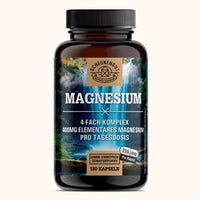
With magnesium, the evidence points to a gap. At very large amounts, a magnesium salt slowed iron absorption in one trial, but not in a second. For magnesium in normal capsule amounts, we found no trial that settles the question. The gap costs nothing. Iron in the morning, vitamin D at midday, magnesium after dinner. Magnesium contributes to normal muscle function, and after an evening workout it has its best spot. Our Magnesium Bisglycinate delivers 360 mg of elemental magnesium per daily dose, chelated and vegan. How magnesium and vitamin D fit together is covered in a separate article.
D3 and K2 together with iron
In our product, K2 sits in the same tablet as the D3 and comes to lunch with it. Vitamin K contributes to the maintenance of normal bones, and so does vitamin D. Both are fat-soluble, both want the same meal. We found no trial that sets vitamin K2 against iron, and the gap from morning to midday is there anyway. Scheunengut's Vitamin D3 Depot + K2 contains K2Pure® as the MK-7 form, so you don't have to buy anything extra.
Get tested first
Whether your iron stores and your vitamin D level really need topping up is something only a blood test at your doctor's can show. Both can be measured with one blood draw, and once you know your values, you can decide in the winter months how long you need which product at all. So take iron with a number in hand. Not on a hunch. If you've been prescribed an iron product, what your doctor says applies, including on timing and medication.
Matching Products from Scheunengut
Since 2012 we have been making food supplements without investors and with a focus on pure raw material quality. Three products are enough for this daily plan. The Iron Bisglycinate with natural Vitamin C from rose hip starts your morning: iron in an organically bound chelate form, highly bioavailable and well tolerated, without the typical stomach pressure, and with the vitamin C right in it. The Vitamin D3 Depot + K2Pure® is high-dose and built for the rhythm: just 1 tablet every 5th day, so 180 tablets last 900 days on paper. For the evening there is the Magnesium Bisglycinate with 360 mg of elemental magnesium and the Magnesium Complex from four sources with 400 mg. If you are looking for B12, you'll find it in the Vitamin B Complex.
Frequently Asked Questions (FAQ)
Can you take iron and vitamin D together?
Yes. Iron and vitamin D don't interfere with each other. It's still better to take them at two times: iron in the morning with vitamin C and no coffee, vitamin D with lunch and a little fat. That way each gets what it needs for absorption.
When is the best time to take iron and vitamin D?
Iron in the morning after getting up, with water or orange juice, vitamin D at midday with the biggest meal. You take the Vitamin D3 Depot only every fifth day, the iron daily. First cup of coffee later.
Can you take iron, vitamin D and vitamin B12 together?
Yes, on the same day and even in the same hour. We found no absorption interaction. Put B12 with your morning iron or your midday vitamin D, whichever fits your routine.
Can you take vitamin D, iron and magnesium together?
On the same day yes, in the same intake better not. Magnesium hydroxide slowed iron absorption in one trial, but not in a second. With iron in the morning, vitamin D at midday and magnesium in the evening, you are on the safe side.
Can you take vitamin D3, K2 and iron together?
Yes. D3 and K2 belong together at lunch as a pair, the iron comes in the morning. We found no interaction between K2 and iron, and with two time slots the question doesn't come up anyway.
Does vitamin D improve iron absorption?
Not proven. A small trial saw less hepcidin after a single huge dose, a larger one over twelve months with daily amounts saw no change in iron markers. So plan vitamin D for bones and the immune system, not as an iron aid.
What gets in the way of iron and vitamin D the most?
For iron, calcium, coffee, black tea, cocoa and herbal teas get in the way. For vitamin D, an empty plate does, because it takes fat as its companion. Calcium-D combination tablets belong with lunch, never with the morning iron.
Health notice: This guide is for general information purposes only and does not replace individual medical or pharmaceutical advice. Food supplements are not a substitute for a balanced, varied diet and a healthy lifestyle. If you have health concerns, are pregnant or breastfeeding, or are taking medication, please consult a doctor or pharmacist. How our guides are created →
Sources
- Effect of dietary factors and time of day on iron absorption from oral iron supplements in iron deficient women — von Siebenthal HK et al., American Journal of Hematology, 2023
- Taking vitamin D with the largest meal improves absorption and results in higher serum levels of 25-hydroxyvitamin D — Mulligan GB, Licata A., Journal of Bone and Mineral Research, 2010
- Dietary fat increases vitamin D-3 absorption — Dawson-Hughes B et al., Journal of the Academy of Nutrition and Dietetics, 2015
- Calcium: effect of different amounts on nonheme- and heme-iron absorption in humans — Hallberg L et al., American Journal of Clinical Nutrition, 1991
- Inhibition of non-haem iron absorption in man by polyphenolic-containing beverages — Hurrell RF, Reddy M, Cook JD, British Journal of Nutrition, 1999
- Inhibition of food iron absorption by coffee — Morck TA, Lynch SR, Cook JD, American Journal of Clinical Nutrition, 1983
- High-dose vitamin D3 reduces circulating hepcidin concentrations: a pilot trial in healthy adults — Smith EM et al., Clinical Nutrition, 2017
- Effect of supplementation with vitamin D on biochemical markers of iron status and erythropoiesis in older people: BEST-D trial — Lamikanra AA et al., British Journal of Nutrition, 2025
- Effect of magnesium hydroxide on iron absorption following simulated mild iron overdose in human subjects — Wallace KL et al., Academic Emergency Medicine, 1998
- Effect of magnesium hydroxide administration on iron absorption after a supratherapeutic dose of ferrous sulfate in human volunteers — Snyder BK, Clark RF, Annals of Emergency Medicine, 1999