



A vitamin E deficiency is very rare in healthy adults, because the body stores vitamin E in fatty tissue. Possible signs are weakened reflexes, muscle weakness and a swaying gait; the cause almost always lies in fat absorption in the gut. Only a blood test ordered by your doctor brings certainty.
A vitamin E deficiency is very rare in healthy adults, because the body stores vitamin E in fatty tissue and most people take in enough of it from plant oils, nuts and seeds. If a deficiency does occur, it shows up mainly in nerves and muscles, namely as weakened reflexes, muscle weakness and a swaying gait, and only a blood test brings certainty, since complaints of this kind usually have quite different causes, such as tension, lack of exercise or a bottleneck elsewhere in metabolism that has nothing to do with vitamin E.
Vitamin E Deficiency Symptoms: Possible Signs
Nerves and muscles depend on the protection that vitamin E gives cell membranes, which is why the first hints appear there. These are described:
- weakened reflexes and declining coordination
- muscle weakness, especially in the legs
- difficulty walking and a swaying gait
- abnormal sensations up to numbness in the hands and feet
- in premature babies, changes in the blood vessels of the retina and anaemia
These signs are non-specific. Tingling in the feet or muscle weakness have a hundred other causes in everyday life, and in adults deficiency signs are rare according to the MSD Manual, precisely because the stored vitamin lasts a long time. If you notice such complaints persistently, have them checked by a doctor instead of supplementing on suspicion.
Vitamin E Deficiency Symptoms in Women: Are There Differences?
There are no female-specific signs. The described symptoms are the same in women and men, they are rare, and they almost always have a cause in fat absorption. Dry skin or thin hair are often linked with vitamin E, but they are not among the deficiency signs described in the MSD Manual.
One difference lies in the requirement: breastfeeding women need 13 mg of RRR-alpha-tocopherol a day, more than other adults (8 mg).
The Vitamin E Test: How a Deficiency Is Established
A blood test that your GP orders measures the vitamin E level. It determines alpha-tocopherol in the blood, and the value is meaningful mainly in connection with blood fats, because vitamin E is carried in the blood bound to fats, so a value on its own, without a look at the blood fats, is easily misread. Symptoms and the question of whether a fat digestion disorder is present come on top. What your result means is placed in context by your doctor; a single value is not a diagnosis.
A test is worthwhile if the described complaints persist and fit a condition that uses fats poorly, such as a disease of the gallbladder, liver or pancreas, or after bowel surgery. Without this history a test is rarely needed.
Why a Deficiency Is So Rare
Unlike water-soluble vitamins, the body does not excrete vitamin E continuously but stores it mainly in fatty tissue, and even if intake is low for weeks, it simply draws on this depot without you noticing. A deficiency in otherwise healthy adults therefore almost never arises from diet alone; the German Nutrition Society (DGE) calls it "very rare".
On top of that, vitamin E is found in many everyday foods that land on your plate anyway. A deficiency is therefore almost always a signal that something else in the body is not right, usually with absorption in the gut. That is reassuring.
Causes: When Levels Do Drop Too Low
Vitamin E is fat-soluble, and its absorption depends directly on well-working fat digestion. That is exactly where the real causes lie.
Fat Digestion and Absorption Disorders
Diseases that disturb the absorption of dietary fats also affect vitamin E. These include liver and gallbladder disease, inflammation of the pancreas, cystic fibrosis, coeliac disease, Crohn's disease or the state after certain operations on the digestive tract. If fat is not properly broken down and absorbed, the vitamin dissolved in it goes unused as well.
Premature Babies
Premature babies are born with very small vitamin E stores, because only small amounts cross the placenta. They are among the few groups in which a deficiency really occurs, and they are closely monitored by doctors.
Rare Genetic Causes and a Very Low-Fat Diet
There are very rare inherited disorders in which the body does not transport vitamin E properly; they lead to a deficiency regardless of diet and belong to specialist medicine. A permanently very low-fat diet can also reduce intake, because plant fats are the main source.
What Vitamin E Is Good For: Effects in the Body
Vitamin E is the collective name for a group of fat-soluble compounds, the tocopherols and tocotrienols. For humans, alpha-tocopherol is what counts above all. It sits in the cell membranes, which consist largely of fats, and stabilises them. In one sentence it is the authorised statement: vitamin E contributes to the protection of cells from oxidative stress, and that is precisely its core task in the body.
Put simply, vitamin E intercepts aggressive oxygen compounds before they damage the delicate unsaturated fatty acids in the membranes. It is also involved in the immune system, which you probably think about more in the cold season than in summer. If you want to know more about its effects, you will find them in our guide to vitamin E as a fat-soluble antioxidant.
How Much Vitamin E You Need
Since the new edition of its reference values in September 2025, the DGE gives 8 mg of RRR-alpha-tocopherol a day for adults, also 8 mg for pregnant women and 13 mg for breastfeeding women. Older tables, including some health websites, still list 12 mg for women and 14 mg for men aged 25 to 50; they count in tocopherol equivalents, a different unit. So check the unit before you compare figures.
The requirement also depends on how many polyunsaturated fatty acids someone eats, because they need protection from oxidation in turn. If you use a lot of plant oil, you usually take in more vitamin E as well.
Vitamin E Foods: Where It Is Found
Vitamin E is found above all in plant fats. You will remember that easily. The DGE names nuts and seeds such as almonds and sunflower seeds, wheat germ, plant oils, sweet potatoes, chickpeas, leafy vegetables and peppers; among the oils, wheat germ, sunflower, corn germ, soya and rapeseed oil supply notable amounts, as do hazelnuts. Animal foods contain rather little, most likely fatty fish such as salmon or eel.
Because vitamin E is fat-soluble, the body absorbs it together with fat. A dash of good oil over a salad or a handful of nuts at lunch is therefore not only tasty but also sensible, above all if your plate is otherwise rather low in fat and the vitamin would be absorbed less well without accompanying fat. Heat, light and oxygen wear vitamin E down: keep oils dark and well sealed and do not heat them repeatedly. Used cold, a quality oil keeps the most.
Supplementing: Worthwhile or Not?
For most people a varied diet is enough. A targeted vitamin E supplement belongs where one of the named absorption disorders is present, and you plan it with your doctor, including a check of blood values. If you take blood-thinning medication, talk to them first.
If you decide on a supplement, a look at the form helps: the DGE counts 1 mg of RRR-alpha-tocopherol, the natural form, as equal to 2 mg of all-rac-alpha-tocopherol, the synthetic mixture. If the pack shows natural vitamin E labelled RRR-alpha-tocopherol, it is best to compare milligrams per daily portion in the same unit.
Cell Protection Working Together: Manganese, Copper and Astaxanthin
Nutrients work as a team. Manganese contributes to the protection of cells from oxidative stress, as does copper, and both belong with vitamin E to the body's own protective network. In practice that means the basis stays the plate with nuts, seeds, wholegrain and vegetables.
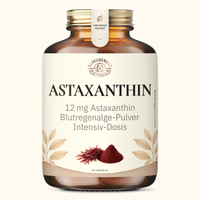
If you want to do something more for your cell protection, our range holds astaxanthin, the red pigment of the blood rain alga Haematococcus pluvialis. It supplies 12 mg per capsule. You take one capsule every second day after a meal, which equals 6 mg of astaxanthin a day.
Matching Products from Scheunengut
There is no pure vitamin E supplement from us; for cell protection, the Astaxanthin with 12 mg per capsule fits instead: Haematococcus pluvialis powder from French, vegan algae farming, laboratory-tested and taken as one capsule every second day. It suits anyone who spends a lot of time in the sun or at a screen and wants to build a regular cell-protection routine. It combines well with a vitamin E kitchen: a breakfast with nuts and seeds, then the capsule after the meal.
What has defined us since 2012 is in every tin: a company without investors that relies on pure raw-material quality and has every batch tested in the laboratory.
Frequently Asked Questions (FAQ)
How can you tell if you have a vitamin E deficiency?
A pronounced deficiency shows in nerves and muscles: weakened reflexes, declining coordination, muscle weakness and a swaying gait. These signs are non-specific and usually have other causes. A deficiency can only be confirmed with a blood test at your doctor.
Who is at increased risk of a vitamin E deficiency?
Mainly people with disorders of fat digestion and absorption, for example in diseases of the liver, gallbladder, pancreas or bowel. Premature babies and people with rare genetic disorders of vitamin E metabolism belong here too. For healthy adults the risk is very low.
Can you get enough vitamin E through diet alone?
As a rule, yes. Plant oils, nuts, seeds and wheat germ supply plenty of vitamin E. If you eat a varied diet and regularly include good oils and a handful of nuts, you usually meet the requirement of 8 mg RRR-alpha-tocopherol a day without trouble, and without ever needing a capsule.
Can too much vitamin E be harmful?
From ordinary food you take in hardly too much. With supplements, follow the serving recommendation on the pack. If you take blood-thinning medication, talk to your doctor before supplementing.
How is a vitamin E deficiency diagnosed?
Through a blood test that measures the level of alpha-tocopherol. The value becomes meaningful mainly in relation to blood fats, because vitamin E is carried in the blood bound to fats. Symptoms and possible fat digestion disorders count as well; the interpretation belongs in medical hands.
What is vitamin E good for?
Vitamin E contributes to the protection of cells from oxidative stress. As a fat-soluble vitamin it sits in the cell membranes and protects the unsaturated fatty acids there from oxidation.
Which foods contain vitamin E?
Plant fats lead: wheat germ oil, sunflower and rapeseed oil, hazelnuts, almonds, sunflower seeds and wheat germ. Sweet potatoes, chickpeas, leafy vegetables and peppers add to that.
Health notice: This guide is for general information purposes only and does not replace individual medical or pharmaceutical advice. Food supplements are not a substitute for a balanced, varied diet and a healthy lifestyle. If you have health concerns, are pregnant or breastfeeding, or are taking medication, please consult a doctor or pharmacist. How our guides are created →
Sources
- Vitamin E - Fact Sheet for Health Professionals — NIH Office of Dietary Supplements, 2021
- Scientific Opinion on Dietary Reference Values for vitamin E as alpha-tocopherol — EFSA, 2015
- Proposed Maximum Levels for Vitamin E in Foods Including Food Supplements — German Federal Institute for Risk Assessment (BfR), 2021
- Vitamin E: Reference Values for Nutrient Intake — German Nutrition Society (DGE), 2025
- Vitamin E Deficiency — MSD Manual, Patient Edition (German), 2024
- Vitamin E Deficiency — StatPearls, National Center for Biotechnology Information, 2023
- Vitamin E — Austrian Health Portal (gesundheit.gv.at), o. J.