

Guides
In the Scheunengut guide, we explain vitamins, minerals, plant compounds and dietary supplements clearly and with a solid scientific grounding – from correct intake to the right product for you. Use the search or the topic filters to quickly find what you need.

Magnesium Oil or Capsules? Comparing the Forms
Magnesium oil or capsules - which is better? For a plannable, targeted magnesium supply, capsules (or powder/tablets) are the more reliable choice, because the dose per serving is precisely defined....

Magnesium Deficiency: Signs of a Low Supply
What are the signs of a magnesium deficiency? Possible indications such as persistent tiredness, a feeling of muscle tension or twitching, inner restlessness and difficulty concentrating are often mentioned –...

Holidays: Enjoyment & Nutrient Balance
Enjoyment and a balanced diet are not mutually exclusive - over weeks and months, it is the overall balance that counts, not the one lavish holiday feast. After rich days,...

Nutrients During Intermittent Fasting: Supply Within the Eating Window
With intermittent fasting you often have only two or three opportunities to eat per day - and therefore significantly fewer chances to meet your nutrient needs than with five meals....
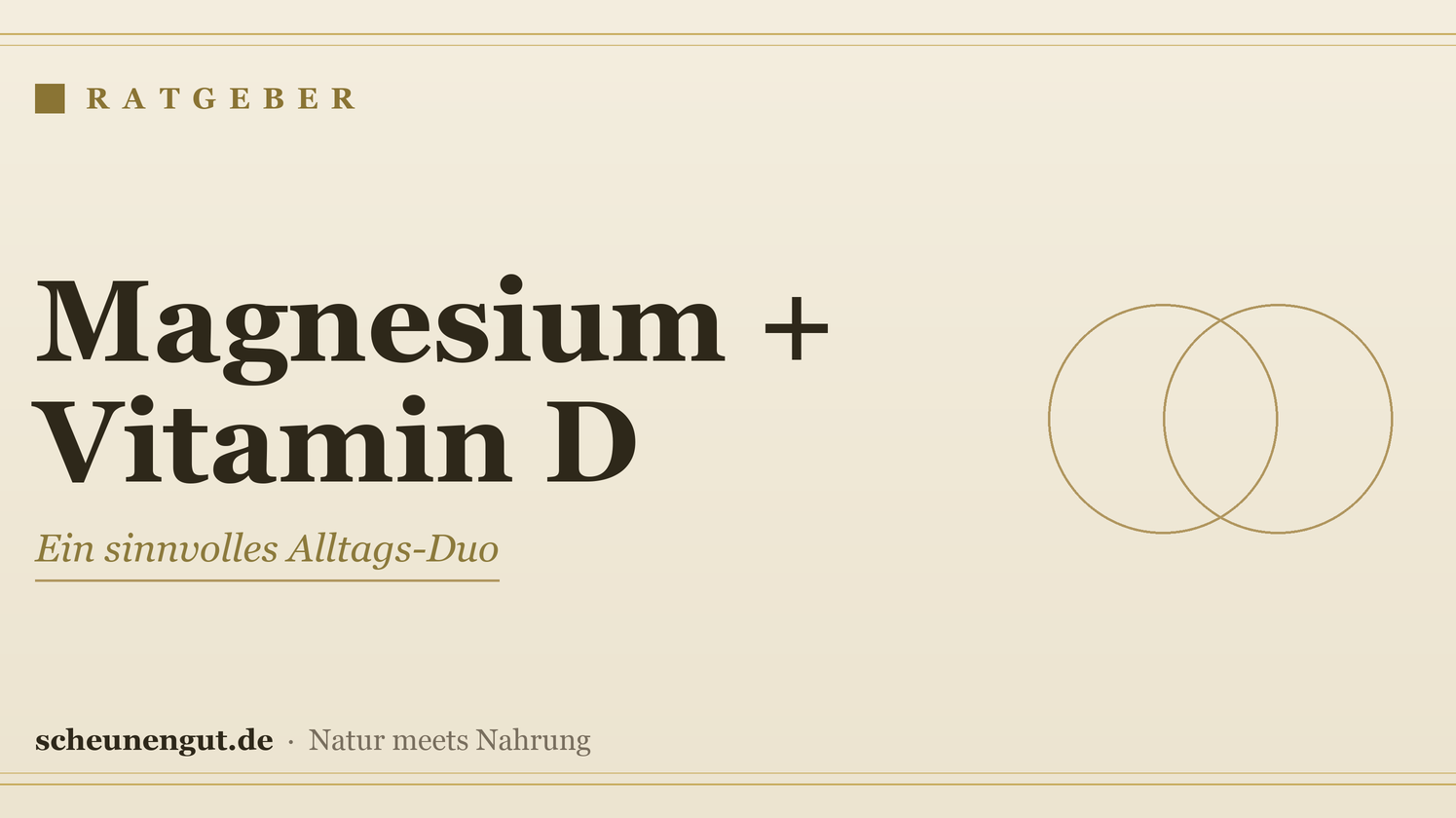
Taking Magnesium and Vitamin D Together: Your Daily Plan
Yes, you can take magnesium and vitamin D together, with the same meal and no gap between them. We haven't found a study in which taking both at once makes...

Can You Overdose on Magnesium?
In short: through normal foods you practically cannot overdose on magnesium with healthy kidneys – any surplus is simply excreted. More relevant is the additional intake through supplements, above all...

How Long Should You Take Magnesium?
How long should you take magnesium? There is no fixed duration for everyone: because magnesium is an essential mineral that the body needs daily, the basic supply is an ongoing...

How Long Does It Take for Magnesium to Work?
How long does it take for magnesium to work? Magnesium is absorbed within a few hours of intake, but a noticeable effect depends on whether your stores are filled –...

Magnesium or Potassium: What's the Difference?
In short: magnesium and potassium are two entirely distinct minerals – one does not replace the other. Both are involved in muscle and nerve function, but they act in different...

Magnesium: take it in the morning or evening?
The short answer: there is no fixed rule – more important than the time of day is that you take magnesium daily and consistently at all. For simply replenishing your...

Sports & Electrolytes: Magnesium, Potassium & Co. in Balance
Which electrolytes matter during exercise? Through sweat you lose mainly sodium, plus smaller amounts of potassium, magnesium and calcium. During long, intense or sweaty sessions, a targeted intake of these...

Stress & inner calm: magnesium, B vitamins & adaptogens
When under stress: magnesium and B vitamins contribute to the normal function of the nervous system and to normal psychological function – plus adaptogens (traditional) and lifestyle tips.

Sleep Better Naturally: Melatonin, Magnesium & Herbs
Sleep better naturally: how sleep hygiene, melatonin, magnesium and traditional herbs work together – with practical tips for your evening routine.

Which Magnesium Is Best? The Big Comparison
Bisglycinate, citrate, malate or oxide? The big comparison of magnesium forms: bioavailability, tolerability and which form suits which goal.

Magnesium Bisglycinate or Magnesium Citrate – Which Magnesium Is Better?
Bisglycinate or citrate? The honest comparison of the two most popular magnesium forms – bioavailability, tolerability and which form suits sleep, muscles or digestion best.
No guides found.