

Guides
In the Scheunengut guide, we explain vitamins, minerals, plant compounds and dietary supplements clearly and with a solid scientific grounding – from correct intake to the right product for you. Use the search or the topic filters to quickly find what you need.

Estrogen: What This Hormone Does in the Body
Talking about “estrogen” as if it were a single hormone is where most explanations go wrong — estrogen isn’t one substance at all, but a group of three closely related...

Ferritin in Women: Why Levels Differ
Women have noticeably lower ferritin levels than men on average – and that's not a coincidence, it's physiology. With every period, you lose part of your iron stores, and they...

High CRP Level: What It Means for You
You're holding a lab report, and it says: CRP elevated. Don't panic — a single elevated value is, at first, just a number, not a diagnosis. What matters is how...
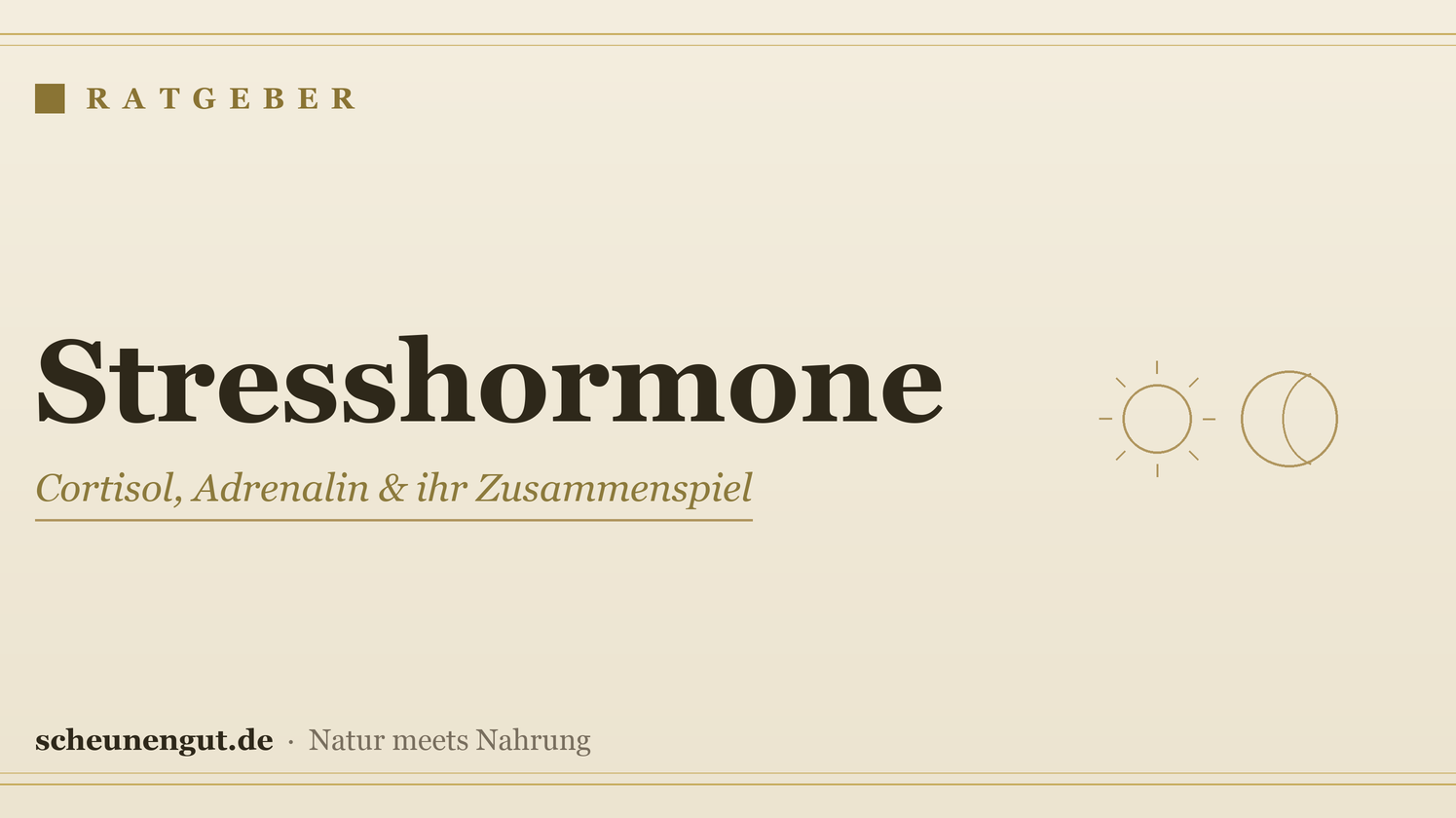
Stress Hormones: How Cortisol and Adrenaline Work Together
Your heart races the moment something startles you – before you've even had time to think. Hours later, after a tense meeting or a night spent working through a deadline,...

Low Ferritin: What’s Behind It – and What Matters Now
Your lab results say “ferritin too low,” and your first thought might be: Haven’t I eaten enough meat, spinach, and the like? Here’s the good news first: a low ferritin...

Estrogen Dominance: Myth vs. Medical Fact
“Estrogen dominance” is one of the most-searched terms in women’s health — and one of the least clearly defined. Tens of thousands of people search for it every month because...

Progesterone: What This Hormone Does in Your Body
Progesterone is often labeled “the pregnancy hormone” — but it’s far more than that. Every woman with a functioning cycle produces it month after month, whether or not a pregnancy...

High Ferritin: Understanding the Real Causes
“Ferritin elevated” – seeing this note on a lab report often triggers immediate worry about iron overload. That worry is usually misplaced: in the vast majority of cases, a high...

Autonomic Nervous System: How Your Body Runs Itself
Your heart beats, your lungs breathe, your stomach digests breakfast — and you never have to issue a single conscious command for any of it. All that fine-tuning runs on...

Inflammatory Markers: What CRP, ESR & Co. Show in Your Blood
"An elevated inflammatory marker" on your blood test results — that phrase alone often causes more worry than the finding itself warrants. A raised CRP, a faster ESR, or altered...

Homocysteine: What Your Level Really Tells You
“Homocysteine elevated” – that's often all your lab report says, and most people have no idea whether it's actually a problem. The short answer: homocysteine isn't a disease. It's an...

Ferritin: What Your Iron Stores Really Show
Your hemoglobin looks perfectly normal on your blood count, yet you've felt drained for weeks? Then it's worth looking at a second value: ferritin. It shows how full your iron...

Elevated Homocysteine: What Your Level Really Means
You're holding your blood test results, and one value is flagged in red: homocysteine, elevated. The first instinct is often worry — but in the vast majority of cases, the...

The Vagus Nerve: Your Nervous System's Brake
You take a slow, deliberate breath out – and immediately feel calmer. That's not a coincidence. One single nerve responds directly to it: the vagus nerve. It's your body's brake,...

CRP Level: Simply Explained
Few lab values get ordered as often — or misunderstood as often — as CRP. It shows up after a simple cold just as much as after surgery or a...

L-Tryptophan: Safe Use in Pregnancy & Breastfeeding
You've probably heard of L-tryptophan — usually mentioned alongside relaxed sleep and a steady mood — and you're wondering whether it's safe to take during pregnancy or while breastfeeding. Or...

Phenylalanine: Side Effects and Safety
"Contains a source of phenylalanine" — that phrase sits on every can of diet soda, and it trips a lot of people up: what does a sweetener warning have to...

Desmodium: Side Effects & Safety Explained
Curious about Desmodium and wondering how well you'll tolerate it? The short answer: this West African plant is generally well tolerated in traditional use, but there are a few things...

Buying Phenylalanine: How to Recognize the L- and DL-Form
Phenylalanine is the raw material your body uses to build tyrosine — and tyrosine, in turn, is the precursor of dopamine and norepinephrine. On the shelf, you’ll run into it...

Caffeine in Pregnancy & Breastfeeding: How Much Is Safe
It's two in the morning, the baby is finally asleep, and on your third glance at your phone you find yourself wondering: is this afternoon's coffee still in your milk?...

Caffeine: What It Really Does
Coffee in the morning, an energy drink before the afternoon slump, a cola to stay awake – caffeine is probably part of your daily routine, but do you actually know...
Vitamin B6: The Right Dosage for Histamine Intolerance
Vitamin B6 comes up almost automatically with histamine intolerance – it’s a cofactor for the enzyme that breaks histamine down. The obvious reaction for many people: more must be better,...

Best Betaine HCl: 6 Criteria That Actually Matter
Betaine HCl is a niche supplement ingredient – and one of the most fiercely compared. Search for a “betaine HCl best-of list” and you’ll mostly find rankings that stack up...

L-Arginine: Safe Use During Pregnancy & Breastfeeding
You’ve been taking L-arginine for a while now – for training, circulation, or because your partner talked you into it – and now the pregnancy test is positive, or you’re...
No guides found.